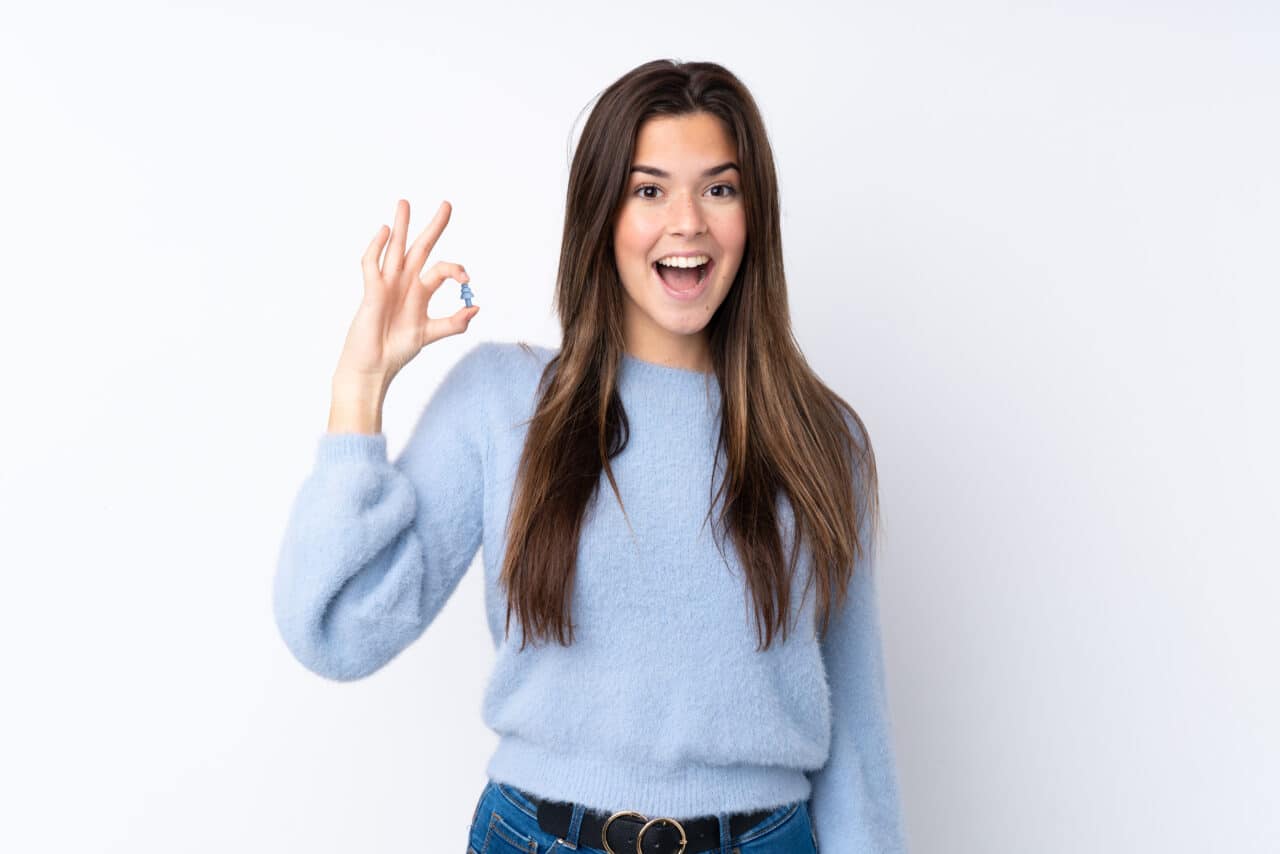
Custom-molded earplugs can be a worthwhile investment for frequent clubbers, but they are not the right choice for everyone. They offer excellent sound quality and a precise fit, but they come with a high upfront cost, a professional fitting process, and some practical drawbacks that make universal-fit high-fidelity earplugs a better starting point for most people. If you go to clubs a few times a year, a quality universal-fit earplug will protect your hearing just as well at a fraction of the price. If you are a professional DJ, a musician, or someone who is out four or five nights a week, the investment starts to make more sense.
What are custom-molded earplugs and how do they work?
Custom-molded earplugs are hearing protection devices made from a physical impression of your ear canal. An audiologist or hearing care professional takes a silicone mold of your ear, sends it to a laboratory, and a device is fabricated that fits your exact anatomy. The result is a plug that sits securely in your ear without any adjustment and creates a consistent acoustic seal every time you put it in.
Most custom earplugs designed for music environments use a flat-attenuation filter, sometimes called a musician’s earplug filter. This filter is engineered to reduce all frequencies relatively evenly, so the music reaching your ears sounds like the real thing, just at a lower volume. Standard foam earplugs, by contrast, block high frequencies much more aggressively than low ones, which is why music sounds muffled and bass-heavy when you wear them at a club.
The filter inside a custom earplug typically comes in different attenuation levels, usually around 9 dB, 15 dB, or 25 dB, so you can choose how much protection you need based on how loud the venue is and how long you plan to stay.
How much do custom-molded earplugs cost compared to universal fit?
Custom-molded musician’s earplugs typically cost between $150 and $300 in the United States when you factor in the audiologist consultation, ear impression, and the device itself. Some high-end options with electronic components can cost significantly more. That is a meaningful upfront investment compared to universal-fit high-fidelity earplugs, which generally range from $15 to $50.
The cost argument for custom earplugs improves over time because they are built to last for several years with proper care. If you go out frequently and replace universal earplugs regularly, the gap closes. But for most casual clubbers, the math does not favor custom options. A well-made universal earplug with a flat-attenuation filter delivers strong protection and clear sound at a cost that makes regular use genuinely realistic.
One thing worth noting is that a poorly fitted custom earplug can actually sound worse than a good universal option. The quality of the ear impression, the skill of the professional taking it, and the materials used all affect the final result. If any of those variables go wrong, you have spent a lot of money on something that underperforms.
Do custom earplugs actually sound better at clubs and concerts?
When fitted correctly by a skilled professional, custom musician’s earplugs do offer excellent sound quality. Because the fit is precise and consistent, the acoustic seal does not shift, and the filter performs as designed every single time. That consistency is genuinely valuable in loud club environments where you want predictable protection without fiddling with your ears all night.
That said, the gap between a well-made custom earplug and a quality universal high-fidelity earplug is smaller than most people expect. Universal earplugs with flat-attenuation filters, particularly those using advanced filter materials, can preserve sound clarity in a way that is noticeably better than foam or basic silicone options. The difference you hear is real and meaningful.
Where custom earplugs genuinely pull ahead is in fit consistency. Universal earplugs depend on correct insertion technique to perform well, and many people unknowingly wear them incorrectly. If you have an unusually shaped ear canal, or if you have never been able to get standard earplugs to sit comfortably, a custom option removes that variable entirely.
What are the downsides of custom-molded earplugs for clubbers?
The most obvious downside is the cost and process involved in getting them. You need to find a qualified audiologist, book an appointment, wait for the molds to be fabricated, and then return to collect them. That process takes time and is not always convenient, especially if you decide you want hearing protection before a big night out this weekend.
Custom earplugs are also less forgiving if your ears change over time. Weight fluctuation, age, and even dental work can alter the shape of your ear canal, which means a mold taken today might not fit as well in five years. At that point, you are looking at the cost of a new fitting.
There is also a practical risk that comes with anything expensive and easy to lose. Clubs are loud, dark, and crowded. Leaving a $200 earplug on a bathroom counter is a very real scenario. Many regular clubbers find that the anxiety of losing custom earplugs actually makes them less likely to use them consistently, which defeats the purpose entirely.
Finally, the filter in a custom earplug still needs to be replaced periodically, usually every one to two years, which adds ongoing cost to the investment.
Who should actually invest in custom-molded earplugs?
Custom-molded earplugs make the most sense for people whose hearing is genuinely on the line night after night. That means working DJs, touring musicians, sound engineers, and venue staff who are exposed to loud music for long hours on a regular basis. For these people, the investment is not a luxury, it is a practical health decision.
They also make sense for anyone who has tried multiple universal-fit options and cannot find one that fits comfortably or stays in place. Some ear canals are shaped in ways that make standard earplugs unreliable, and in those cases, a custom mold solves a real problem.
For the average person who goes clubbing on weekends or attends a handful of concerts a year, custom earplugs are not necessary to protect your hearing well. The important thing is that you use protection consistently, and that means choosing something comfortable, affordable, and easy to keep on you.
US venues regularly exceed 110 dB, and at those levels, hearing damage can begin in just a few minutes of unprotected exposure. There are no federal noise regulations in the US that limit venue sound levels, so the responsibility sits entirely with you. Using any well-designed hearing protection is far more important than which type you choose.
How do you choose the right earplugs for club environments?
For most clubbers, the right choice comes down to three things: sound quality, comfort, and how likely you are to actually use them. The best earplug is the one you wear every time, not the most technically advanced one sitting forgotten at the bottom of your bag.
Look for earplugs that use a flat-attenuation filter rather than foam or basic silicone. These preserve the full frequency range of the music, so you hear the bass, the mids, and the highs in proper balance, just at a safer volume. That makes a real difference to how enjoyable the night is with them in.
Fit matters a lot in a club environment. You want something that stays in place when you are dancing, does not cause discomfort after a few hours, and is easy to remove when you want to have a conversation. Earplugs made from hypoallergenic materials are a smart choice if you have sensitive ears or plan to wear them for extended periods.
If you are new to hearing protection for clubbing, starting with a quality universal option is the sensible move. You get to experience what flat-attenuation actually sounds like, figure out which fit style works for you, and build the habit of wearing them before committing to a larger investment.
That is exactly where our Shush Acoustic earplugs come in. We designed them specifically for music environments, with a ceramic Venturi-shaped filter that reduces sound by 23 dB while keeping the full listening experience intact. The ceramic material conducts sound more cleanly than plastic filters, and because the filter sits inside the earplug rather than at the tip, you are protected even if the plug does not sit perfectly deep in your ear. Made from hypoallergenic synthetic rubber with a three-layer mushroom fit, they stay comfortable through a full night out and last for at least a year of regular use. For most clubbers, they deliver everything a custom earplug offers in terms of sound quality and protection, without the cost, the waiting time, or the risk of losing something irreplaceable on the dance floor.
Frequently Asked Questions
How do I know if my current earplugs are actually inserted correctly and giving me the right level of protection?
A properly inserted earplug should create a noticeable reduction in sound immediately, and the music should still sound balanced rather than muffled or bass-heavy. A quick test is to cup your hands over your ears while wearing them — if the sound changes dramatically, the seal is likely incomplete. With flat-attenuation earplugs specifically, if voices sound like someone turned the volume down rather than like someone stuffed cotton in your ears, you are on the right track. If you consistently struggle to get a good seal, that is a strong sign that a different fit style or tip size may work better for you.
Can I wear earplugs all night at a club, or should I take breaks?
Ideally, you should wear hearing protection for the entire time you are in a loud environment, not just during the busiest parts of the night. Noise-induced hearing damage is cumulative, meaning even moderate exposure adds up over hours. If you do need to remove them to have a conversation, step away from the speakers or move toward a quieter area of the venue first. Re-inserting them before heading back onto the floor is a habit worth building from the start.
What is the difference between SNR and NRR ratings on earplugs, and which one should I pay attention to?
NRR stands for Noise Reduction Rating and is the standard used in the United States, while SNR (Single Number Rating) is the European equivalent. When shopping for earplugs in the US, focus on the NRR figure. Keep in mind that real-world protection is typically about half the rated NRR value due to imperfect insertion and fit, so an earplug rated at 23 dB NRR will likely deliver around 11–12 dB of effective protection in practice. That is still meaningful and protective at club volumes, especially when worn consistently throughout the night.
Are there any situations where I should not use earplugs at a club, even if the music is loud?
There are very few situations where skipping hearing protection at a loud venue makes sense, but safety awareness is one worth mentioning. If you are in an unfamiliar environment or attending a large event alone, make sure you can still hear enough to be aware of emergency announcements or unusual situations around you. Quality flat-attenuation earplugs reduce volume without eliminating awareness, so this is rarely a real concern — but it is worth knowing that foam earplugs with very high NRR ratings can significantly reduce situational awareness in ways that musician-style earplugs typically do not.
How should I clean and store my earplugs to make them last as long as possible?
After each use, wipe your earplugs down with a soft, damp cloth or an unscented antibacterial wipe and let them air dry completely before storing them. Avoid submerging them in water or using harsh solvents, which can degrade the materials over time. Store them in the case they came with, away from direct sunlight and extreme heat — leaving them loose in a pocket or bag increases the risk of damage and contamination. With proper care, quality silicone or synthetic rubber earplugs should last a year or more of regular use.
I already have some hearing loss — is it still worth wearing earplugs at clubs?
Absolutely, and arguably it is even more important. Once hearing cells are damaged, they do not regenerate, but the hearing you still have is worth protecting. People with existing hearing loss are often more sensitive to loud environments and may experience faster deterioration with continued unprotected exposure. If you have diagnosed hearing loss, it is worth consulting an audiologist before choosing a protection level, since they can advise on the right attenuation for your specific situation and whether a custom solution would benefit you more than a universal option.
What is the best way to build the habit of actually remembering to bring earplugs on a night out?
The most effective strategy is to treat earplugs like your phone or wallet — something that lives in a fixed spot and comes with you automatically. Keep a pair in your everyday bag, your jacket pocket, or clipped to your keys so they are always within reach without any extra thought. Many people also find it helpful to keep a backup pair at home and one in their car or coat. The habit forms quickly once wearing them becomes the norm rather than the exception, and starting with an affordable universal option lowers the barrier to actually doing it consistently.