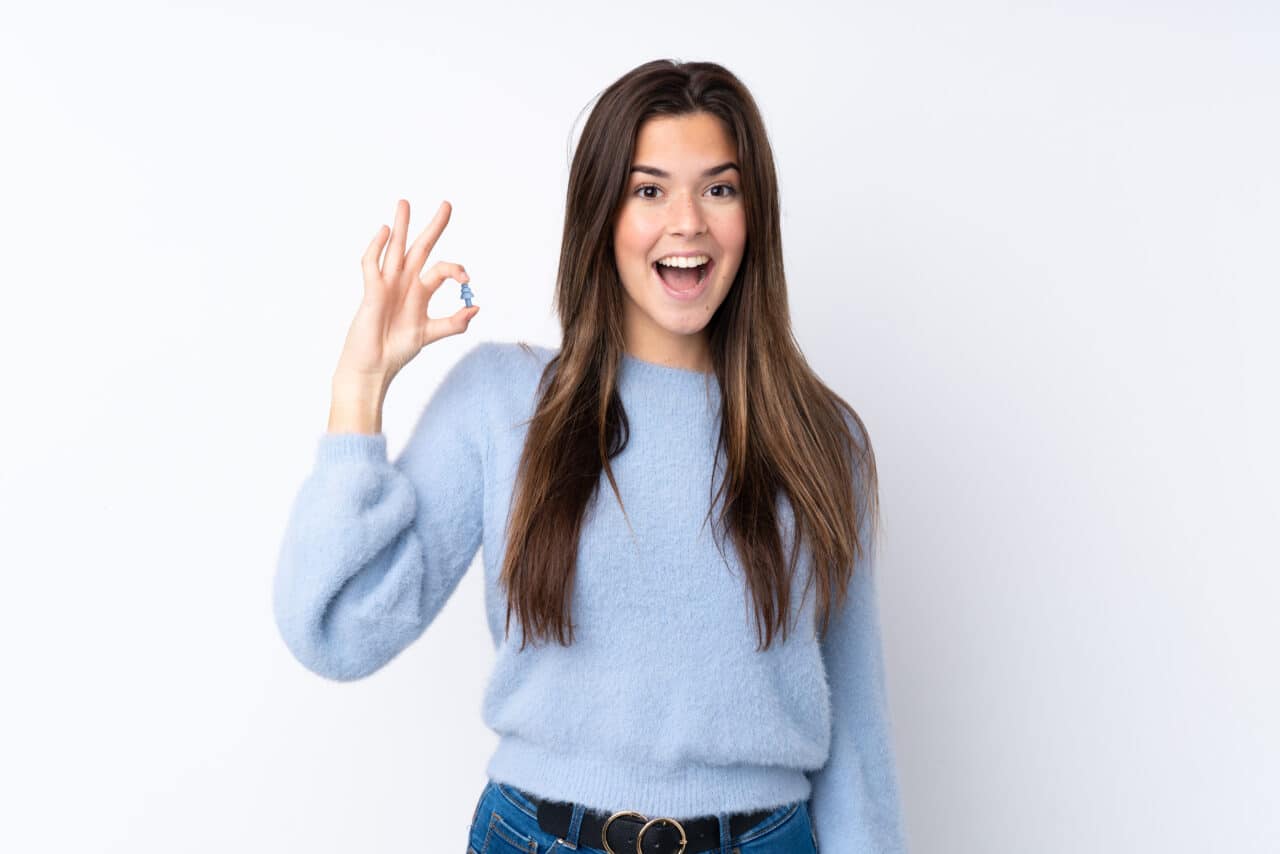
No, properly fitted music earplugs do not damage your hearing over time. In fact, the opposite is true: wearing them consistently at concerts and loud venues actively protects you from permanent hearing loss. The concern usually comes from a misunderstanding of how high-fidelity earplugs work compared to cheap foam plugs. This article breaks down exactly what is happening to your ears at loud events, how music earplugs actually work, and what mistakes to avoid so your hearing stays sharp for years to come.
Can earplugs actually damage your hearing over time?
This question comes up a lot, and it makes sense to ask. Putting something in your ear regularly does feel like it could cause problems. But well-designed earplugs, used correctly, do not damage your hearing. They reduce the sound pressure reaching your inner ear, which is exactly what protects you.
The only scenario where earplugs could cause an issue is if you are inserting them so aggressively that you are pushing earwax deeper into the canal, or if you are using a material that irritates your ear canal over time. That is why the material your earplugs are made from matters. Hypoallergenic materials designed for extended wear avoid skin irritation entirely. Beyond that, wearing earplugs at loud events is one of the most straightforward things you can do to protect your long-term hearing health.
The real risk to your hearing is not the earplug. It is the concert without one.
What happens to your hearing at loud music events?
Your inner ear contains thousands of tiny hair cells inside the cochlea. These cells convert sound waves into electrical signals that your brain reads as sound. Loud noise damages these cells through mechanical force, and once they are gone, they do not grow back. That is not a figure of speech. There is no medical procedure that restores them. The damage is permanent.
At a typical US concert or club, sound levels regularly hit 105 to 110 decibels. At 100 dB, you have roughly 15 minutes of safe exposure before risking noise-induced hearing loss. At 110 dB, that window is even shorter. Many venues in the US have no federal noise regulation in place, meaning there is no legal ceiling on how loud a show can get. You are on your own.
Beyond hearing loss itself, many people develop tinnitus after repeated loud exposures. Tinnitus is the persistent ringing, buzzing, or hissing you hear with no external source. It can be mild and occasional, or it can be severe enough to disrupt sleep, increase anxiety, and affect daily life. It is one of the most common and least talked about consequences of skipping hearing protection at live music events.
How do music earplugs work differently from regular foam plugs?
Standard foam earplugs block sound by physically filling the ear canal and absorbing sound energy. They work well for blocking out noise entirely, but they have a significant drawback for music: they cut high-frequency sound much more aggressively than low-frequency sound. The result is that music sounds muffled, bass-heavy, and distorted. Most people pull them out within the first song because the experience is so unpleasant.
High-fidelity music earplugs take a different approach. Instead of simply blocking sound, they use a filter to reduce volume more evenly across all frequencies. The goal is to bring the overall level down while keeping the tonal balance of the music intact. A well-designed filter means the music sounds like the same song, just at a lower volume. You can still hear the vocals clearly, the mix sounds balanced, and you can hold a conversation without removing them.
The filter design and material make a significant difference in how well this works. Filters that attenuate evenly across the frequency range preserve the listening experience far better than those that only address certain pitches. This is why not all high-fidelity earplugs perform equally, even when their stated decibel reduction looks similar on paper.
What’s the difference between SNR, NRR, and decibel reduction ratings?
When you are shopping for earplugs for music protection, you will run into a few different rating systems depending on where the product was tested and certified.
- NRR (Noise Reduction Rating) is the standard used in the United States, governed by ANSI. It measures how many decibels of protection a hearing protection device provides under laboratory conditions.
- SNR (Single Number Rating) is the European equivalent, used in EU-certified products and governed by EN standards. It is a single figure representing average attenuation across frequencies.
- Decibel reduction is the general term for how much sound is attenuated. Both NRR and SNR express this, but they use slightly different testing methodologies, so a direct one-to-one comparison between them is not always accurate.
For music specifically, the raw number matters less than how evenly that reduction is distributed across frequencies. An earplug with a high NRR that cuts treble far more than bass will make music sound worse than an earplug with a moderate SNR that attenuates all pitches uniformly. When evaluating earplugs for music, look for independently tested attenuation data across multiple frequency bands, not just a single headline number.
Products certified under both ANSI and EN 352-2:2020 standards have been independently verified, which gives you more confidence that the stated ratings reflect real-world performance.
Should you wear earplugs at every concert or only loud ones?
A good rule of thumb: if you need to raise your voice to be heard by someone standing next to you, the sound level is high enough to cause damage with prolonged exposure. At that point, earplugs for music protection are worth putting in.
Not every show hits dangerous levels. An acoustic set in a small venue might stay well within a safe range. But most amplified shows, clubs, festivals, and stadium events will exceed safe exposure thresholds well before the headliner finishes their set. The problem is that noise-induced hearing loss is cumulative. Each loud event adds to the total damage over a lifetime, even if no single night feels catastrophic.
Audiologist guidelines have been updated over the years. The original 60-60 rule recommended keeping listening levels below 60% for no more than 60 minutes. A more recent revision suggests an 80-90 rule for personal devices: no more than 80% of maximum volume for 90 minutes per day. At live events, those thresholds are out of your control entirely. Wearing earplugs gives you a way to stay within a safe range even when the venue is not managing sound levels with your hearing in mind.
The short answer: wear them at any amplified show. You will not miss anything. You will just hear it more clearly for longer.
What are the most common mistakes people make with music earplugs?
Even people who buy good earplugs often undercut their own protection by making avoidable mistakes. Here are the ones that come up most often.
- Not inserting them properly. A loose fit dramatically reduces the actual attenuation you get. The earplug needs to create a proper seal in the ear canal to deliver the rated protection. If it sits loosely at the opening, sound bypasses the filter almost entirely.
- Waiting until the show is already loud. By the time you feel the need to put them in, you have already had significant exposure. Putting them in before the first song is the right move.
- Choosing the wrong attenuation level. A 9 dB reduction is appropriate for moderate sound levels or shorter durations. A 15 dB reduction suits most live shows. A 25 dB reduction is better for extended exposure at very high volumes. Matching the attenuation to the event type makes a real difference.
- Using foam plugs instead of high-fidelity ones and giving up. Many people try foam earplugs once, find the sound quality unbearable, and conclude that earplugs ruin music. High-fidelity earplugs are a completely different experience. The comparison is not fair.
- Skipping them because they look obvious. This is a social concern more than a practical one, and it is fading fast. Discreet, low-profile designs make earplugs nearly invisible in the ear, and awareness of hearing protection at live events is growing across all age groups.
If you have been putting off finding a pair that actually works, our Shush Acoustic music earplugs are worth a look. We built them around a ceramic Venturi-shaped filter that reduces sound by 23 dB while keeping the music sounding exactly as it should: clear, balanced, and undistorted. The filter sits inside the earplug rather than at the stem tip, so you get full protection even if your ear canal only accommodates the first layer. Made from hypoallergenic synthetic rubber, they are more durable than foam or standard silicone alternatives and built to last well over a year of regular use. We also made them in a three-layer universal fit, so they stay put without discomfort, even during a three-hour set.
Frequently Asked Questions
How do I know if my music earplugs are actually creating a proper seal?
A proper seal means the sound reaching your ears feels noticeably reduced and evenly balanced, not just muffled in the highs. A quick test: cup your hands over your ears after inserting the earplugs. If the sound level drops significantly more, your seal is incomplete. For multi-flange or layered earplugs, try gently pressing them slightly deeper and rotating them until they sit snugly. If you consistently struggle to get a good fit, it may be a sign that you need a different size or style rather than a different brand.
Can I wear music earplugs if I already have some hearing loss or tinnitus?
Yes, and it is arguably even more important that you do. Once your hair cells have sustained damage, the remaining healthy ones are more vulnerable to further harm. Wearing high-fidelity earplugs at loud events helps protect what hearing you still have and can prevent tinnitus from worsening. If your tinnitus or hearing loss is significant, it is worth consulting an audiologist before choosing a protection level, as they can recommend attenuation that suits your specific hearing profile.
How do I choose between 9 dB, 15 dB, and 25 dB attenuation options?
Think about the type of event and your proximity to the speakers. A 9 dB reduction works well for smaller venues, acoustic-leaning shows, or if you are standing farther from the stage. A 15 dB reduction is the sweet spot for most amplified concerts and club environments. A 25 dB reduction is best suited for extended festival sets, front-row positions, or any situation where you know the sound system is running at high volume for several hours. When in doubt, go with the middle option — you can always step outside briefly if the level still feels too intense.
How should I clean and store my music earplugs to make them last?
After each use, wipe the earplugs down with a soft, damp cloth or a mild soap and water rinse, then let them air dry completely before storing them. Avoid alcohol-based wipes on silicone or rubber materials, as these can degrade the material over time and reduce the lifespan of the earplug. Store them in the case they came with — loose in a pocket or bag exposes them to lint, debris, and compression that can affect the filter and the fit. With proper care, a quality pair of high-fidelity earplugs should last well over a year of regular use.
Will wearing earplugs make it harder to communicate with people at a show?
With high-fidelity earplugs, conversation is actually easier at loud events than without them. Because they reduce volume evenly rather than cutting out specific frequencies, speech clarity is preserved — you are just hearing voices at a lower, more manageable level. Foam earplugs tend to make conversation feel like talking through a wall, which is one reason people pull them out. If you find yourself struggling to hear someone while wearing high-fidelity plugs, try facing them directly and reducing the distance slightly; the improvement is usually immediate.
Is there any risk of becoming dependent on earplugs or making my ears more sensitive to sound over time?
No, wearing earplugs does not make your ears more sensitive or create any kind of dependency. Your hearing system does not recalibrate to quieter input in a way that makes normal environments feel overwhelming after consistent earplug use. What some people experience is simply a heightened awareness of how loud certain environments actually are once they start protecting their hearing — that is a perceptual shift, not a physiological one. Your ears are not being conditioned; you are just paying more attention.
At what age should someone start thinking seriously about hearing protection at concerts?
The honest answer is: from the very first amplified show, regardless of age. Noise-induced hearing loss is cumulative, meaning damage starts accumulating early and adds up over a lifetime of exposure. Teenagers and young adults are actually at higher risk because they tend to attend more frequent, louder events and are less likely to consider long-term consequences. The earlier someone starts wearing hearing protection at loud events, the more of their hearing they preserve going into their thirties, forties, and beyond — when the effects of earlier exposure typically become most noticeable.
Related Articles
- Do earplugs block enough sound for power tools?
- Can I still hear colleagues while wearing earplugs in a factory?
- What are the most comfortable earplugs for long shifts?
- Can years of factory noise cause permanent hearing loss?
- How do you get workers to actually wear earplugs?
- Are reusable earplugs more cost-effective than disposables for teams?
- Can workplace noise cause stress and fatigue?
- Can earplugs for nightclubs help people with sensory sensitivities enjoy going out?
- What is noise-induced hearing loss and can clubbing cause it?
- Should teenagers wear ear protection when going to nightclubs?
- Are earplugs for nightclubs actually worth wearing?
- How do bartenders and club staff protect their hearing at work?
- What is the difference between earplugs for live music and standard foam plugs?
- What are the best types of hearing protection for festival crowds?
- Should you wear earplugs to every concert you attend?