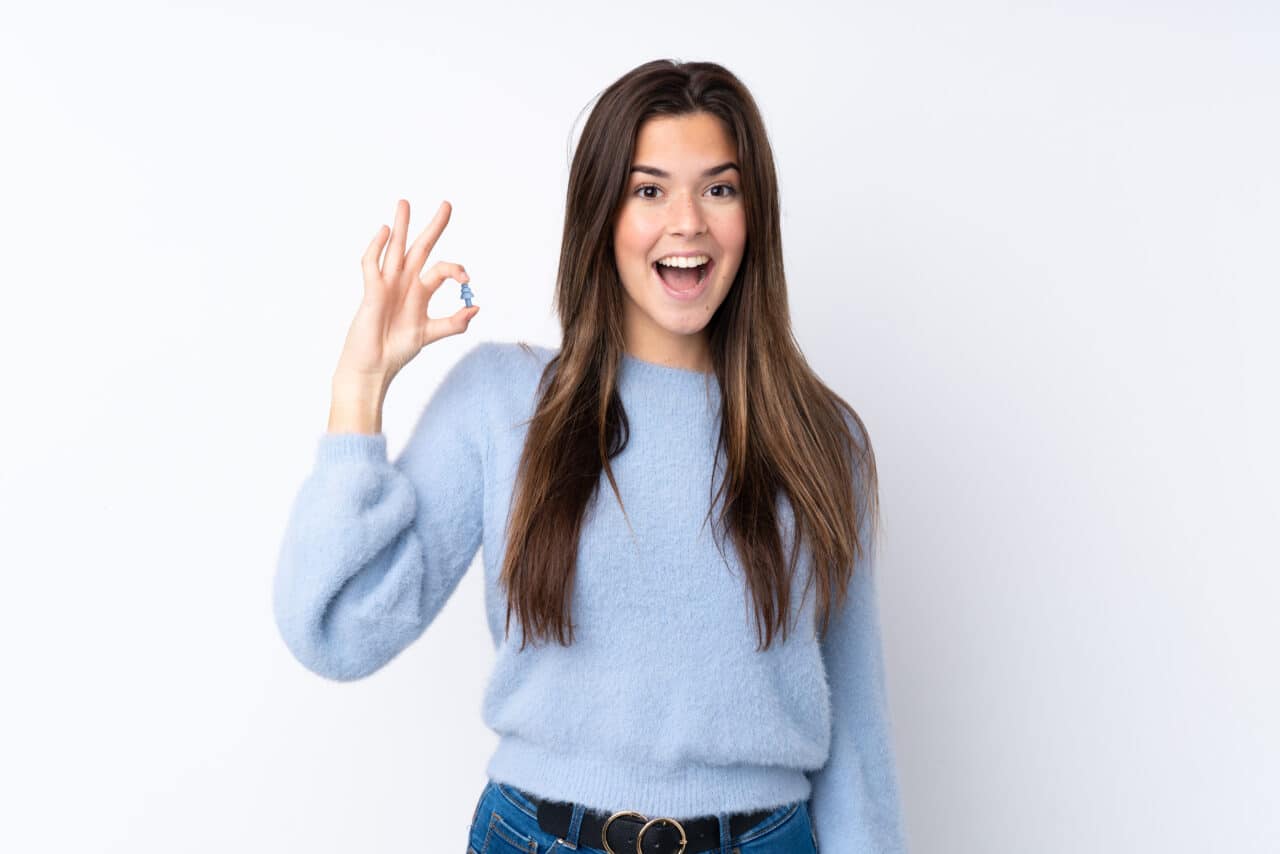
Yes, you absolutely need earplugs for your first EDM event. Sound levels at EDM concerts and festivals regularly hit 110 dB or higher, which is loud enough to cause permanent hearing damage within minutes. The good news is that wearing earplugs does not mean missing out on the music. High-fidelity earplugs are specifically designed to turn down the volume without killing the experience, so you still hear every drop, beat, and bassline exactly as intended, just at a safer level.
How loud is an EDM event, and can it damage your hearing?
EDM events are genuinely, measurably loud. Sound levels at clubs, festivals, and stadium shows regularly exceed 110 dB, and in front of the main speakers, peaks above 115 dB are not unusual. To put that in context, 85 dB is the threshold where prolonged exposure starts to cause hearing damage. At 110 dB, you can reach a dangerous dose of noise in under two minutes of unprotected exposure.
The tricky part is that hearing damage does not always feel dramatic. You might walk out of a show with ringing ears that seem to fade overnight, but research from the World Health Organization confirms that even when short-term symptoms fully resolve, progressive and irreversible injury to the inner ear can continue for months. The hair cells in your inner ear do not regenerate. Once they are gone, they are gone for good.
There is also no federal noise regulation in the United States that limits how loud a venue or festival can be. That means concert and clubgoers are routinely exposed to dangerously high sound levels with no legal ceiling in place. Protecting yourself is entirely up to you.
What are high-fidelity earplugs and how are they different from foam ones?
Foam earplugs are the ones you find in a drugstore for a dollar or two. They work by physically blocking your ear canal, and they do bring the volume down, but they do it unevenly. High-frequency sounds like vocals, hi-hats, and synth details get cut far more aggressively than low-frequency bass, which means music ends up sounding muffled, dull, and distorted. For a genre built on layered sound design and sonic detail, that is a real problem.
High-fidelity earplugs are engineered differently. Instead of just stuffing the ear canal shut, they use a filter that attenuates sound more evenly across the frequency spectrum. The result is that music sounds like music, just quieter. The balance between highs, mids, and lows stays intact, so you still hear the track the way the artist intended it.
The filter design is what separates a good high-fidelity earplug from a bad one. Filters made from ceramic material conduct sound more cleanly than plastic alternatives, and a venturi-shaped filter (funnel-shaped on both sides) helps preserve the natural movement of sound waves rather than breaking them up. These design choices are what keep the listening experience clear and balanced rather than muffled.
Will earplugs ruin the EDM experience?
This is the most common worry, and it is completely understandable. EDM is a full-body experience. The bass is supposed to hit you, the drops are supposed to feel massive, and the energy of the crowd is part of the whole thing. The idea of putting something in your ears and dulling all of that feels counterintuitive.
But here is the thing: well-designed high-fidelity earplugs do not dull the experience. They reduce the volume to a range where your ears can actually process and enjoy the sound without being overwhelmed. At 110 dB, your auditory system is effectively in damage-control mode. Bring it down to a safer level and your ears can relax, which means you actually hear more detail, not less.
Most first-time earplug users at concerts report the same surprise: the music sounds better, not worse. The muddiness and harshness that comes with dangerously high volume disappears, and the actual sound design of the music becomes clearer. You can hold a conversation between sets without shouting. And you leave the venue without that hollow, ringing feeling that usually signals your ears took a hit.
What should I look for when choosing earplugs for EDM?
Not all earplugs marketed as “concert earplugs” are created equal. Here is what actually matters when you are shopping for earplugs for loud events:
- Even attenuation across frequencies: This is the most important factor. Look for earplugs that reduce sound evenly rather than cutting highs more than lows. The packaging or product page should mention flat or balanced attenuation.
- Enough protection: For most live music events, an SNR (Signal-to-Noise Ratio) of around 20 to 25 dB is appropriate. That brings a 110 dB environment down to a much safer range without making everything inaudible.
- A secure, comfortable fit: If earplugs are uncomfortable, you will take them out. Look for a multi-layer or mushroom-tip design that works with different ear canal sizes and stays in place when you are moving around.
- Durable, skin-friendly materials: Soft synthetic rubber is significantly more durable than foam or silicone and is hypoallergenic, which matters if you have sensitive ears or plan to wear them for hours at a time.
- Filter quality: Ceramic filters outperform plastic ones for sound clarity. The position of the filter inside the earplug also matters. A filter placed inside the body of the earplug (rather than at the tip of the stem) means you stay protected even if the earplug does not sit perfectly deep in the canal.
How do I wear earplugs correctly at a concert?
Wearing earplugs incorrectly is one of the most common reasons people feel like they do not work. A poor seal means sound leaks around the earplug, which reduces protection significantly and can also make music sound uneven or distorted.
For mushroom-tip or flanged earplugs, the process is straightforward:
- Pull your outer ear gently upward and back with one hand to open the ear canal slightly.
- With your other hand, insert the earplug with a gentle twisting motion until it sits snugly in the canal.
- Release your ear and check that the earplug feels secure and that the sound around you has dropped noticeably in volume.
- If the sound has not changed much, the seal is probably not good enough. Reinsert and try again.
If you are using earplugs with multiple layers or flanges, make sure the innermost layer is the one creating the seal, not just the outer edge. A well-fitted earplug should feel comfortable, not painful, and should stay in place without constant adjustment.
When is it too late to protect your hearing at a concert?
The honest answer is that it is never fully “too late” to put earplugs in, but the earlier, the better. Hearing damage is cumulative, meaning every minute of unprotected exposure at high volumes adds to the total load on your inner ear. If you have already been standing in front of the speakers for an hour without protection, putting earplugs in for the second half of the night still reduces the total damage you accumulate.
That said, do not use post-show ringing as a gauge for whether your hearing survived. Temporary threshold shift, the technical term for that muffled, ringing feeling after a loud event, can feel like it fully resolves within a day or two. But research consistently shows that the underlying cellular damage in the inner ear can persist and progress long after the symptoms disappear. “Hidden hearing loss” is a real phenomenon where people lose the ability to understand speech in noisy environments without it showing up on standard hearing tests.
The practical takeaway: put your earplugs in before the music starts, not after you realize it is too loud. And if you attend events regularly, make hearing protection a habit rather than an afterthought.
If you are heading to your first EDM event and want to go in prepared, we designed the Shush Acoustic earplugs specifically for this. Our ceramic venturi filter reduces sound by 23 dB while keeping the music sounding exactly as it should, clear, balanced, and full of detail. Made from soft hypoallergenic synthetic rubber with a universal three-layer fit, they stay comfortable through a full night of music and last for at least a year of regular use. We think once you try them, going to a show without them will feel like the weird choice.
Frequently Asked Questions
Can I use the same pair of high-fidelity earplugs for multiple events, or do I need to replace them frequently?
A quality pair of high-fidelity earplugs made from durable synthetic rubber can last a year or more with regular use, making them a genuinely cost-effective investment compared to disposable foam alternatives. To extend their lifespan, rinse them with warm water after each use, let them air dry completely, and store them in their case rather than loose in a pocket or bag. Inspect the filter periodically — if sound quality starts to seem uneven or muffled compared to when they were new, that is a sign the filter may be degraded and it is time for a replacement pair.
What if earplugs feel uncomfortable or keep falling out while I'm dancing?
Fit is everything, and discomfort or poor retention almost always comes down to the wrong size or insertion technique rather than a flaw in the earplug itself. Multi-layer or three-flange designs accommodate a wider range of ear canal sizes than single-tip options, so if one style keeps slipping, try a different format. Re-read the insertion steps — pulling the outer ear upward and back before inserting creates a straighter canal and dramatically improves both seal and stability. If you have tried multiple styles and still struggle with fit, custom-molded earplugs made by an audiologist are an option worth considering for frequent concert-goers.
Is it safe to wear earplugs all night at a festival, or should I take breaks?
Wearing high-fidelity earplugs continuously throughout a festival day is completely safe and is actually the recommended approach — the risk comes from taking them out, not from leaving them in. If you want to give your ears a rest, do it during genuinely quiet moments away from the sound system, not in the crowd between sets where ambient levels can still be damaging. Think of earplugs at a festival the way you think of sunscreen: reapplying (or reinserting) consistently throughout the day is far better than going in and out of protection.
I already have some ringing in my ears from past concerts. Is it still worth protecting my hearing now?
Absolutely, and the sooner you start the better. Existing tinnitus or sensitivity to loud sounds is a strong signal that your inner ear has already sustained some damage, which makes the remaining healthy hair cells even more valuable and worth protecting. While no earplug can reverse damage that has already occurred, consistent hearing protection can significantly slow or stop further deterioration. It is also worth scheduling a hearing evaluation with an audiologist to get a baseline assessment — knowing where your hearing stands now helps you track changes over time.
Do I still need earplugs if I'm not standing near the front or main speakers?
Yes — distance from the main speakers reduces volume somewhat, but at most EDM events the sound system is designed to fill the entire venue, meaning even mid-crowd or rear positions regularly exceed safe exposure thresholds. Subwoofers in particular project low-frequency energy broadly throughout a space, so the bass that defines the EDM experience reaches you regardless of where you are standing. Unless you are in a clearly designated quiet zone or well outside the venue itself, assume the sound level warrants protection.
How do I convince my friends to wear earplugs without sounding like a buzzkill?
The most effective approach is usually a personal one: share that you tried them and the music actually sounded better, not worse, since that genuinely surprises most people. Bring a spare pair to the next event and offer them the chance to try it themselves — firsthand experience is far more convincing than any argument. You can also point out the practical upside of being able to hold a normal conversation between sets and leaving the venue without that hollow, ringing feeling. Framing it as a quality-of-experience upgrade rather than a safety lecture tends to land much better.
Are there situations where I should see a doctor after a loud concert?
Yes — if you experience ringing (tinnitus), muffled hearing, or a feeling of fullness in your ears that does not fully resolve within 24 to 48 hours after an event, that warrants a visit to an audiologist or ENT specialist rather than a wait-and-see approach. Sudden hearing changes, pain inside the ear canal, or any sensation of dizziness following loud noise exposure are also reasons to seek evaluation promptly. Do not assume symptoms will simply go away on their own — early intervention gives you the best chance of minimizing long-term impact.
Related Articles
- What causes that muffled feeling after a noisy shift?
- How long can you be exposed to loud noise before damage?
- How do you get workers to actually wear earplugs?
- Can noise exposure affect sleep quality in workers?
- Are there earplugs that fit small and large ears?
- Can better earplugs improve hearing protection compliance?
- Can a single loud concert damage your hearing permanently?
- Can wearing earplugs regularly at clubs protect your long-term music enjoyment?
- Are earplugs at stadium concerts actually necessary in 2026?
- How do you prevent hearing damage at concerts without muffling the sound?
- What should you look for when buying earplugs for music sound protection in 2026?
- What are the early signs of hearing damage from clubbing?
- Can earplugs for a football game block crowd noise but keep commentary clear?
- How does standing near speakers at a stadium concert affect hearing damage risk?
- How do high-fidelity earplugs differ from regular foam ones?