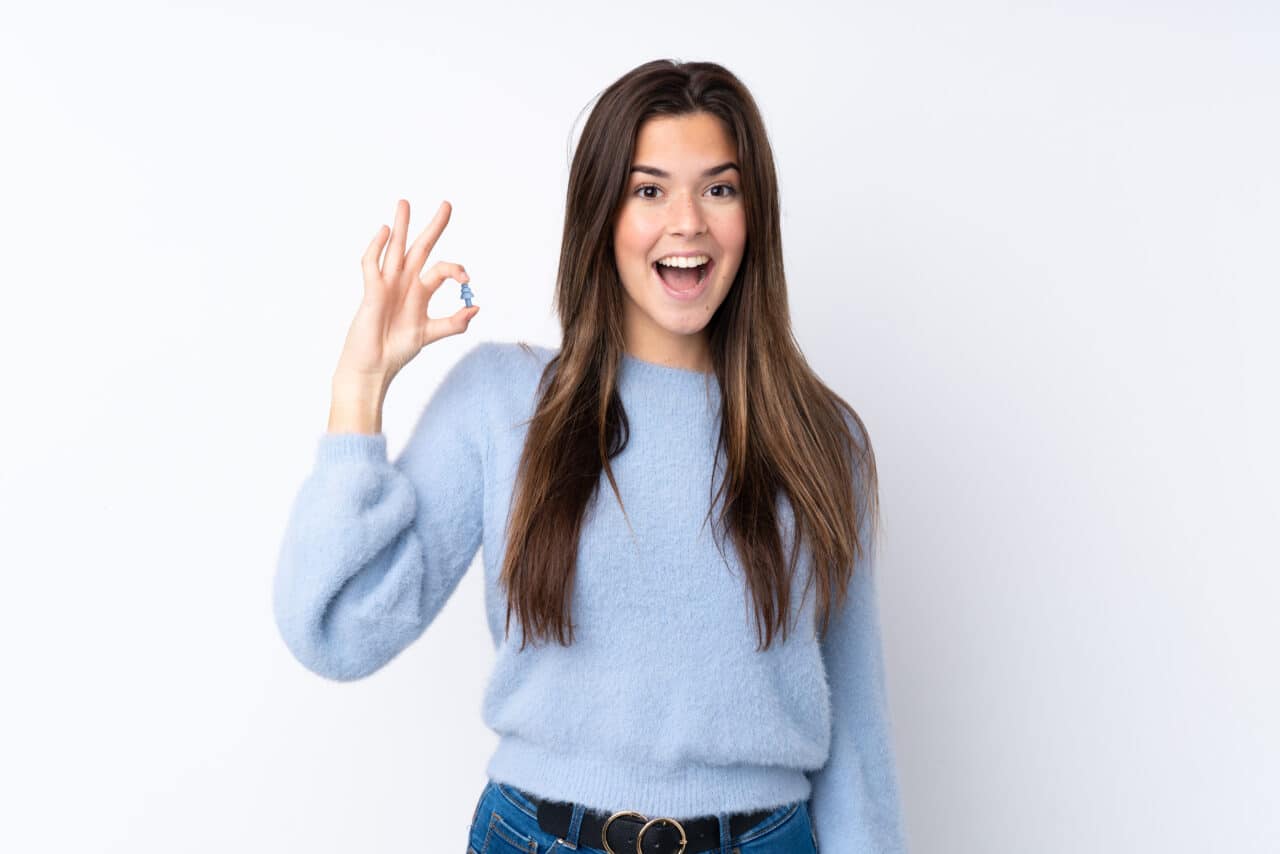
Earplugs for music and noise-canceling earbuds are not the same thing, and they work in completely different ways. Music earplugs are designed to lower the volume of everything around you while keeping sound clear and balanced. Noise-canceling earbuds use electronic technology to suppress background sound so you can listen to audio playback more comfortably. At a loud concert or festival, only proper earplugs for music protection actually shield your hearing from damage. Noise-canceling earbuds are built for listening, not for protecting your ears from hazardous sound levels.
What’s the difference between earplugs for music and noise-canceling earbuds?
The core difference comes down to purpose. Music earplugs are hearing protection devices. They physically reduce the volume of sound entering your ear canal, and high-fidelity versions do this without distorting the audio around you. You hear music as it was meant to sound, just at a safer level.
Noise-canceling earbuds are consumer audio products. They use tiny microphones and signal processing to generate an opposing sound wave that cancels out steady background noise, like the hum of an airplane engine or air conditioning. This works well in low-to-moderate noise environments. But at a concert reaching 105 to 110 dB, they are not designed to protect your ears from that level of acoustic energy.
The distinction matters because one product protects your hearing and the other improves your listening comfort. Confusing the two can lead to real, permanent hearing damage.
How does noise cancellation actually work in earbuds?
Active noise cancellation (ANC) works by capturing ambient sound through external microphones built into the earbud, then generating an inverted audio signal that cancels out that incoming sound before it reaches your ear. It is remarkably effective at eliminating consistent, low-frequency noise like engine hum, HVAC systems, or the rumble of public transport.
Where ANC falls short is with unpredictable, high-energy sound. Live music, crowd noise, and sudden loud bursts are too dynamic and varied for ANC to neutralize effectively. The technology was designed for commutes and open offices, not festivals.
There is also a deeper issue. Research by Fligor and Ives found that in noisy environments, people instinctively turn up the volume on their earbuds to hear their music over background noise, typically around 13 dB above the surrounding noise level. On a loud bus at 75 to 80 dB, that means listening at 88 to 93 dB, roughly equivalent to standing next to a running chainsaw. At a venue hitting 110 dB, the math gets dangerous fast. Wearing noise-canceling earbuds at a concert and cranking the volume to compensate is not protection. It is double exposure.
How do high-fidelity earplugs protect hearing at concerts?
Standard foam earplugs block sound by plugging the ear canal, which muffles high frequencies more than low ones. The result is music that sounds dull and muddy. High-fidelity earplugs work differently. They use a precision acoustic filter to reduce sound evenly across the frequency spectrum, so the music still sounds like music, just quieter.
The CDC reports that concert venues in the US regularly reach 105 to 110 dB. At 110 dB, you have roughly three minutes of safe exposure before risking permanent hearing damage. There are no federal noise regulations governing concert venues in the US, which means the responsibility falls entirely on you as the listener.
High-fidelity earplugs for music protection reduce that exposure to a safe range without removing you from the experience. You can still hear the bass, the vocals, and the detail in the mix. You can still talk to the person next to you. You are just not burning through your hearing in the process.
Which is better for concerts — earplugs or noise-canceling earbuds?
For hearing protection at concerts, earplugs win without question. Noise-canceling earbuds are not certified hearing protection devices. They do not carry SNR (Sound Reduction Number) or NRR (Noise Reduction Rating) ratings because they are not tested or designed to block hazardous sound levels.
High-fidelity music earplugs, on the other hand, are independently tested and rated. A good pair reduces volume by 20 to 25 dB while preserving sound quality. That is the difference between standing at 110 dB unprotected and hearing the same concert at a safe 85 to 90 dB.
Noise-canceling earbuds are great for travel, open offices, and focus work. At a concert or festival, they simply are not the right tool for the job. Using them there gives you a false sense of protection while your hearing absorbs the full impact of the room.
Can noise-canceling earbuds damage your hearing at live events?
Yes, and this is worth taking seriously. If you wear noise-canceling earbuds at a concert and play music through them to cover the background noise, you are stacking two loud sources on top of each other. Your earbuds are playing audio directly into your ear canal while the concert itself continues to push sound through the gaps around the earbud housing.
Most consumer earbuds do not create a tight acoustic seal. Sound bleeds in around the edges. This means the noise-canceling effect is only partial in a truly loud environment. Your ears are still absorbing significant acoustic energy from the room, and if you raise your playback volume to compensate, you are adding to the problem rather than solving it.
Noise-induced hearing loss is permanent. The hair cells in the inner ear that convert sound into electrical signals do not regenerate once damaged. The threshold for hearing damage is 85 dB, and many concert venues exceed that by 25 dB or more. Even a few hours of unprotected exposure at those levels causes cumulative damage that builds over time.
What should you look for when choosing music earplugs?
A few things separate genuinely useful earplugs for music sound protection from the ones that just muffle everything and ruin the experience.
- Acoustic filter quality: Look for earplugs with a precision filter that reduces sound evenly across frequencies. This keeps music sounding balanced rather than muffled. Ceramic filters, like the ones we use at Shush, offer better sound conductivity than plastic alternatives and preserve clarity even after reducing volume.
- SNR or NRR rating: This tells you how many decibels of protection the earplug provides. For concerts and festivals, aim for an SNR of at least 20 dB. Our Shush Acoustic earplugs carry an SNR of 23 dB, bringing a 110 dB venue down to a safe listening level.
- Fit and comfort: Earplugs that hurt or fall out do not protect you. Look for a universal fit with multiple layers or sizes, and materials that are soft and hypoallergenic. You want something you can wear for a full set without noticing it.
- Reusability: Single-use foam earplugs are wasteful and inconsistent. A quality reusable pair gives you reliable protection every time you use it.
- Certified and independently tested: Make sure the product has been tested against recognized safety standards. In the US, look for ANSI S3.19-1974 compliance.
If you are looking for earplugs that check all of these boxes, our Shush Acoustic music earplugs are built specifically for live music environments. The ceramic Venturi filter sits inside the earplug rather than at the tip of the stem, which means you stay protected even if the earplug does not sit perfectly deep in the canal. They are made from soft synthetic rubber that is more durable than silicone, last at least 365 days of regular use, and come in plastic-free packaging. You hear the music the way it was meant to sound. You just do not pay for it with your hearing.
Frequently Asked Questions
How do I know if the venue I'm attending is loud enough to actually damage my hearing?
A good rule of thumb is that if you have to raise your voice to be heard by someone standing next to you, the environment is likely above 85 dB — the threshold at which hearing damage begins. Concert venues, clubs, and music festivals in the US regularly hit 100 to 110 dB, which means damage can start within minutes of unprotected exposure. When in doubt, bring earplugs. The cost of a quality pair is nothing compared to the cost of permanent hearing loss.
Will high-fidelity earplugs make it harder to talk to people at a concert?
Not significantly. Unlike foam earplugs that muffle speech and make conversation frustrating, high-fidelity earplugs reduce volume evenly across frequencies, which means voices still come through clearly — just at a safer level. Many people actually find it easier to have a conversation while wearing high-fidelity earplugs at a loud venue because the overall noise floor is brought down to a more manageable level.
Can I wear my noise-canceling earbuds on the way to the concert and then switch to earplugs once I'm inside?
Absolutely, and that’s actually a smart approach. Noise-canceling earbuds are excellent for blocking out transit noise on the subway, bus, or rideshare on the way to the venue. Once you’re inside and the music starts, swap them out for your high-fidelity earplugs. This way you get the comfort and audio quality of your earbuds during travel and the proper hearing protection you need once the decibels climb.
What's the biggest mistake people make when buying earplugs for concerts?
The most common mistake is grabbing a pack of cheap foam earplugs from a drugstore and assuming they’ll do the job. While foam earplugs do provide noise reduction, they cut high frequencies far more aggressively than low ones, leaving you with a muffled, bass-heavy sound that ruins the experience. Many people take them out after a few songs because the music sounds so bad — which defeats the entire purpose. Investing in a pair of high-fidelity earplugs with a proper acoustic filter means you’ll actually keep them in all night.
How do I get a proper fit with music earplugs so they actually work?
A proper seal is essential — an earplug that sits loosely in your ear canal won’t deliver its rated noise reduction. To insert them correctly, gently pull your outer ear upward and back to straighten the ear canal, then insert the earplug and let it settle. If your earplugs come with multiple tip sizes, try each one to find the fit that feels snug without being uncomfortable. You’ll know you have a good seal when the ambient noise around you drops noticeably as soon as they’re in.
Is one concert without earplugs really enough to cause lasting hearing damage?
Yes, it can be. A single exposure to sound above 100 dB for even a short period can cause temporary threshold shift — a temporary reduction in hearing sensitivity — and repeated incidents like this cause cumulative, permanent damage over time. Some people also experience tinnitus (ringing in the ears) after a single loud event, and for a portion of those people, the ringing never fully goes away. Hearing loss is irreversible, so protecting your ears from the very first show is the right call.
Are there specific genres or types of live events where hearing protection matters most?
Any live amplified music event poses a real risk, but rock concerts, EDM festivals, metal shows, and nightclubs tend to be the loudest, frequently exceeding 105 to 110 dB. That said, even acoustic performances in small, reflective venues or loud DJ sets at bars can push past 90 to 95 dB. If there’s a sound system involved and a crowd, it’s worth having your earplugs on hand regardless of genre.
Related Articles
- Why do earplugs hurt after wearing them all day?
- 4 most common reasons workers don't comply with hearing protection rules
- Can noise exposure affect sleep quality in workers?
- What are the legal requirements for hearing protection at work?
- Can workplace noise cause stress and fatigue?
- Do earplugs come in different sizes?
- Can wearing earplugs at concerts reduce tinnitus risk?
- How do musicians on stage avoid hearing damage during live shows?
- What is noise-induced hearing loss and can clubbing cause it?
- Can wearing earplugs regularly at clubs protect your long-term music enjoyment?
- Do earplugs for live music change how a band actually sounds?
- What happens to sound quality when you wear the wrong earplugs?
- How do bartenders and club staff protect their hearing at work?
- Do earplugs for EDM events block the bass frequencies you came to feel?
- What is the difference between foam and high-fidelity festival earplugs?