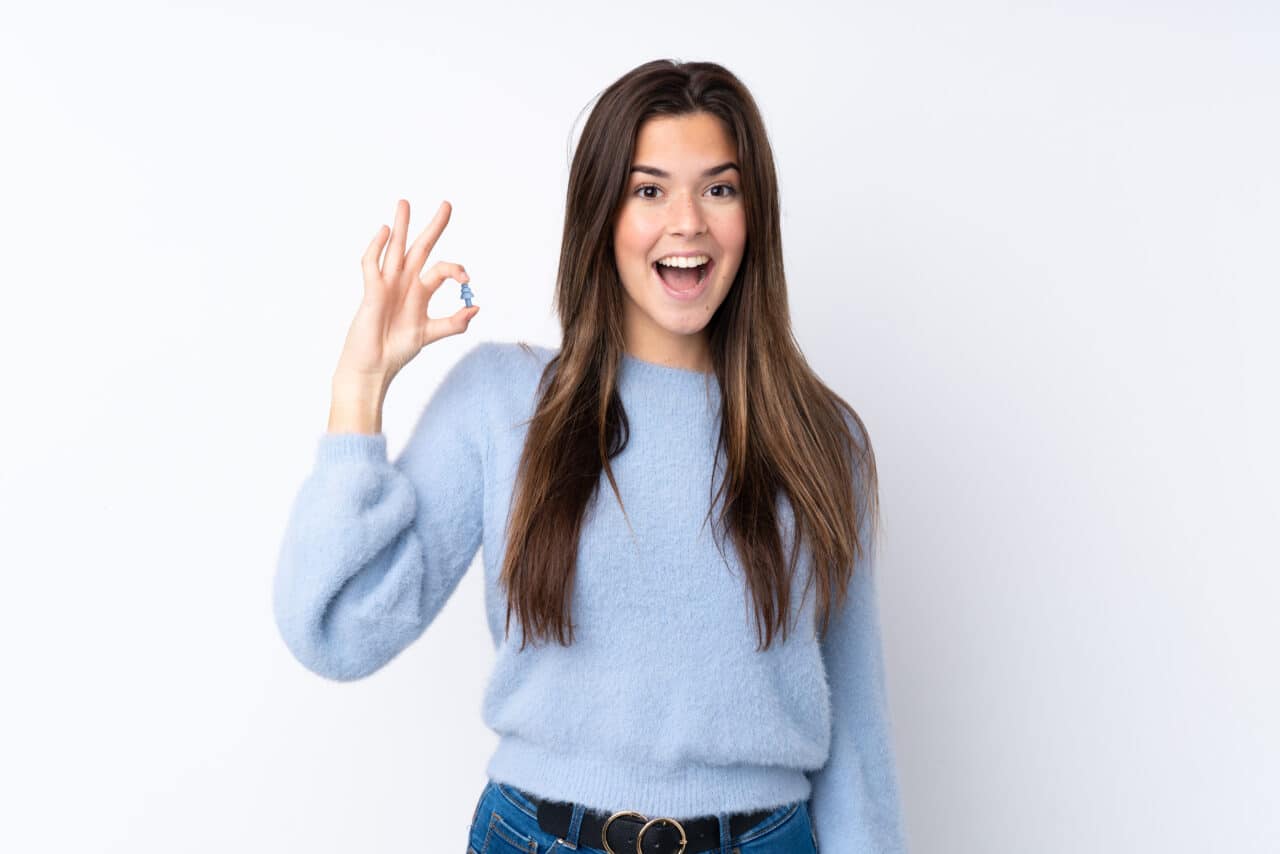
Yes, you should wear earplugs at a club even if you are standing far from the speakers. Sound levels inside a nightclub are high enough throughout the entire venue to cause real hearing damage, not just near the front. Distance gives you a little relief, but not nearly enough to make ear protection unnecessary. A good pair of earplugs lets you enjoy the music and the night without paying for it with ringing ears the next morning.
How loud is a nightclub, even far from the speakers?
Most nightclubs run at sound levels between 100 and 110 decibels on the dance floor. That is roughly the same as a chainsaw or a jackhammer running right next to you. Even in the back of the room, near the bar or the entrance, levels typically sit between 90 and 100 dB, which is still well above the threshold where hearing damage begins.
Sound does not just travel in a straight line from the speakers to your ears. It bounces off walls, ceilings, and floors. It fills the entire space. That is why the back corner of a club can still feel physically loud, because it is. The CDC notes that venues regularly reach 105 to 110 dB, and in the US there is no federal regulation that limits how loud a club or concert venue can be. That means no legal ceiling, no required warnings, and no one checking the levels on your behalf.
The World Health Organization recommends that recreational venues keep sound below 100 dB averaged over 15 minutes, with peaks no higher than 135 dB. Most US clubs do not come close to meeting that standard.
At what decibel level does hearing damage actually start?
Hearing damage begins at around 85 dB with prolonged exposure. At that level, the safe daily limit is about two hours. Every 3 dB increase roughly halves the safe exposure time. So at 88 dB you are looking at one hour, at 91 dB around 30 minutes, and at 100 dB you have fewer than 15 minutes before damage can start accumulating.
At 110 dB, which is a common nightclub level, safe exposure time drops to under two minutes. And the damage does not always show up immediately. You might leave a club with ringing ears that fade by morning and assume everything is fine. But the WHO makes clear that even when short-term symptoms fully resolve, progressive and irreversible injury to the inner ear may continue for months. Repeated exposure damages the delicate hair cells in the inner ear, and those cells do not grow back.
There is also something researchers call hidden hearing loss, where damage does not show up in standard hearing tests but leaves people struggling to understand speech in noisy environments. You can lose meaningful hearing function without ever getting a diagnosis.
Does standing far from the speakers really protect your hearing?
Standing away from the speakers helps a little, but it does not protect your hearing in any meaningful way. Sound intensity decreases with distance, but inside an enclosed space like a nightclub that effect is much weaker than it would be outdoors. The room itself acts as a sound trap. Reflections from every hard surface keep the overall level high throughout the venue.
A useful way to think about it: moving from the front of the dance floor to the back of the bar might drop the level by 5 to 10 dB in the best case. If the front is at 110 dB, the back is still at 100 to 105 dB. That is still well into the danger zone, especially over the course of a two or three hour night out.
Standing far from the speakers is a reasonable habit, but it is not a substitute for ear protection in clubbing situations. The only reliable way to reduce your exposure to a safe level is to put something between the sound and your inner ear.
What kind of earplugs work best for a nightclub?
Standard foam earplugs are not ideal for a nightclub. They block too much sound across the board and make music sound muffled, flat, and distorted. They cut high frequencies far more aggressively than low ones, which strips the music of its clarity and detail. You end up feeling isolated rather than protected.
What you want for clubbing is a high-fidelity earplug, sometimes called a musician’s earplug. These are designed to reduce volume more evenly across frequencies, so the music still sounds like music, just at a safer level. The difference in listening experience compared to foam is genuinely noticeable.
When choosing earplugs for a nightclub, look for:
- A flat attenuation profile that reduces all frequencies evenly
- A filter that preserves sound clarity rather than muffling it
- A comfortable fit you can wear for several hours without discomfort
- A material that is hypoallergenic if you have sensitive ears
- Reusability, so you are not throwing away a new pair every weekend
Custom-molded options exist and offer an excellent fit, but they require a visit to an audiologist and come at a higher cost. A well-made universal high-fidelity earplug is a practical and effective alternative for most people.
Will earplugs ruin the music experience at a club?
No, the right earplugs will not ruin the experience. In fact, many people find that good earplugs actually improve how music sounds at a club. When volume drops to a comfortable level, your ears are not overwhelmed, and you can actually hear the mix more clearly. The bass, the melody, the detail in the track, all of it becomes easier to appreciate when your ears are not being overloaded.
The concern about earplugs ruining the vibe usually comes from experience with foam earplugs, which genuinely do make music sound worse. High-fidelity earplugs work differently. They are engineered to reduce volume without distorting the sound signature. You can still hold a conversation, still feel the music, still enjoy the full experience of the night.
Another practical benefit: you come home without ringing ears. You wake up the next morning able to hear normally. That alone changes how you feel about the night.
How do you wear earplugs correctly so they actually work?
Even the best earplugs fail if they are not inserted properly. A poor seal means sound leaks in around the earplug, reducing its effectiveness significantly. Here is how to get it right:
- Clean and dry hands: Always insert earplugs with clean hands to avoid introducing bacteria into your ear canal.
- Pull your ear up and back: Gently pull the top of your outer ear upward and slightly backward with your opposite hand. This straightens the ear canal and makes insertion easier and more effective.
- Insert firmly but gently: Push the earplug in until it sits snugly. You should feel a clear change in the sound around you when the seal is good.
- Check the fit: If you can still hear the room at full volume, the earplug is not seated properly. Reinsert and try again.
- Use the right size: Earplugs that are too small for your ear canal will not seal correctly. Many brands offer multiple sizes or a universal multi-layer design that adapts to different canal sizes.
For a night out, it helps to practice inserting your earplugs at home before you go. Once you are in a loud club with limited lighting, having already figured out the technique makes everything easier.
When it comes to finding the right earplugs for a night out, we built the Shush Acoustic earplugs specifically for exactly this situation. The ceramic Venturi-shaped filter sits inside the earplug and reduces sound by 23 dB while keeping the music sounding balanced, clear, and undistorted. The synthetic rubber material creates a secure, comfortable fit that holds through hours of dancing, and the three-layer mushroom design adapts to different ear canal sizes without needing custom molding. Unlike foam or standard silicone options, Shush Acoustic earplugs are reusable for at least a full year, which makes them a smarter long-term investment for anyone who goes out regularly. You protect your hearing, you enjoy the music, and you wake up the next day feeling fine.
Frequently Asked Questions
How do I know if my earplugs are actually reducing sound to a safe level?
Check the NRR (Noise Reduction Rating) printed on the earplug packaging — for a nightclub environment running at 100–110 dB, you want an NRR of at least 20–25 dB to bring your exposure down to a safer range. Keep in mind that real-world protection is typically about half the rated NRR due to fit variation, so proper insertion technique matters just as much as the rating itself. If you want to get precise, free smartphone apps like NIOSH SLM or Decibel X can give you a rough reading of ambient sound levels before and after insertion.
Can I damage my hearing from just one night out at a club without earplugs?
Yes, a single night of unprotected exposure at typical nightclub levels (100–110 dB) is more than enough to cause measurable damage to the hair cells in your inner ear. The ringing or muffled feeling you notice the next morning — called a temporary threshold shift — is your auditory system signaling that real injury occurred, even if it fades within a day or two. Repeated episodes compound over time, and some of that damage accumulates silently without any obvious symptoms until it becomes permanent.
What's the best way to get my friends on board with wearing earplugs at clubs without it feeling awkward?
Normalize it by framing earplugs as a practical upgrade rather than a health precaution — most people are more receptive when you lead with the fact that the music actually sounds better and you wake up feeling normal the next day. Picking up a spare pair to offer a friend on a night out is one of the most effective ways to convert skeptics, since the experience speaks for itself. Many regular club-goers and music fans have started treating earplugs the same way they treat a good pair of headphones: just part of how you enjoy sound responsibly.
Are there situations inside a club where I can safely take my earplugs out?
You can briefly remove them in quieter areas like an outdoor smoking patio, a cloakroom, or a hallway clearly away from the main room — places where levels realistically drop below 80–85 dB. The key word is briefly: even a few unprotected minutes back near the dance floor or speakers adds up over the course of a long night. A good rule of thumb is to keep them in any time you can feel the bass or have to raise your voice to be heard by someone standing right next to you.
How do I clean and maintain reusable earplugs so they stay hygienic and effective?
After each use, wipe your earplugs down with a soft, damp cloth or a gentle unscented soap and warm water, then let them air dry completely before storing them — never use alcohol-based cleaners on silicone or rubber earplugs, as these can degrade the material over time. Store them in their carry case rather than loose in a pocket or bag, where they can pick up lint and debris that compromises the seal. Inspect the filter and body periodically for visible wear, cracking, or deformation, and replace them when the fit or sound quality noticeably changes.
I already have some ringing in my ears after years of clubbing — is it too late to bother with earplugs now?
It is absolutely not too late, and starting now is one of the most important things you can do. Tinnitus (persistent ringing) and early hearing loss indicate that your inner ear has already sustained some damage, which means the hair cells you still have are even more vulnerable to further injury than they would be in someone with no prior exposure. Protecting what remains is entirely possible, and audiologists consistently emphasize that preventing additional damage is far more achievable than reversing what has already occurred. If the ringing is persistent or worsening, scheduling a hearing evaluation with an audiologist is a worthwhile next step alongside starting to use ear protection.
Do musicians and DJs who perform in clubs regularly actually wear hearing protection themselves?
Many professional musicians and DJs do use hearing protection, and the rate of adoption has grown significantly as awareness of occupational hearing loss has increased in the music industry. Custom in-ear monitors (IEMs), which are a step up from standard high-fidelity earplugs, are standard equipment for many touring artists because they allow performers to hear a controlled mix at a safe volume while blocking out damaging stage and crowd noise. Several high-profile musicians — including Pete Townshend of The Who and Chris Martin of Coldplay — have spoken publicly about noise-induced hearing damage and now advocate for ear protection, which has helped shift the culture around hearing health in live music settings.
Related Articles
- Are foam earplugs good enough for power tools?
- Can I still hear colleagues while wearing earplugs in a factory?
- Why do earplugs hurt after wearing them all day?
- What are the most comfortable earplugs for long shifts?
- What is the cost of providing earplugs to all employees?
- Does loud noise at work affect concentration?
- Why do my earplugs keep falling out at work?
- Are custom-molded earplugs worth the cost for occasional concertgoers?
- Should teenagers wear ear protection when going to nightclubs?
- How do you prevent hearing damage at concerts without muffling the sound?
- How do bartenders and club staff protect their hearing at work?
- Are foam earplugs good enough for stadium concerts?
- What is noise-induced hearing loss and can earplugs prevent it?
- Are custom earplugs worth it for regular festival-goers?
- What causes hearing loss at loud concerts?