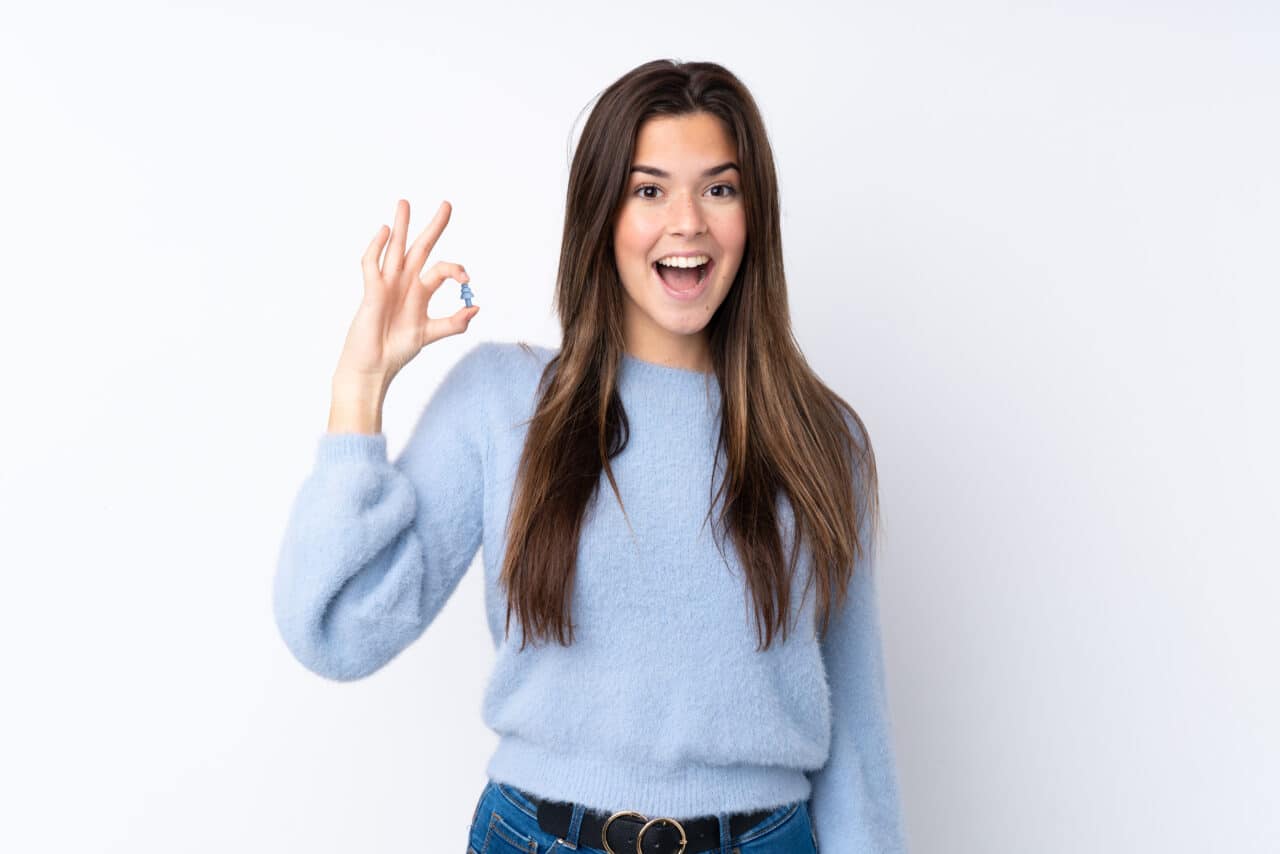
The early signs of hearing damage from clubbing include ringing or buzzing in your ears after a night out, muffled hearing that takes hours to clear, and difficulty following conversations in a noisy room. These symptoms can feel temporary, but they are warning signals that your ears took a hit. If they happen repeatedly, the damage can become permanent. The good news is that wearing ear protection while clubbing makes a real difference, and it does not ruin the experience at all.
How loud is a typical nightclub, and why does it matter?
Most nightclubs in the US run their sound systems at somewhere between 100 and 110 decibels. Some push past that during peak hours or live sets. To put that in perspective, normal conversation sits around 60 dB, and the threshold where hearing damage starts to occur is 85 dB.
The reason this matters is not just how loud it is, but how long you are exposed. At 100 dB, research suggests your ears can handle around 15 minutes before damage begins to accumulate. At 110 dB, that window shrinks to just a couple of minutes. Most people spend three to five hours in a club. That is a significant mismatch.
There is also no federal noise regulation in the US for entertainment venues. Unlike in several European countries, American clubs are not legally required to limit sound levels or warn guests. That means the responsibility falls entirely on you.
What causes hearing damage in loud music environments?
Inside your inner ear, the cochlea contains thousands of tiny hair cells that convert sound waves into electrical signals your brain can understand. These cells are remarkably sensitive, and that sensitivity is exactly what makes them vulnerable.
When sound is too loud or lasts too long, these hair cells get damaged through mechanical force. Once they are gone, they do not grow back. There is no surgery, no medication, and no treatment that restores them. The cochlea is only about 9 mm in diameter, but it does a job nothing else in your body can replicate.
Loud music environments also tend to involve a combination of factors that compound the risk: high bass frequencies that travel through your body, long exposure times, and the social tendency to stand near speakers to talk to friends. All of this adds up.
What’s the difference between tinnitus and permanent hearing loss?
These two things often go hand in hand, but they are not the same.
Tinnitus is the perception of sound when there is no external source. It usually sounds like ringing, buzzing, hissing, or a high-pitched tone. After a loud night out, most people experience some version of this. When it fades by the next morning, it is easy to dismiss. But research from the WHO suggests that even when temporary tinnitus fully resolves, progressive and irreversible injury to the inner ear may continue for months afterward. The symptom disappears; the damage does not.
Permanent hearing loss is the gradual reduction in your ability to hear certain frequencies, particularly high-pitched sounds. It builds up over time, often without you noticing until it is significant. You might find yourself asking people to repeat themselves more often, struggling to follow conversations in busy restaurants, or turning the TV up louder than you used to. These are not signs of aging. They are signs of accumulated noise exposure.
There is also something called hidden hearing loss, where standard hearing tests come back normal but you still struggle to understand speech in noisy environments. This type of damage is real but does not always show up on routine audiometric screening.
How many times can you go clubbing before hearing damage becomes permanent?
There is no clean number here, and anyone who gives you one is guessing. What research does tell us is that noise-induced hearing loss develops insidiously. It accumulates slowly, and by the time most people notice something is wrong, significant damage has already occurred.
Individual susceptibility varies. Some people are naturally more vulnerable to noise-induced hearing loss than others. Genetics, overall health, and even the specific frequencies a venue produces all play a role. What is consistent across the research is this: repeated exposure to sound levels above 85 dB without protection causes cumulative damage, and that damage is permanent.
Going clubbing once without ear protection probably will not destroy your hearing. Going every weekend for years without protection almost certainly will. The risk is not one big event. It is the pattern.
Should you wear earplugs at clubs and concerts?
Yes, and the reason most people do not comes down to a misconception: that earplugs make music sound terrible. That was true of old foam earplugs, which muffle and distort sound rather than reducing volume evenly. High-fidelity earplugs work differently. They lower the overall volume while preserving the clarity and balance of the music, so it still sounds like music rather than a muffled blur.
More than half of US adults, according to CDC survey data, say they would wear hearing protection at a venue if it was provided when sound levels could exceed safe limits. The barrier is not willingness. It is awareness and access.
Wearing earplugs for clubbing also does not prevent you from having a conversation. A good pair lets you hear people talking without needing to shout or lean in. You can still feel the bass, follow the melody, and enjoy the atmosphere. You just wake up the next morning without ringing ears.
What should you do if your hearing seems off after a night out?
If you notice muffled hearing, ringing, or a feeling of fullness in your ears after clubbing, give your ears time to rest. Avoid more loud noise for at least 24 hours. Do not put earbuds in at high volume on the commute home. Let your auditory system recover.
If symptoms persist beyond 24 to 48 hours, see a hearing care professional. Persistent tinnitus or prolonged muffled hearing after a single event can indicate more serious damage and is worth getting checked out rather than waiting to see if it clears on its own.
It is also worth getting a baseline hearing test if you regularly attend loud events and have never had one. Hearing screenings in primary care settings are not designed to catch the subtle early changes associated with noise-induced hearing loss. An audiologist can give you a more detailed picture of where your hearing actually stands.
And going forward, the most practical thing you can do is carry earplugs with you. Keep them in your jacket pocket or bag. Put them in when you arrive rather than waiting until it already feels too loud. By the time your ears feel uncomfortable, the damage is already happening.
That is where we come in. Our Shush Acoustic music earplugs are built specifically for exactly this situation. They use a ceramic Venturi-shaped filter that reduces sound by 23 dB while keeping the music clear and balanced, not muffled. The difference compared to standard silicone or foam earplugs is genuinely noticeable. Made from hypoallergenic synthetic rubber with a three-layer fit that works for most ear shapes, they are comfortable enough to wear all night and durable enough to last at least a full year of regular use. One pair, hundreds of nights out, and your ears still working exactly as they should.
Frequently Asked Questions
Are high-fidelity earplugs really worth the price compared to cheap foam ones?
High-fidelity earplugs are absolutely worth the investment if you go out regularly. Foam earplugs are designed for industrial noise reduction, not music — they muffle and distort sound unevenly, making it hard to enjoy a set. High-fidelity options use acoustic filters that reduce volume across all frequencies more evenly, so the music still sounds like music. When you factor in the cost of treating hearing loss or tinnitus down the line, a quality pair of earplugs is one of the best value purchases you can make.
How do I know which earplug decibel rating is right for clubbing?
For most nightclub environments running between 100 and 110 dB, you want earplugs that reduce sound by around 20 to 25 dB — bringing the level down to a safer range without making the music feel distant or flat. Ratings above 30 dB can make it hard to hear music clearly or hold a conversation, while anything below 15 dB may not provide enough protection during long nights or high-volume sets. Look for the NRR (Noise Reduction Rating) on the packaging and aim for that 20–25 dB sweet spot for live music and club environments.
Can I use my earbuds or headphones to block out club noise instead of earplugs?
No — earbuds and headphones are not a substitute for hearing protection in a club setting. They are not designed to seal out environmental noise the way earplugs are, and if you are playing audio through them at the same time, you are actually adding more sound exposure on top of the venue noise. Noise-canceling headphones are also not a practical option in a social nightlife setting. Purpose-built earplugs with an acoustic filter are the only realistic and effective solution for protecting your hearing while still being present in the experience.
What if I only go clubbing occasionally — do I still need to worry about hearing protection?
Even occasional exposure to very high sound levels can cause lasting damage, especially if you are standing near speakers, attending long events, or going to venues that push past 105 dB. One particularly loud night can trigger temporary threshold shifts that, as research has shown, may involve ongoing inner ear injury even after symptoms fade. The occasional nature of your attendance does not eliminate the risk — it just means the cumulative damage builds more slowly. Carrying earplugs for the times you do go out is a low-effort habit that protects you regardless of frequency.
Is there anything I can do to help my ears recover faster after a loud night out?
The most effective thing you can do is give your ears complete acoustic rest — avoid all loud noise, including headphones, earbuds, and loud environments, for at least 24 hours after exposure. Some research suggests that antioxidants like magnesium and vitamins A, C, and E may play a role in reducing noise-induced damage, though this is not a proven treatment and should not replace prevention. Staying hydrated and getting good sleep also supports general recovery. There is no shortcut that undoes noise exposure, which is why protection before and during the event is always the better strategy.
How do I get my friends on board with wearing earplugs without it feeling awkward?
The easiest approach is to normalize it by just doing it yourself and having a spare pair to offer. Most people who try high-fidelity earplugs for the first time are surprised by how little they affect the experience — that firsthand moment tends to do more convincing than any argument. You can also point out that earplugs actually make it easier to have a conversation in a loud club, which is a practical benefit most people immediately appreciate. As awareness around hearing health grows, wearing earplugs at concerts and clubs is increasingly seen as smart rather than unusual.
At what age should I start thinking seriously about protecting my hearing at clubs?
There is no minimum age — hearing damage from noise exposure can occur at any point in life, and the earlier it starts accumulating, the more significant the long-term impact. In fact, younger people are often at greater risk because they tend to attend more events, stay out longer, and are less likely to perceive the risk as real or immediate. The habits you build in your twenties around hearing protection will directly affect what your hearing looks like in your forties and beyond. Starting now, regardless of your age, is always the right call.
Related Articles
- Why am I so tired after a loud shift?
- Can I still hear colleagues while wearing earplugs in a factory?
- Can you reverse hearing damage from loud environments?
- How do you get workers to actually wear earplugs?
- Does loud noise at work affect concentration?
- How does noise affect worker health?
- How loud is a typical nightclub compared to safe hearing levels?
- Are earplugs for nightclubs actually worth wearing?
- Do earplugs for football games affect how you hear the referee's whistle?
- Can wearing earplugs at a loud bar reduce next-day fatigue and headaches?
- Why do some concertgoers say earplugs make music sound better?
- Can concert earplugs help with sensory overload at live events?
- What is the safest way to protect your hearing at outdoor stadium concerts?
- How many hours in a nightclub is too long without ear protection?
- Can ear protection for clubbing still let you feel the bass?