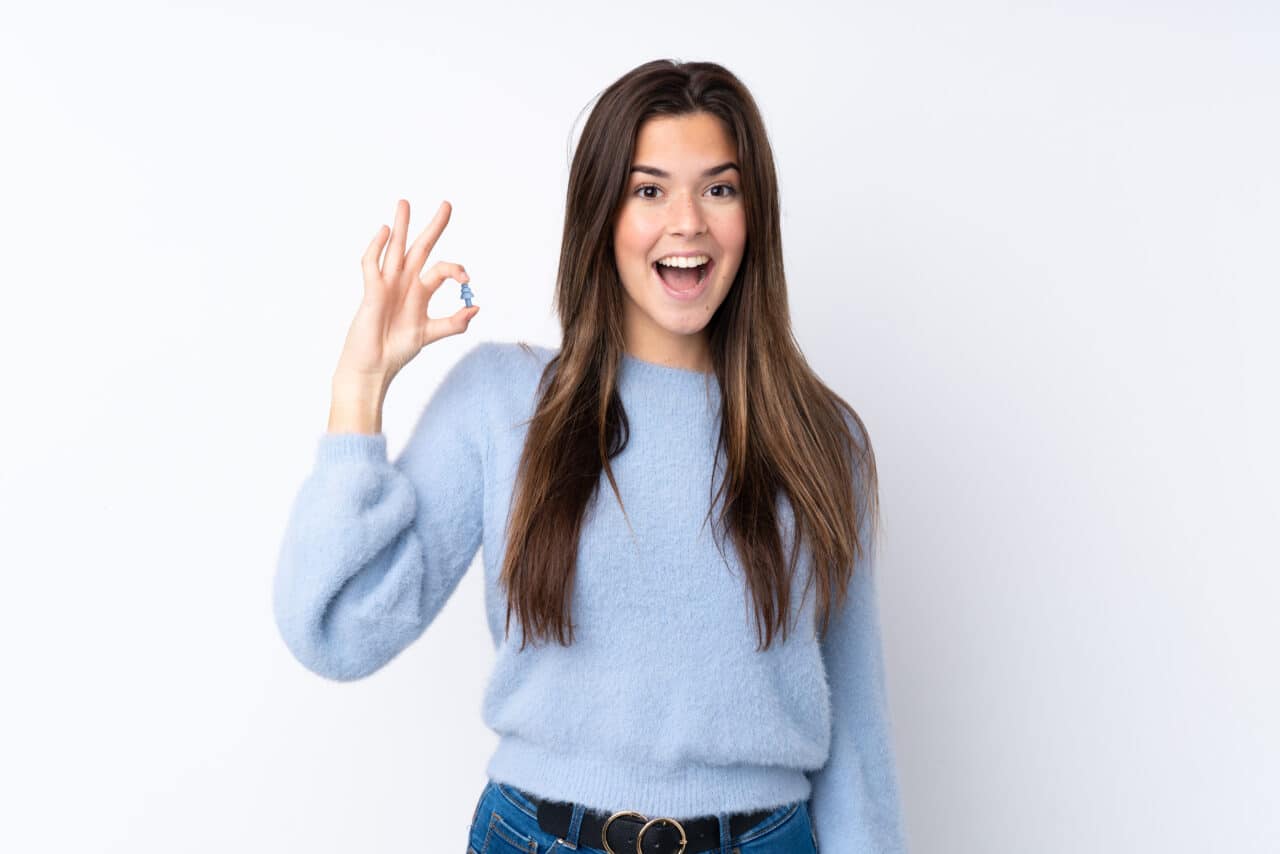
Repeated exposure to loud events causes cumulative damage to the tiny hair cells inside your inner ear. These cells do not grow back, which means every unprotected concert, festival, or stadium event adds to a total that your hearing carries for life. The good news is that the damage is largely preventable when you take the right steps before you walk through the venue doors.
What happens to your hearing when exposed to loud noise?
Your inner ear contains thousands of microscopic hair cells that convert sound vibrations into electrical signals your brain can interpret. When sound reaches a certain volume, these cells bend under the pressure. At moderate levels, they recover. At high levels, especially sustained ones, they get damaged or destroyed entirely.
The World Health Organization notes that repeated exposure to high sound levels damages both the hair cells and the nerve connections between your inner ear and your brain. Once those connections break down, hearing loss and tinnitus follow. What makes this particularly tricky is that the damage builds gradually. You may not notice anything is wrong until a significant portion of those cells is already gone.
There is also something researchers call hidden hearing loss. This is damage that does not show up on a standard hearing test but leaves you struggling to follow conversations in noisy rooms. It is more common than most people realize, and it tends to affect people who have had regular exposure to loud environments without protection.
How loud is too loud at a concert or festival?
The World Health Organization recommends that venues limit sound to no more than 100 dB(A) over any 15-minute period. That recommendation exists specifically to reduce risk at concerts, nightclubs, festivals, and bars. The challenge is that in the US, there is no federal regulation requiring venues to comply with any noise limit. That means concert and club-goers are routinely exposed to levels that exceed what any health authority would consider safe.
To put that in perspective, many US venues regularly hit 110 dB or higher. At that level, safe exposure time drops to just a few minutes before damage can start occurring. A typical concert or festival set runs for an hour or more, often much longer. The math is not in your favor if you are standing unprotected near the speakers.
The farther you stand from the sound source, the lower your exposure. But even at 150 feet from a racetrack, research has recorded average levels close to 101 dB, which already exceeds safe listening guidelines. At most music events, the crowd is considerably closer to the speakers than that.
Why does your hearing feel muffled after a loud event?
That muffled, cottony feeling you get after a loud concert is called a temporary threshold shift. Your hearing has been temporarily dulled because the hair cells in your inner ear are fatigued from the noise exposure. Most people also experience a ringing sound, known as tinnitus, that fades over the following hours or days.
The important thing to understand is that “temporary” does not mean “harmless.” Research shows that even when short-term symptoms fully resolve, progressive and irreversible injury to the inner ear can continue for months after the event. Your hearing might feel fine by the next morning, but the underlying damage has already occurred at a cellular level.
Repeated temporary threshold shifts are also a warning sign. Each time your hearing feels muffled after an event, you are getting a signal that your exposure level was high enough to cause stress to your auditory system. Over time, those episodes accumulate into permanent change.
Can hearing loss from loud events be reversed?
No. Hearing damage caused by excessive sound exposure is largely irreversible. There is currently no cure, only management tools such as hearing aids or cochlear implants. Those tools help people function better with the hearing they have left, but they do not restore what was lost.
This is one of the most important things to understand about noise-induced hearing loss: it is permanent, it is progressive, and it develops quietly. By the time most people notice a real change in their hearing, significant damage has already occurred. Hearing aids have improved dramatically over the years, but they cannot replicate the natural hearing abilities you had before the damage happened.
That is why prevention is so much more valuable than any treatment. Protecting your hearing before and during exposure is the only reliable strategy available to you.
What are the long-term effects of repeated noise exposure?
The long-term picture is sobering. Ears that are repeatedly exposed to high noise levels age faster than ears that are not. Research has confirmed that early noise exposure accelerates age-related hearing loss, meaning the cumulative impact of attending loud events regularly in your twenties and thirties can show up as significantly worse hearing in your fifties and sixties compared to someone who protected their ears.
Beyond hearing loss itself, long-term noise exposure is associated with persistent tinnitus, which is a chronic ringing or buzzing sound that never fully goes away. Tinnitus affects sleep, concentration, and quality of life in ways that are difficult to fully appreciate until you are living with it.
There is also the social dimension. People with noise-induced hearing loss often find it harder to follow conversations in group settings, which can lead to social withdrawal and frustration. The WHO estimates that over 430 million people worldwide already live with disabling hearing loss, and unsafe listening practices in recreational settings are a significant contributing factor.
How can you protect your hearing at loud events?
The most straightforward thing you can do is wear hearing protection every time you attend a loud event. This applies to EDM events, stadium concerts, live music festivals, and any other venue where amplified sound is the main attraction. Earplugs for loud events are the single most effective personal tool available to you, and modern options have come a long way from the foam plugs that make everything sound like you are underwater.
A few other practical steps make a real difference:
- Take breaks away from the loudest areas of the venue, especially near speakers
- Give your ears recovery time between events rather than attending back-to-back nights
- Stand farther from speaker stacks when possible without sacrificing too much of the experience
- Get your hearing tested regularly, especially if you attend events frequently
The type of earplug you choose matters more than most people think. Standard foam earplugs reduce volume indiscriminately, which is why music sounds muffled and distorted when you wear them. High-fidelity earplugs work differently. They use a filter to reduce sound evenly across frequencies, so the music still sounds like music, just at a safer volume. You can hold a conversation, hear the bass clearly, and still protect your hearing without sacrificing the experience you paid for.
That is exactly what we designed the Shush Acoustic earplugs to do. At the center of every pair is a ceramic Venturi-shaped filter, the only one of its kind on the market, positioned inside the earplug rather than at the tip. This internal placement means you are protected even if the earplug only partially fits your ear canal. The ceramic material conducts sound more cleanly than plastic alternatives, so the music stays clear and balanced rather than muffled. With an SNR of 23 dB and a hypoallergenic synthetic rubber construction that lasts at least a full year of regular use, they are built for people who take both their hearing and their music seriously. Earplugs for stadium events, EDM nights, or any live music experience should never feel like a compromise, and with the right pair, they do not have to be.
Frequently Asked Questions
How do I know if the earplugs I'm using are actually providing enough protection at a concert?
Look for earplugs with a published SNR (Single Number Rating) or NRR (Noise Reduction Rating) value — the higher the number, the more protection they provide. For concerts and festivals regularly hitting 110 dB or more, you want an SNR of at least 20 dB to bring your exposure down to a safer range. If you’re unsure whether your current pair is doing enough, a sound level meter app on your phone can give you a rough idea of the decibel levels you’re dealing with at the venue, helping you gauge whether your protection is adequate.
Will high-fidelity earplugs really let me enjoy the music, or will everything still sound off?
High-fidelity earplugs are specifically engineered to reduce volume evenly across the frequency spectrum, which means the tonal balance of the music stays largely intact — you hear the same mix, just quieter. Foam earplugs, by contrast, block high frequencies more than low ones, which is why music sounds muddy and muffled when you wear them. Most people who switch to high-fidelity earplugs are genuinely surprised by how natural the music sounds, and many say they actually enjoy shows more because they’re not walking away with ringing ears or sensory fatigue.
How soon after a loud event should I be concerned if the ringing in my ears hasn't stopped?
Tinnitus that fades within a few hours to a day after an event is generally a sign of temporary stress to your auditory system, though as the post explains, that doesn’t mean no damage occurred. If the ringing persists beyond 24 to 48 hours, or if you notice any muffled hearing that isn’t resolving, it’s worth scheduling an appointment with an audiologist as soon as possible. Catching and documenting early changes in your hearing is important, since noise-induced hearing loss is cumulative and progressive — the sooner you have a baseline on file, the better equipped you are to track any changes over time.
I only go to a handful of concerts a year — is hearing protection still necessary for me?
Yes, and here’s why: there is no known safe threshold of unprotected exposure to sounds above 100 dB, and the damage is cumulative across your entire lifetime, not just within a single year. Even a few unprotected events annually add to a total your ears carry permanently, and that total interacts with all other sources of noise exposure in your life — traffic, headphones, workplaces, and more. Think of it less like a frequency question and more like a seatbelt question: you don’t skip the seatbelt just because you’re only making a short trip.
What's the best way to get started with hearing protection if I've never worn earplugs to a show before?
The easiest first step is to pick up a pair of high-fidelity earplugs before your next event and wear them from the moment you enter the venue — not just when it gets uncomfortably loud. Many first-timers make the mistake of waiting until their ears already feel stressed before putting them in, but by that point exposure has already occurred. Give yourself one full show with them in from start to finish, and pay attention to how much clearer and less fatiguing the experience feels compared to going unprotected. Most people don’t go back after that first experience.
Are there certain spots in a venue that are significantly safer for my hearing than others?
Yes — your distance from speaker stacks is one of the biggest variables you can actually control at a live event. Sound intensity drops significantly as you move away from the source, so positioning yourself toward the back of the floor, away from side-fill speakers and front-of-stage speaker arrays, can meaningfully reduce your exposure level. That said, even at the back of many large venues, levels can still exceed safe listening thresholds, so distance alone isn’t a substitute for wearing hearing protection — it’s a useful complement to it.
Can I get my hearing tested even if I don't currently notice any problems?
Absolutely, and this is actually the best time to do it. Getting a baseline audiogram when your hearing feels normal gives you a reference point to compare against in future tests, which is how early changes get caught before they become significant losses. Many audiologists offer standard hearing evaluations, and some ENT clinics and university audiology programs offer them at low or no cost. If you attend loud events regularly, establishing that baseline and retesting every year or two is one of the smartest proactive steps you can take for your long-term hearing health.
Related Articles
- 7 most comfortable earplugs for all-day wear
- What earplugs are best for occasional power tool use?
- Should I be worried if my ears ring every day after work?
- Do reusable earplugs feel better than foam for long shifts?
- What is hearing protection compliance?
- Can better earplugs improve hearing protection compliance?
- Can one night of clubbing cause permanent hearing damage?
- Should teenagers wear ear protection when going to nightclubs?
- Do earplugs for live music change how a band actually sounds?
- Can earplugs for music protection reduce listening fatigue during long shows?
- How do bartenders and club staff protect their hearing at work?
- Can you really prevent hearing damage at concerts without losing sound quality?
- Do earplugs affect your ability to communicate with people at loud events?
- How do you store concert earplugs without losing or damaging them?
- Should you wear earplugs to every concert you attend?