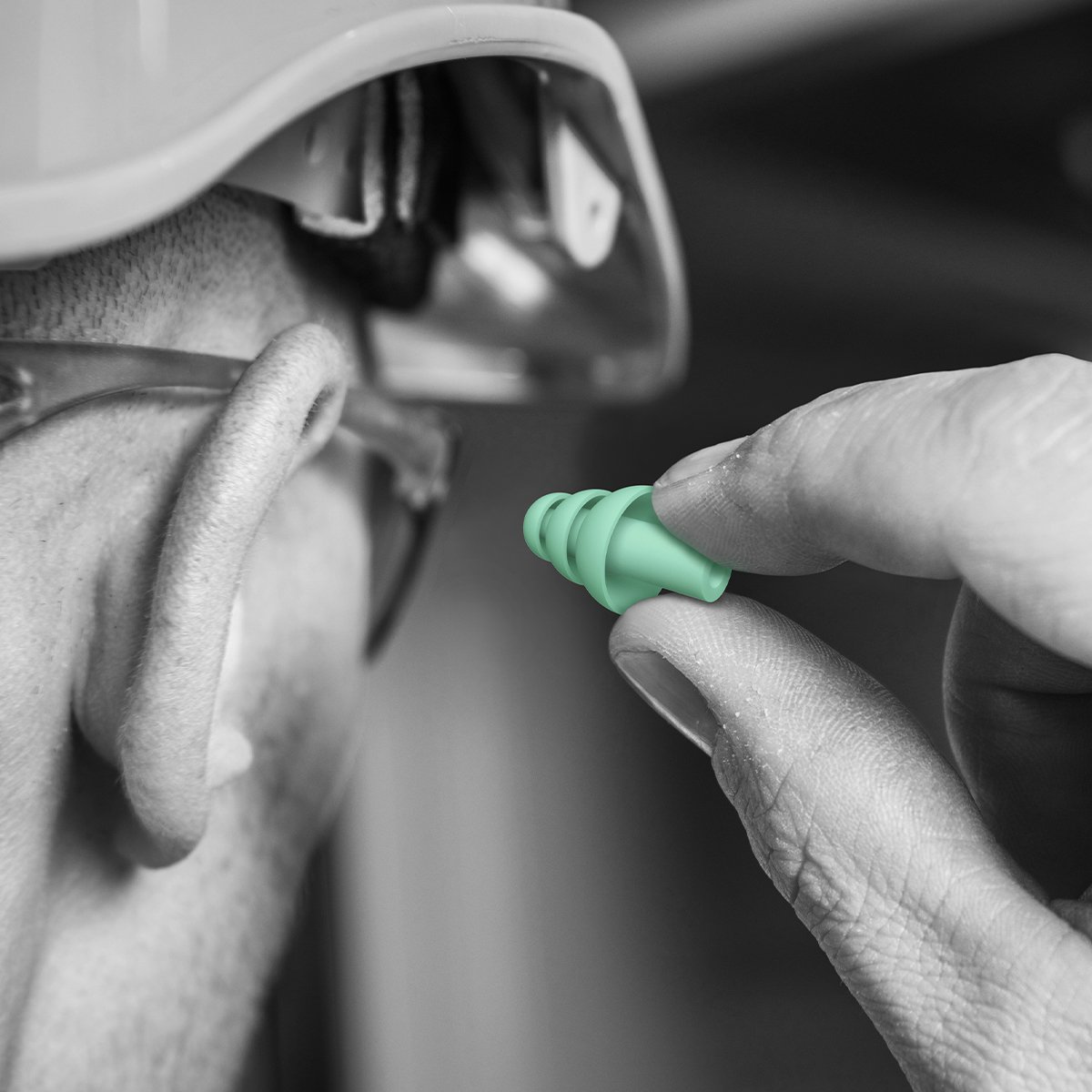
Yes, hearing damage from power tools absolutely builds up over time. Each exposure to loud tool noise causes small amounts of harm to the hair cells inside your inner ear, and those cells do not grow back. Over months and years of regular use, that accumulated damage leads to permanent hearing loss, even if no single session felt particularly harmful.
This is what makes tool noise so easy to underestimate. The damage is gradual and painless, which means most people only notice it when the loss is already significant. The sections below walk through the key questions around power tool noise, hearing risk, and what you can do to protect yourself.
How loud are common power tools, exactly?
Most common power tools produce sound levels between 85 and 110 decibels, which puts them firmly in the range where hearing damage can occur. A circular saw typically runs around 100 to 105 dB, an angle grinder around 100 dB, a belt sander around 93 dB, and even a standard electric drill can hit 95 dB during use. These are not fringe cases – they are everyday tools in millions of garages and job sites.
To put those numbers in context, normal conversation sits around 60 dB, and a lawnmower runs at roughly 85 to 90 dB. The decibel scale is logarithmic, which means a 10 dB increase represents roughly ten times more sound energy. A circular saw at 100 dB is not just a little louder than a lawnmower – it is dramatically more intense. That intensity is what makes power tool noise dangerous even during short sessions.
How does repeated noise exposure damage your hearing?
Repeated noise exposure damages hearing by progressively destroying the hair cells in your cochlea, the fluid-filled structure in your inner ear responsible for converting sound vibrations into nerve signals. These hair cells are finite. Once they are gone, your auditory system has no way to replace them, and the frequencies they were responsible for become harder or impossible to hear.
A single loud exposure can cause a temporary threshold shift, where sounds seem muffled for hours afterward. That muffled feeling is your auditory system under stress. With enough repetition, temporary shifts become permanent. The damage tends to start at higher frequencies, which is why people with noise-induced hearing loss often struggle to follow conversations in noisy environments before they notice any obvious hearing problem at all.
What makes this particularly relevant for tool users is that the damage accumulates even when exposures are spread out over days or weeks. Your ears do not fully reset between sessions. Each time you run a sander or a saw without protection, you are adding to a running total that your hearing system cannot undo.
What are the first signs that tool noise has affected your hearing?
The first signs that tool noise has affected your hearing are often subtle and easy to dismiss. They include difficulty understanding speech in noisy environments, a persistent ringing or buzzing in the ears known as tinnitus, sounds feeling slightly muffled after a work session, and needing to turn up the volume on your phone or television more than you used to.
Tinnitus is one of the earliest warning signs and one of the most overlooked. Many people assume the ringing after a loud session is temporary and harmless. Sometimes it is. But recurring tinnitus after tool use is a signal that your hair cells are under repeated stress, and over time that stress becomes structural damage.
Another early indicator is difficulty distinguishing between similar-sounding words, especially consonants like “s,” “f,” and “th.” High-frequency hearing loss, which tool noise tends to cause first, makes those sounds harder to separate. If conversations are starting to feel unclear even though people are speaking at normal volume, that is worth taking seriously.
How much tool use is too much before hearing is at risk?
Hearing is at risk when sound exposure exceeds 85 dB for more than eight hours, but that threshold drops sharply as volume increases. At 91 dB, the safe exposure time is cut to two hours. At 97 dB, it is thirty minutes. At 103 dB, it is under eight minutes. Most power tools operate well above 90 dB, which means even a focused hour of work without hearing protection can push you into damaging territory.
These thresholds are based on occupational health guidelines used across the US and internationally, and they represent the point where the risk of permanent damage begins, not the point where damage is guaranteed. Individual sensitivity varies, and some people experience damage at lower levels or shorter durations. The safe assumption is that any unprotected exposure above 85 dB is adding to your cumulative risk.
For regular DIYers or tradespeople who use tools multiple days per week, the math adds up quickly. A weekend project involving two to three hours of saw or grinder use, repeated every few weeks over years, represents a meaningful and preventable hearing risk.
Can hearing lost from tool noise be recovered?
Hearing lost from tool noise cannot be recovered. Noise-induced hearing loss is permanent because it results from the destruction of hair cells in the cochlea, and the human auditory system cannot regenerate those cells. Once a frequency range is damaged, that damage is irreversible with current medical treatment.
Hearing aids can amplify remaining hearing and help compensate for the loss, but they do not restore what was there before. There is ongoing research into hair cell regeneration, but no treatment exists today that can reverse noise-induced hearing loss in humans.
This is the most important reason to treat prevention seriously. The window to protect your hearing is before the damage happens, not after. Temporary hearing changes, like muffling or ringing after a session, are a signal that you are close to the threshold where permanent damage occurs. Treating those signals as warnings rather than inconveniences is what keeps cumulative harm from becoming irreversible loss.
What type of hearing protection works best around power tools?
The hearing protection that works best around power tools combines adequate noise reduction with enough sound clarity to stay aware of your environment and communicate safely. Earplugs with a solid attenuation rating, ideally an SNR of 20 dB or higher, are a practical choice because they fit under safety glasses and helmets without interference, and high-quality options let you hear speech and ambient sounds without removing them between tasks.
Foam earplugs offer basic protection but muffle sound significantly, making it harder to hear warnings or conversations on a job site. Standard silicone earplugs are similarly limited. The difference becomes clear when you use earplugs built around a high-fidelity filter rather than just bulk material – sound stays balanced and natural rather than muffled, which means you are more likely to keep them in consistently.
Consistency is the real variable in hearing protection. Protection you remove every few minutes because it is uncomfortable or because you cannot hear your colleagues is not doing its job. The best earplug is one you actually wear for the full duration of your work session.
Our Shush Worker earplugs are built specifically for this kind of environment. With an SNR of 23 dB, they reduce hazardous tool and machinery noise to safe levels while keeping sound clear enough for normal communication. The ceramic filter inside each earplug preserves sound quality rather than just blocking it, and the hypoallergenic synthetic rubber construction is built for all-day comfort and at least a year of daily reuse. They are independently certified to EU, US, Canadian, and Australian standards, so you know the protection rating is real and verified.
Frequently Asked Questions
Should I wear hearing protection even for short tasks like drilling a single hole or making one cut?
Yes, even brief exposures matter when the tool is operating above 90 dB. A single cut with a circular saw at 100 dB can expose your ears to damaging sound levels within seconds, and those short bursts add to your cumulative total over time. The habit of reaching for your earplugs before you start the tool — not after it’s already running — is one of the most effective things you can do to protect your long-term hearing.
Can I use regular foam earplugs from the drugstore, or do I need something more specialized?
Basic foam earplugs do provide some protection, but they come with real trade-offs in a workshop or job site setting. They muffle all sound indiscriminately, making it hard to hear coworkers, warnings, or changes in tool behavior that might signal a problem. High-fidelity earplugs with a proper acoustic filter offer similar or better noise reduction while preserving sound clarity, which means you’re more likely to keep them in consistently — and consistent wear is what actually prevents damage.
What's the best way to get into the habit of wearing hearing protection every time I use tools?
The most effective approach is to make your earplugs part of your pre-task setup, not an afterthought. Store them with your safety glasses or right next to the tools you use most often so they’re impossible to overlook. Some people find it helpful to treat putting on hearing protection the same way they treat putting on a seatbelt — a non-negotiable step before anything else happens, regardless of how quick the job seems.
I already have some ringing in my ears after tool use. Is it too late to bother protecting my hearing?
It is absolutely not too late. While any hearing already lost cannot be restored, consistent protection from this point forward can prevent further damage and preserve the hearing you still have. Recurring tinnitus after tool use is a clear signal that your ears are under real stress, and that stress is cumulative — stopping or reducing it now makes a meaningful difference to where your hearing is in five or ten years. See an audiologist if the ringing is frequent or persistent, as they can assess your current hearing baseline and give you a clearer picture of where you stand.
Do noise-canceling headphones or regular music headphones count as hearing protection?
No, and this is one of the most common misconceptions in workshop safety. Noise-canceling headphones are designed for environments like offices or airplanes, not high-decibel power tools, and they don’t carry verified industrial noise reduction ratings. Listening to music through headphones while using tools can actually make things worse, since people tend to raise the volume to compete with the tool noise, adding another layer of sound exposure on top of the hazard they’re trying to block. Only hearing protection with a certified NRR or SNR rating is appropriate for power tool use.
Is one ear more at risk than the other depending on how I hold or use a tool?
Yes, asymmetric hearing loss is actually quite common among tool users, particularly for those who consistently hold a tool closer to one side of the body or work in a fixed position relative to a loud machine. The ear closer to the noise source receives higher sound pressure and accumulates damage faster. Wearing protection in both ears equally is important, but if you’ve noticed differences in how clearly you hear on each side, that’s worth mentioning to an audiologist during a hearing evaluation.
How often should I get my hearing checked if I regularly use power tools?
If you use power tools regularly — whether as a professional tradesperson or an active DIYer — a baseline hearing test is a smart first step so you have a reference point to compare against over time. After that, an annual or biennial hearing evaluation is a reasonable cadence, similar to how you’d approach regular eye exams. Early detection of high-frequency hearing loss gives you the best chance to adjust your habits and protection before the damage progresses into ranges that affect everyday communication.
Related Articles
- When should you put in earplugs at a concert?
- What small gifts can make a big difference?
- How loud are power tools?
- What causes that muffled feeling after a noisy shift?
- Is ear ringing after a loud shift normal?
- Can I still hear colleagues while wearing earplugs in a factory?
- 4 most common reasons workers don't comply with hearing protection rules
- What is hearing protection compliance?
- Why do my earplugs keep falling out at work?
- Can wearing earplugs at concerts reduce tinnitus risk?
- What is noise-induced hearing loss and can clubbing cause it?
- What causes hearing loss at loud concerts?
- How do sound engineers and event crew protect their hearing at stadium shows?
- How does standing near speakers at a stadium concert affect hearing damage risk?
- How do you store concert earplugs without losing or damaging them?