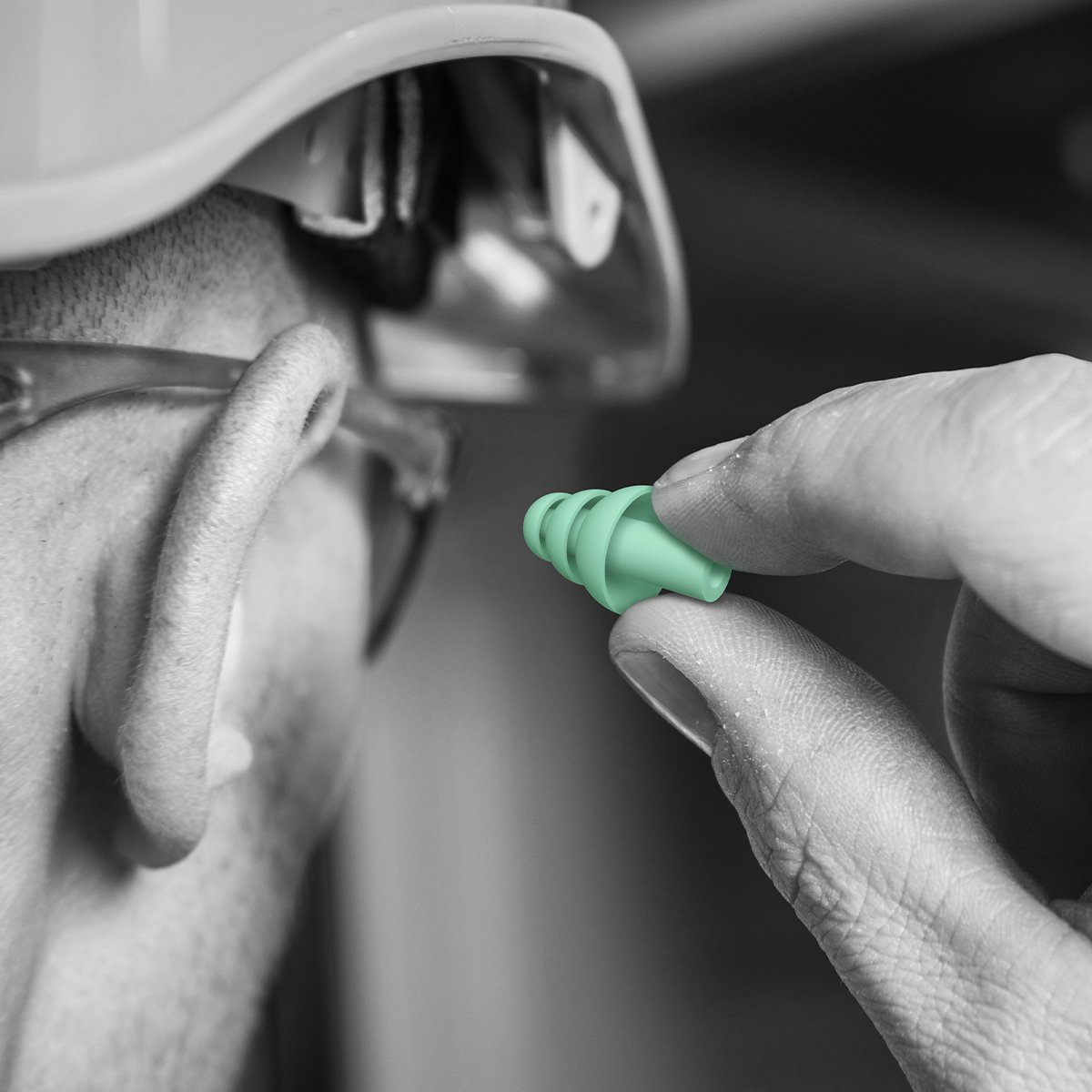
Yes, noise fatigue is increasingly recognized as a legitimate occupational health concern. While it does not yet have the same formal regulatory status as noise-induced hearing loss in every country, major occupational health bodies acknowledge that prolonged exposure to workplace noise causes physical and cognitive exhaustion that goes well beyond hearing damage alone. Workers in loud environments are at real risk, and the effects are measurable. Below, we break down what noise fatigue actually is, who it affects most, and what you can do about it.
What does noise fatigue actually do to your body?
Noise fatigue is the physical and mental exhaustion that builds up when your body is forced to process loud or persistent sound over an extended period. Your nervous system treats unwanted noise as a low-level threat, keeping you in a state of mild stress arousal throughout the workday. Over time, that constant activation drains your energy, slows your reaction time, and leaves you feeling wiped out even when the physical demands of your job are not especially intense.
The physiological chain reaction starts with your auditory system working overtime to filter and interpret sound. Your brain allocates significant cognitive resources to this process, pulling attention and energy away from other tasks. At the same time, elevated noise triggers the release of stress hormones like cortisol and adrenaline. In short bursts, that response is harmless. Sustained across an eight-hour shift, it contributes to muscle tension, elevated heart rate, disrupted sleep patterns, and reduced immune function. Workers often describe the feeling as a heavy tiredness that a good night’s sleep barely fixes.
Is noise fatigue officially recognized by occupational health bodies?
Noise fatigue is recognized as a real occupational health issue by leading bodies including the National Institute for Occupational Safety and Health (NIOSH) and the World Health Organization (WHO). These organizations acknowledge that workplace noise causes harm beyond the inner ear, including increased stress, cardiovascular strain, and reduced cognitive performance. However, formal regulations in most countries still focus primarily on noise-induced hearing loss rather than fatigue as a standalone condition.
In the United States, OSHA sets permissible noise exposure limits to prevent hearing damage, but there is no separate federal standard specifically targeting noise fatigue. That said, occupational health research consistently links chronic noise exposure to broader health outcomes, and many workplace wellness frameworks now include noise management as part of employee health programs. Recognition is growing, even if the regulatory framework has not fully caught up with the science.
What industries and jobs carry the highest noise fatigue risk?
The industries with the highest risk for occupational noise and fatigue are manufacturing, construction, mining, transportation, and agriculture. Workers in these sectors are regularly exposed to sustained high-decibel noise from heavy machinery, power tools, engines, and industrial equipment. Open-plan offices and call centers also carry meaningful risk, particularly for cognitive fatigue, even when noise levels fall below the thresholds associated with hearing damage.
Within high-risk industries, certain roles stand out:
- Assembly line workers face continuous machine noise throughout full shifts with limited quiet breaks
- Construction workers operate power tools and work near heavy equipment, often for the entire workday
- Truck and bus drivers experience prolonged engine and road noise that accumulates over long routes
- Airport ground crew work in environments where jet noise regularly exceeds safe exposure limits
- Factory supervisors spend extended time on loud production floors without always using hearing protection consistently
What these roles share is not just high noise levels but sustained exposure with few natural breaks. The cumulative load across a shift is what drives fatigue, not just peak volume.
How is noise fatigue different from noise-induced hearing loss?
Noise fatigue and noise-induced hearing loss are related but distinct conditions. Noise-induced hearing loss is a permanent structural injury to the hair cells of the inner ear caused by excessive sound pressure. Noise fatigue, by contrast, is a systemic response involving the nervous system, hormonal regulation, and cognitive load. Fatigue can occur even at noise levels that do not directly damage hearing, and it can affect workers who use hearing protection correctly.
Another key difference is reversibility. Early-stage noise fatigue typically resolves with adequate rest and reduced noise exposure. Noise-induced hearing loss does not. That said, the two conditions often co-exist and reinforce each other. Workers who develop hearing loss must work harder to process speech and sound, which accelerates cognitive fatigue. Treating them as entirely separate problems misses how closely they interact in real workplace conditions.
What are the recognized symptoms of noise fatigue at work?
The recognized symptoms of noise fatigue in occupational settings include persistent tiredness that does not improve with normal rest, difficulty concentrating, increased irritability, headaches, and a reduced ability to process information accurately. Workers may also notice that their reaction times slow down toward the end of a shift and that they make more small errors as the day progresses.
Some symptoms are easy to misattribute to other causes:
- Mental fog that sets in mid-shift and makes decision-making feel harder than usual
- Physical tension in the neck, shoulders, and jaw from sustained stress activation
- Heightened sensitivity to sound after work, where normal household noise feels disproportionately irritating
- Sleep disruption despite physical tiredness, driven by residual cortisol elevation
- Reduced motivation and a general sense of being depleted that builds across the working week
If these symptoms consistently appear on workdays and ease on rest days, noise exposure is likely a contributing factor worth addressing.
What hearing protection actually reduces noise fatigue on the job?
Hearing protection reduces noise fatigue most effectively when it brings sound to a safe and comfortable level without distorting what workers need to hear. Foam earplugs and basic disposable options block a broad range of frequencies indiscriminately, which can actually increase cognitive strain because workers struggle to understand speech or detect important audio cues and compensate by removing their protection or straining harder to listen. High-fidelity earplugs that preserve sound clarity while reducing volume address this problem directly.
Our Shush Worker earplugs are built specifically for this kind of environment. With an SNR of 23 dB, they reduce hazardous industrial noise to safe levels while keeping sound clear and natural, so workers can still communicate with colleagues without taking them out. The internal ceramic filter, a design unique to Shush, prevents sound distortion that cheaper filters cause, which means your auditory system is not fighting to interpret what it hears. Made from durable hypoallergenic synthetic rubber, they are comfortable enough for a full shift and built to last at least 365 days of regular use, making them a genuinely practical long-term investment for anyone working in a loud environment.
Beyond the product itself, reducing noise fatigue at work also means advocating for quieter machinery where possible, rotating workers away from the noisiest areas during shifts, and building in genuine quiet breaks. Protection and environment work together. The best earplug cannot fully compensate for a workplace where noise management is treated as an afterthought.
Frequently Asked Questions
How do I know if my workplace noise levels are high enough to cause fatigue even if I'm not experiencing hearing loss?
You don’t need to reach hearing-damage thresholds to experience noise fatigue. If your workplace consistently measures above 70 dB — roughly the level of a busy restaurant — sustained exposure can trigger the stress hormone response and cognitive load that drives fatigue. A simple way to check is to use a free sound level meter app on your smartphone for a rough baseline reading, or request a formal noise assessment from your employer or an occupational health professional. If your symptoms consistently improve on days off and return on workdays, that pattern alone is a strong indicator that noise is a contributing factor.
Can noise fatigue cause long-term health problems if it goes unaddressed?
Yes, chronic noise fatigue that is never properly managed can contribute to longer-term health issues beyond day-to-day exhaustion. Research links sustained occupational noise exposure to elevated cardiovascular risk, including higher rates of hypertension and heart disease, as well as chronic sleep disorders and anxiety. The repeated cortisol spikes that drive noise fatigue are not harmless over years of daily exposure. Addressing it early — through better hearing protection, workplace noise controls, and adequate recovery time — is far more effective than waiting until symptoms become persistent or severe.
What's the best way to talk to my employer about noise fatigue if they don't take it seriously?
Frame the conversation around productivity, safety, and liability rather than personal comfort, since those angles tend to get more traction with management. Come prepared with specific data: point to NIOSH and WHO guidelines, reference OSHA’s permissible noise exposure standards, and document your symptoms and the conditions that trigger them. If your employer has a health and safety representative or an HR department, escalating through those channels with written records gives your concerns more formal weight. In workplaces with a union, your representative can also help push for a proper noise risk assessment.
Are there things I can do outside of work to recover from noise fatigue more effectively?
Recovery from noise fatigue improves significantly when you actively reduce your total daily noise load, not just your work exposure. In the hours after your shift, prioritize genuinely quiet environments — avoid loud music, crowded bars, or high-volume TV as a wind-down habit, since your auditory system needs low-stimulation time to recover. Consistent, quality sleep is the most powerful recovery tool available, so protecting your sleep environment with blackout curtains, a white noise machine set at a low level, or earplugs can make a measurable difference. Magnesium supplementation has some emerging research support for reducing noise-related stress responses, though you should discuss any supplementation with a healthcare provider.
Do high-fidelity earplugs really make a noticeable difference compared to standard foam earplugs for fatigue specifically?
For noise fatigue specifically, the difference between high-fidelity and standard foam earplugs can be substantial. Standard foam plugs attenuate high frequencies much more aggressively than low frequencies, which muffles and distorts sound in a way that forces your brain to work harder to interpret speech and environmental cues — often leading workers to remove their protection entirely. High-fidelity earplugs use acoustic filters designed to reduce volume more evenly across frequencies, keeping sound natural and intelligible. That reduction in cognitive strain is exactly what makes them more effective for fatigue, not just hearing protection.
Can noise fatigue affect workers in offices or remote work settings, or is it only a concern in industrial environments?
Noise fatigue is absolutely a concern in office and remote work settings, even though the risk profile looks different from industrial environments. Open-plan offices with overlapping conversations, keyboard noise, and HVAC hum consistently register as sources of cognitive fatigue in occupational research, particularly for roles requiring sustained concentration. Remote workers can also be affected by household noise, neighborhood sounds, or the cognitive effort of filtering background noise during back-to-back video calls. The mechanism is the same — your brain is continuously allocating resources to process unwanted sound — even if the decibel levels are lower than a factory floor.
How long does it typically take to recover from noise fatigue after reducing exposure?
For most workers, acute noise fatigue — the tiredness built up over a single shift or a short period — resolves within one to two days of reduced noise exposure and adequate sleep. However, if noise fatigue has been accumulating unchecked over weeks or months, recovery can take considerably longer, sometimes several weeks of consistently lower exposure before energy levels and concentration return to baseline. The key variable is how early you intervene: the sooner you address both your protection and your environment, the faster and more complete your recovery tends to be. If symptoms persist even after meaningful reductions in noise exposure, it’s worth consulting an occupational health physician to rule out other contributing conditions.
Related Articles
- Can tinnitus from work noise be permanent?
- Are reusable earplugs worth it for home use?
- Why am I so tired after a loud shift?
- What are the most comfortable earplugs for long shifts?
- At what point does workplace noise become dangerous?
- Can noise at work cause more than just hearing loss?
- Does loud noise at work affect concentration?
- What is hearing protection compliance?
- Are reusable concert earplugs better than disposable foam ones?
- Can earplugs for nightclubs help people with sensory sensitivities enjoy going out?
- Can wearing earplugs at a loud bar reduce next-day fatigue and headaches?
- How do sound engineers and event crew protect their hearing at stadium shows?
- Do earplugs change how electronic music sounds at a live EDM event?
- What are the best types of hearing protection for festival crowds?
- Do earplugs affect how you experience bass and low-frequency sound at concerts?