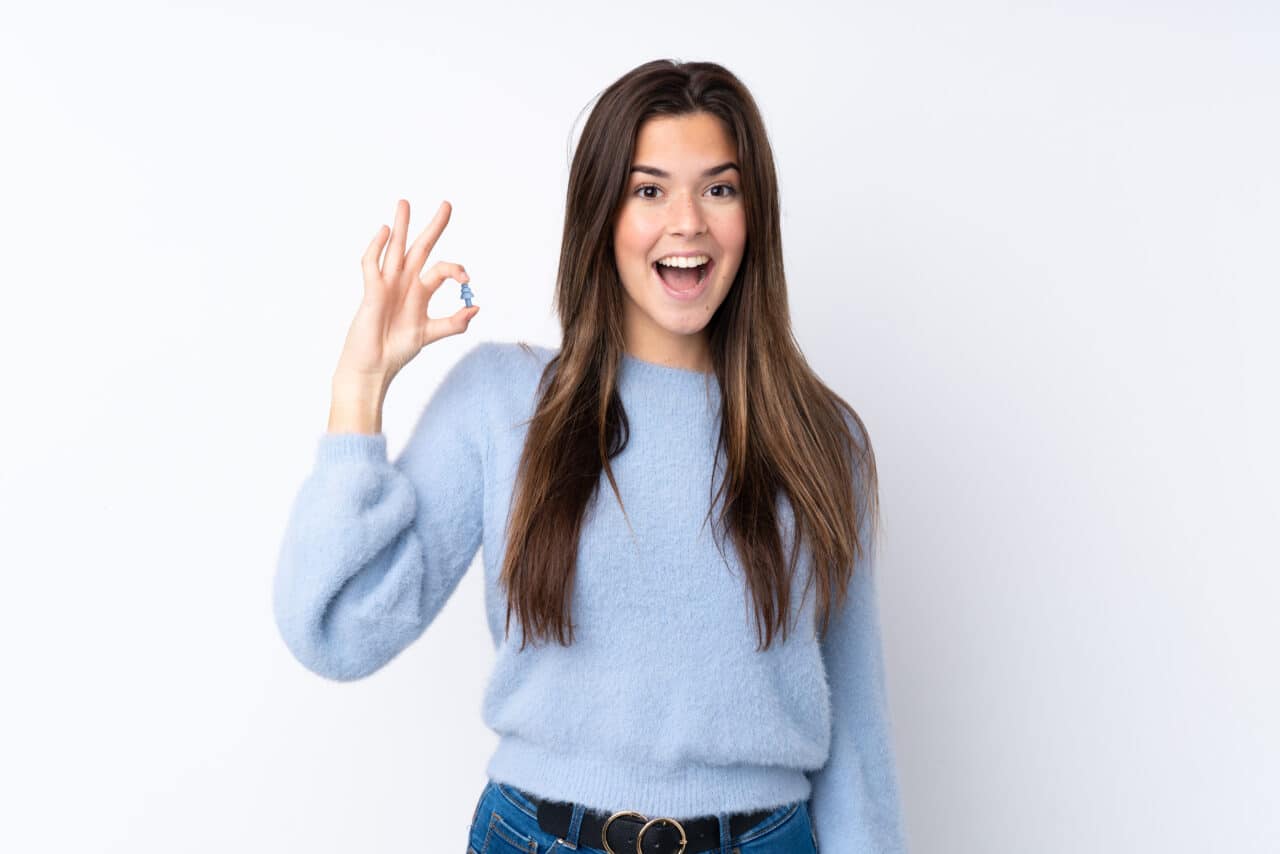
Musicians protect their hearing at live shows using earplugs, most commonly high-fidelity musician earplugs that reduce volume without muffling the sound. Unlike foam earplugs, these are designed to keep the full frequency range intact so performers can still hear themselves, their bandmates, and the mix clearly. In-ear monitors (IEMs) are another popular option, particularly for professional touring musicians who need a personal stage mix delivered directly to their ears. For anyone regularly playing or attending live music, some form of hearing protection is not optional – it is genuinely urgent.
Why do musicians need hearing protection at live shows?
Live music is loud. That is part of what makes it exciting. But the same volume that gives a performance its energy is actively damaging the ears of everyone on and near the stage. Concert venues in the US regularly exceed 110 decibels, and at that level, hearing damage can begin in a matter of minutes. The CDC notes that at 105 to 110 dB, a listener has roughly three minutes of safe exposure before risking permanent harm.
Musicians face a compounded version of this problem. They are not just attending a show for a couple of hours. They are rehearsing, soundchecking, performing, and often doing it all over again the next night. That repeated, cumulative exposure is what causes noise-induced hearing loss (NIHL), and it builds up quietly over time. By the time it becomes noticeable, the damage is already done.
The inner ear contains tiny hair cells that convert sound vibrations into electrical signals your brain interprets as sound. Loud noise physically damages those cells, and unlike many other cells in the body, they do not regenerate. The World Health Organization confirms that hearing damage from excessive sound exposure is largely irreversible. There is no surgery or medication that restores what is lost. That makes prevention the only real strategy.
Tinnitus, the persistent ringing or buzzing in the ears, is one of the most common early signs of damage. Many musicians describe it as a constant companion they have learned to live with. But living with it means accepting a condition that affects sleep, concentration, and the ability to enjoy the very thing that defines their career.
What types of hearing protection do musicians use?
Musicians generally have a few options when it comes to protecting their hearing, and the right choice depends on their budget, role, and how much sound isolation they need.
Foam earplugs
These are the cheapest and most widely available option. They reduce sound significantly, but they do it by blocking frequencies unevenly, making music sound muffled and distant. For a musician who needs to hear pitch, timing, and tone clearly, foam earplugs create more problems than they solve. Most professional musicians avoid them for performance use.
High-fidelity musician earplugs
These are designed specifically for music environments. They use a filter to reduce volume more evenly across frequencies, so the sound stays clear and balanced rather than muffled. They come in universal-fit and custom-molded versions. Universal-fit options are far more accessible and affordable, while custom-molded earplugs are made from impressions of the individual ear canal and offer a precise fit for long-term professional use.
In-ear monitors (IEMs)
IEMs are earphones that deliver a personal mix directly to the musician’s ears, replacing the traditional floor monitor wedges that blast sound back at performers from the stage. Because the musician controls their own mix at a manageable volume, IEMs reduce overall sound exposure significantly. They are standard for touring professionals but require audio infrastructure that is not always available at smaller venues.
What’s the difference between regular earplugs and musician earplugs?
The core difference comes down to how each type reduces sound. Regular earplugs, including most foam and basic silicone options, work by physically blocking the ear canal. This reduces sound, but it does not do so evenly. Low frequencies pass through more easily than high frequencies, which is why everything sounds muddy and muffled when you wear them at a concert. You lose the clarity, the detail, and the balance of the music.
Musician earplugs use an acoustic filter to attenuate sound more uniformly across the frequency spectrum. The goal is to lower the overall volume while keeping the tonal balance of the music intact. You hear the same song, just at a safer level. This matters enormously for anyone who needs to stay musically engaged while protected, whether that is a guitarist listening for pitch, a drummer keeping time, or a sound engineer making mix decisions.
The quality of the filter determines how well this works in practice. Lower-quality filters can still introduce some imbalance, while well-engineered filters deliver a much more natural and transparent listening experience.
How do high-fidelity earplugs actually work?
High-fidelity earplugs work by using a precisely tuned filter to control how sound enters the ear canal. Instead of simply blocking sound with dense material, the filter creates a controlled acoustic path that allows sound waves to pass through at a reduced pressure level.
The shape of the filter matters a great deal. A venturi-shaped filter, which narrows in the middle like a funnel, helps maintain the smooth flow of sound waves without breaking them up. When sound waves stay intact as they pass through the filter, the resulting sound on the other side remains clear and undistorted, just quieter. Filters made from materials with good sound conductivity, such as ceramic, perform better in this regard than plastic alternatives because they introduce less coloration to the sound.
Where the filter sits inside the earplug also affects performance. A filter positioned deeper inside the earplug body rather than at the tip of the stem means the user is protected even if the earplug does not achieve deep insertion into the ear canal. This is particularly useful for people with smaller ear canals who struggle to get a full seal with standard designs.
Should musicians wear earplugs during rehearsals too?
Yes, and this is a point that often gets overlooked. Rehearsals can be just as loud as performances, sometimes louder, because the acoustics of a rehearsal space are rarely optimized the way a venue is. A band practicing in a garage, a basement, or a small studio is often generating the same decibel levels as a live show, but without any of the space to dissipate the sound.
The cumulative nature of noise-induced hearing loss is what makes rehearsal exposure so significant. It is not one loud concert that causes lasting damage for most musicians. It is the hours and hours of accumulated exposure over weeks, months, and years. Wearing hearing protection consistently during rehearsals reduces the total dose of noise the ears absorb over time, which is exactly what slows the progression of damage.
Getting into the habit of wearing earplugs at rehearsal also has a practical benefit: it normalizes the experience. Musicians who only wear protection at shows often find the adjustment jarring. Wearing them regularly means your ears and brain adapt to monitoring your playing through filtered sound, which makes the whole experience feel more natural when it counts.
What should musicians look for when choosing earplugs?
Choosing the right earplugs for live music comes down to a few practical factors. Here is what to pay attention to:
- Sound quality: The earplug should reduce volume without distorting the music. Look for products specifically designed for music environments and described as high-fidelity. If the sound becomes muffled or unbalanced, the filter is not doing its job well enough for musical use.
- Attenuation level: Check the SNR (Single Number Rating) or NRR (Noise Reduction Rating) listed on the product. For concert and festival environments that regularly hit 110 dB or above, you want meaningful reduction, typically in the range of 20 to 25 dB, to bring exposure down to a safer level.
- Fit and comfort: Earplugs that are uncomfortable get left in the bag. Look for a design with multiple size options or a flexible material that adapts to the ear canal. A secure fit also affects how well the earplug performs, since a poor seal reduces attenuation.
- Durability: If you are wearing earplugs regularly, disposable foam options become expensive and wasteful quickly. Reusable earplugs made from robust materials offer a better cost-per-use and hold up through repeated cleaning and use.
- Filter quality: Not all filters are equal. Ceramic filters outperform plastic ones in terms of sound conductivity, and the position of the filter within the earplug affects how well it protects users with different ear canal sizes.
Our Shush Acoustic earplugs were built with exactly these priorities in mind. The ceramic venturi-shaped filter reduces sound by 23 dB SNR while keeping music clear and balanced, so you hear everything as it was meant to sound, just at a volume your ears can handle. Made from hypoallergenic synthetic rubber that outperforms standard silicone for both fit and durability, they last for at least 365 days of use. Whether you are on stage, in the pit, or front row at a festival, we designed these so that protecting your hearing never means missing out on the experience.
Frequently Asked Questions
How do I know if my current earplugs are actually protecting me enough at concerts?
Check the SNR or NRR rating on your earplugs and compare it against the typical volume of the venues you attend. If you’re regularly exposed to 110 dB or more and your earplugs only offer 12–15 dB of reduction, you’re still in the danger zone. A good rule of thumb: after a show, if you notice ringing in your ears, muffled hearing, or a feeling of fullness, your current protection isn’t cutting it and it’s time to upgrade to a higher-attenuation, high-fidelity option.
Can wearing earplugs affect my ability to play in tune or keep time with my bandmates?
With foam earplugs, yes — the uneven frequency reduction can make it genuinely harder to hear pitch and timing accurately. But with high-fidelity musician earplugs, the effect is minimal once you’ve adjusted. Most musicians report that after a short adaptation period of a few rehearsals, they can monitor their playing just as effectively through filtered sound. The key is choosing earplugs with a quality acoustic filter that preserves tonal balance rather than muddying the mix.
What's the best way for a musician to get started with hearing protection if they've never used it before?
Start with a quality pair of universal-fit high-fidelity earplugs before investing in custom-molded ones — they’re affordable, widely available, and give you a chance to get comfortable with the experience. Wear them first at a rehearsal rather than waiting for a high-stakes performance, so you can adjust to the filtered sound in a low-pressure setting. Once wearing protection feels natural and you understand what attenuation level works best for your environment, you can decide whether upgrading to custom-molded IEMs makes sense for your needs.
Are custom-molded earplugs worth the extra cost for most musicians?
For full-time touring or working musicians who are in loud environments multiple times a week, custom-molded earplugs are absolutely worth the investment — the precise fit improves both comfort and attenuation consistency over long wear. However, for weekend players, hobbyists, or musicians just getting started with protection, a well-made universal-fit earplug with a quality ceramic filter delivers excellent performance at a fraction of the cost. The best earplug is ultimately the one you’ll actually wear consistently, so don’t let perfect be the enemy of good.
Can hearing damage from years of playing music be reversed or treated?
Unfortunately, no — noise-induced hearing loss is permanent. The hair cells in the inner ear that are destroyed by loud sound exposure do not regenerate, and as of now, there is no approved medical treatment, surgery, or medication that restores lost hearing from NIHL. Hearing aids can help amplify remaining hearing, but they don’t restore what’s gone. This is exactly why consistent prevention — starting as early as possible in a musician’s career — is the only truly effective strategy.
Is it safe for musicians to use noise-canceling headphones as a substitute for earplugs at live shows?
Noise-canceling headphones are not a reliable substitute for earplugs in live music environments. Active noise cancellation (ANC) is designed to reduce steady, low-frequency background noise like airplane hum — it’s far less effective against the dynamic, high-SPL sound of a live performance. Additionally, most consumer headphones don’t provide a rated level of attenuation the way certified hearing protection does, making it impossible to know how much protection you’re actually getting. Stick with purpose-built musician earplugs or IEMs for any situation where real hearing protection is needed.
How should I clean and maintain reusable musician earplugs to make sure they keep performing well?
After each use, wipe down your earplugs with a soft, damp cloth or a mild soap-and-water rinse, then let them air dry completely before storing them — never use alcohol-based cleaners, as these can degrade the earplug material over time. Check the filter periodically for buildup of earwax or debris, which can affect attenuation performance, and clean it gently with a dry brush or the cleaning tool included with many earplug kits. Store your earplugs in their case when not in use to protect the filter from damage and keep them hygienic between sessions.
Related Articles
- Do earplugs block enough sound for power tools?
- Is noise fatigue a recognized occupational health issue?
- Can noise at work cause more than just hearing loss?
- How often do reusable earplugs need to be replaced?
- Are there earplugs that fit small and large ears?
- How loud is a typical nightclub compared to safe hearing levels?
- How do filters in high-fidelity earplugs preserve sound quality?
- How do earplugs for music protection compare to noise-canceling earbuds?
- What decibel reduction do you really need for music sound protection?
- How do bartenders and club staff protect their hearing at work?
- Can wearing ear protection at clubs improve your experience on the dance floor?
- Are earplugs for going out worth buying if you only go out occasionally?
- What are the early signs of hearing damage from clubbing?
- Can ear protection for clubbing still let you feel the bass?
- How do high-fidelity earplugs differ from regular foam ones?