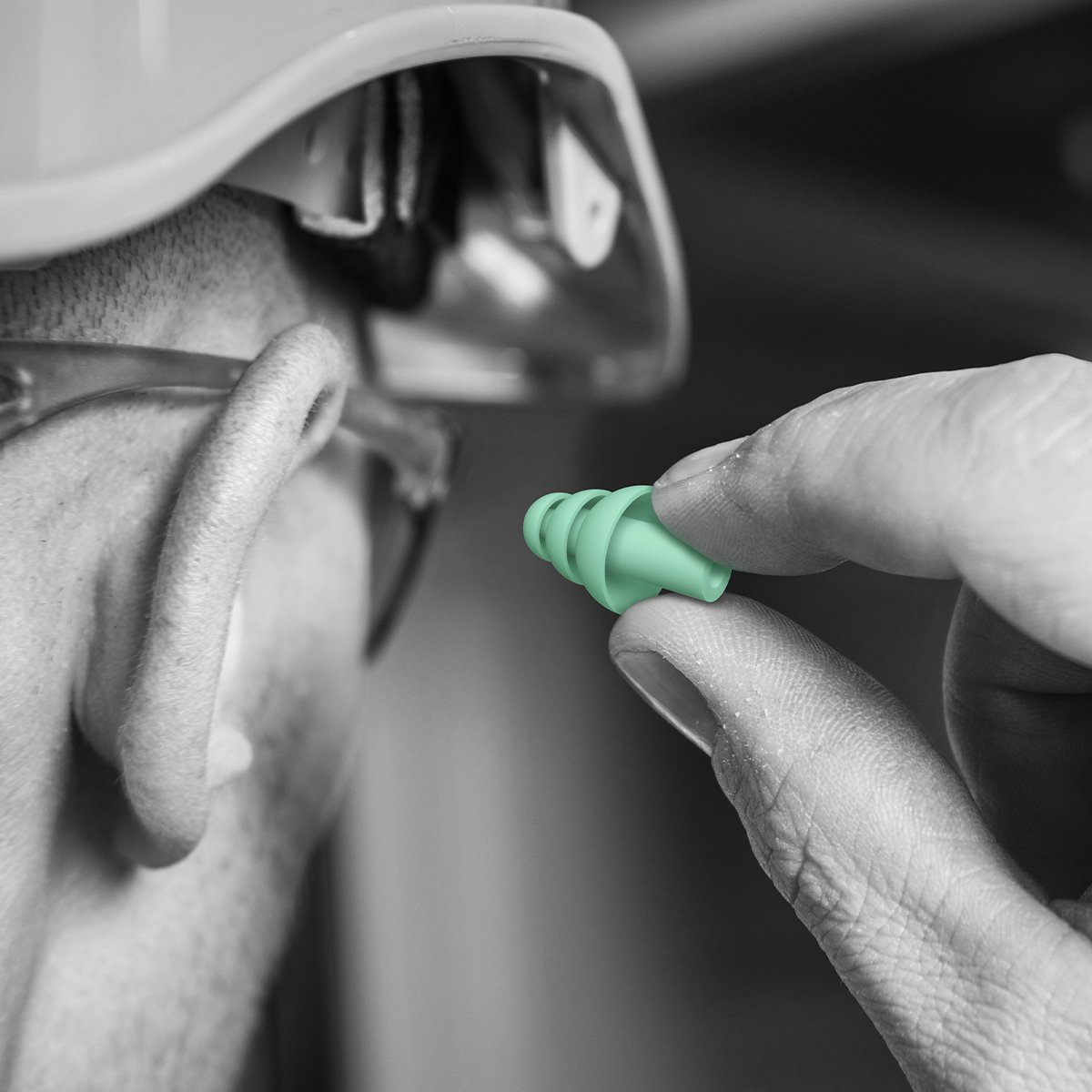
Workplace noise directly affects worker health by causing permanent hearing loss, increasing stress hormones, disrupting sleep, and raising the risk of cardiovascular problems over time. The damage builds gradually, which means many workers don’t notice it until it’s too late. Anyone regularly exposed to loud machinery, tools, or equipment is at risk. Below, we break down exactly how noise harms the body, which jobs carry the highest risk, and what workers can do to protect themselves.
What types of noise are considered harmful in the workplace?
Workplace noise is considered harmful when it reaches or exceeds 85 decibels (dB) over an eight-hour workday. At this level, repeated exposure without protection causes cumulative hearing damage. Both continuous noise, like the hum of industrial machinery, and sudden impact noise, like the crack of a nail gun or a metal press, fall into the harmful category.
The type of noise matters because the body responds differently to each. Continuous noise wears down the hair cells in the inner ear steadily over time. Impact noise delivers a sudden pressure spike that can cause immediate damage, even from a single event. Both are genuinely dangerous, but impact noise is often underestimated because it happens so fast.
Volume isn’t the only factor. Duration plays an equally important role. A worker exposed to 88 dB for eight hours receives the same noise dose as one exposed to 91 dB for four hours. The louder the environment, the less time it takes to reach a harmful dose. This is why even short bursts of very loud noise, like a saw cutting through metal or a compressor firing up nearby, add up quickly across a full shift.
How does prolonged noise exposure damage hearing?
Prolonged noise exposure damages hearing by destroying the tiny hair cells inside the cochlea, the spiral-shaped structure in the inner ear responsible for converting sound vibrations into electrical signals the brain can interpret. Once these hair cells are gone, they do not regenerate. The result is permanent, noise-induced hearing loss.
The process works like this: sound waves enter the ear and cause the fluid inside the cochlea to move. That movement stimulates the hair cells. When sound is too loud or lasts too long, it overstimulates the cells to the point of damage. The cells that process high-frequency sounds, like speech consonants, are typically the first to go, which is why people with early hearing loss often say they can hear someone talking but can’t make out the words clearly.
Over months and years of unprotected exposure, the damage spreads across more frequency ranges. What starts as difficulty hearing in noisy environments eventually becomes difficulty hearing in quiet ones too. And because the loss is gradual, workers often adapt without realizing how much they’ve lost until a hearing test reveals the full picture.
What health effects beyond hearing loss does workplace noise cause?
Workplace noise causes a range of health effects beyond hearing loss, including increased stress, elevated blood pressure, disrupted sleep, reduced concentration, and a higher long-term risk of cardiovascular disease. Noise doesn’t just affect the ears. It activates the body’s stress response, which triggers a cascade of physiological reactions that affect multiple systems.
When the brain perceives loud or unpredictable noise, it signals the adrenal glands to release cortisol and adrenaline. These stress hormones are useful in genuine emergencies, but chronic activation from daily noise exposure keeps the body in a low-grade state of alert. Over time, this contributes to elevated blood pressure, a faster heart rate, and an increased risk of heart disease.
Noise also interferes with cognitive function. Workers in loud environments report higher levels of mental fatigue, more difficulty concentrating, and more errors on tasks that require sustained attention. This isn’t just uncomfortable. It’s a safety risk. Fatigue and distraction in industrial settings contribute directly to accidents and injuries.
Sleep is another area that takes a hit. Workers who are regularly exposed to high noise levels during the day often report trouble falling asleep and staying asleep, even in quiet environments. The nervous system stays activated longer than it should, making genuine rest harder to achieve. Poor sleep then compounds the fatigue and cognitive issues, creating a cycle that’s difficult to break.
Which industries and jobs carry the highest noise exposure risk?
The industries with the highest noise exposure risk include manufacturing, construction, mining, agriculture, transportation, and military service. Jobs that involve operating heavy machinery, power tools, or engines for extended periods consistently produce noise levels well above the 85 dB threshold that triggers hearing damage.
Within manufacturing, workers on production lines, press operators, and those working near industrial fans or HVAC systems face some of the highest daily noise doses. Construction workers using jackhammers, drills, grinders, or working near heavy equipment like excavators and bulldozers are also in a high-risk group. In agriculture, tractor operators and workers around grain-drying equipment are frequently exposed to sustained noise above safe levels.
Transportation workers, including airport ground crews, rail workers, and long-haul truck drivers, face a combination of engine noise and vibration that compounds the physical toll. Musicians and live sound engineers are another often-overlooked group. Performance venues regularly exceed 110 dB, and repeated exposure without protection leads to the same cumulative damage seen in industrial settings.
Office workers and service industry employees are generally at lower risk, though those working near loud HVAC systems, machinery rooms, or in open kitchens can still experience noise levels that affect concentration and stress over time.
How can workers protect their hearing on the job?
Workers can protect their hearing on the job by using properly rated hearing protection, reducing time spent in high-noise areas, and advocating for noise controls at the source. The most practical and immediate step is wearing earplugs or earmuffs rated for the specific noise level in their environment.
Hearing protection is rated by its noise reduction capability. In the US, this is expressed as a Noise Reduction Rating (NRR). In Europe and other markets, the equivalent measure is the SNR (Single Number Rating). Workers should match the protection level to the actual noise exposure in their workplace, not just grab whatever is available.
A common barrier to consistent use is discomfort or sound distortion. Standard foam earplugs muffle all frequencies indiscriminately, making it hard to hear colleagues or notice warning signals. This leads many workers to remove them or not wear them at all. High-fidelity earplugs solve this problem by reducing volume evenly across frequencies, so sound remains clear and natural rather than muffled. Workers can still communicate and stay aware of their surroundings while staying protected.
Beyond personal protection, engineering controls are the most effective long-term solution. These include installing noise barriers, using vibration dampening on machinery, scheduling noisy tasks during lower-occupancy periods, and maintaining equipment to reduce unnecessary noise from wear. When both engineering controls and personal protection are used together, the risk of hearing damage drops significantly.
Our Shush Worker earplugs are built specifically for these environments. With an SNR of 23 dB, they reduce hazardous industrial noise to safe levels while keeping sound clear enough to communicate without removing the plugs. Made from durable, hypoallergenic synthetic rubber, they’re designed for all-day comfort and last at least 365 days of regular use, making them a practical and cost-effective choice for anyone in a high-noise trade.
What are the early signs of noise-induced hearing damage?
The early signs of noise-induced hearing damage include ringing or buzzing in the ears after noise exposure, difficulty understanding speech in noisy environments, and needing to turn up the volume on devices more than before. These signs often appear before any measurable permanent hearing loss shows up on a standard hearing test.
Tinnitus, the ringing or buzzing sound that appears after a loud event, is one of the most recognizable early warning signals. For many workers, it shows up after a long shift and fades overnight. This temporary tinnitus is the ear’s way of signaling that it was pushed close to its limit. If it becomes permanent or starts appearing without a loud trigger, that’s a sign that damage has already occurred.
Another early indicator is what audiologists call a “noise notch,” a specific dip in hearing ability around the 4,000 Hz frequency range. This doesn’t always feel noticeable in everyday life, but it shows up clearly in a hearing test. It’s one of the reasons regular audiometric testing is recommended for workers in high-noise industries.
Difficulty following conversations in background noise is also an early sign that’s easy to dismiss. Many people chalk it up to inattention or the other person speaking unclearly. In reality, it often reflects early damage to the high-frequency hair cells responsible for processing speech consonants. Catching this pattern early and acting on it, whether by improving hearing protection habits or consulting an audiologist, can prevent the damage from progressing further.
Frequently Asked Questions
How do I know if my current hearing protection is rated highly enough for my specific work environment?
The best way to confirm your protection is adequate is to compare your workplace’s measured noise levels (in dB) against the NRR of your earplugs or earmuffs. OSHA provides a simple formula: subtract 7 from the NRR, then divide by 2 to estimate real-world noise reduction. If your employer hasn’t conducted a noise assessment, you can request one — OSHA requires employers in high-noise industries to monitor exposure levels and provide appropriately rated protection at no cost to workers.
Can noise-induced hearing loss be treated or reversed once it starts?
Unfortunately, noise-induced hearing loss is permanent and cannot be reversed, because the damaged cochlear hair cells do not regenerate. Treatment options like hearing aids can help compensate for the loss, but they don’t restore original hearing ability. This is why early prevention and consistent use of hearing protection are so critical — once the damage is done, the focus shifts from recovery to managing what remains.
What's the difference between earplugs and earmuffs, and when should I choose one over the other?
Earplugs are inserted into the ear canal and are generally better suited for prolonged wear in hot or physically demanding environments, since they don’t add bulk or trap heat. Earmuffs sit over the entire ear and can offer higher noise reduction in extremely loud settings, but they can be uncomfortable during extended use and may not seal properly if worn with safety glasses or beards. In some very high-noise environments, wearing both together is recommended for maximum protection.
How often should workers in high-noise industries get their hearing tested?
OSHA’s Hearing Conservation Amendment requires that workers exposed to an average of 85 dB or more over an eight-hour shift receive a baseline audiogram within six months of starting the job, followed by annual hearing tests. Even if your employer doesn’t mandate it, getting tested annually is a smart practice — early detection of a noise notch or frequency dip gives you a chance to adjust your protection habits before the damage progresses.
Are there any common mistakes workers make with hearing protection that reduce its effectiveness?
Yes — one of the most common mistakes is improper insertion of foam earplugs. Rolling them tightly, inserting them while pulling the ear upward and back, and holding them in place until they fully expand is essential for a proper seal; a loosely inserted earplug can reduce the NRR by more than half. Other frequent errors include wearing earmuffs over long hair or glasses that break the seal, using damaged or dirty earplugs past their effective lifespan, and removing protection even briefly during loud tasks, which significantly cuts into cumulative protection for the day.
Can stress and fatigue from workplace noise really lead to long-term physical health problems, or is that overstated?
The research is clear that it’s not overstated. Studies published in journals like Occupational and Environmental Medicine have linked chronic occupational noise exposure to measurably higher rates of hypertension, ischemic heart disease, and sleep disorders — independent of other workplace risk factors. The mechanism is well established: sustained activation of the body’s stress response from noise keeps cortisol and adrenaline elevated, which over years places real strain on the cardiovascular system. Treating noise as a purely hearing-related hazard misses a significant part of the health picture.
What steps can workers take if their employer isn't providing adequate hearing protection or noise controls?
Workers have the right to file a confidential complaint with OSHA if their employer is not complying with noise exposure standards, and retaliation against workers for raising safety concerns is prohibited under the OSH Act. Before escalating, it’s worth documenting specific concerns — noise levels, lack of provided PPE, or absence of a hearing conservation program — and raising them directly with a supervisor or safety officer, since many gaps are due to oversight rather than intentional neglect. Workers can also contact their union representative if applicable, or reach out to OSHA’s free On-Site Consultation Program, which helps employers identify and fix hazards without issuing citations.
Related Articles
- What earplugs can I wear all day without discomfort?
- What causes that muffled feeling after a noisy shift?
- What are the most comfortable earplugs for long shifts?
- Can you reverse hearing damage from loud environments?
- Can years of factory noise cause permanent hearing loss?
- Does hearing damage from work build up over time?
- Can ringing ears after a festival become permanent?
- Can wearing earplugs regularly at clubs protect your long-term music enjoyment?
- Can earplugs for music sound change how instruments sound to your ear?
- Are earplugs for nightclubs actually worth wearing?
- How do you prevent hearing damage at concerts without muffling the sound?
- Can earplugs for a football game block crowd noise but keep commentary clear?
- Are custom earplugs worth it for regular festival-goers?
- What is the safest way to protect your hearing at outdoor stadium concerts?
- How do high-fidelity earplugs differ from regular foam ones?