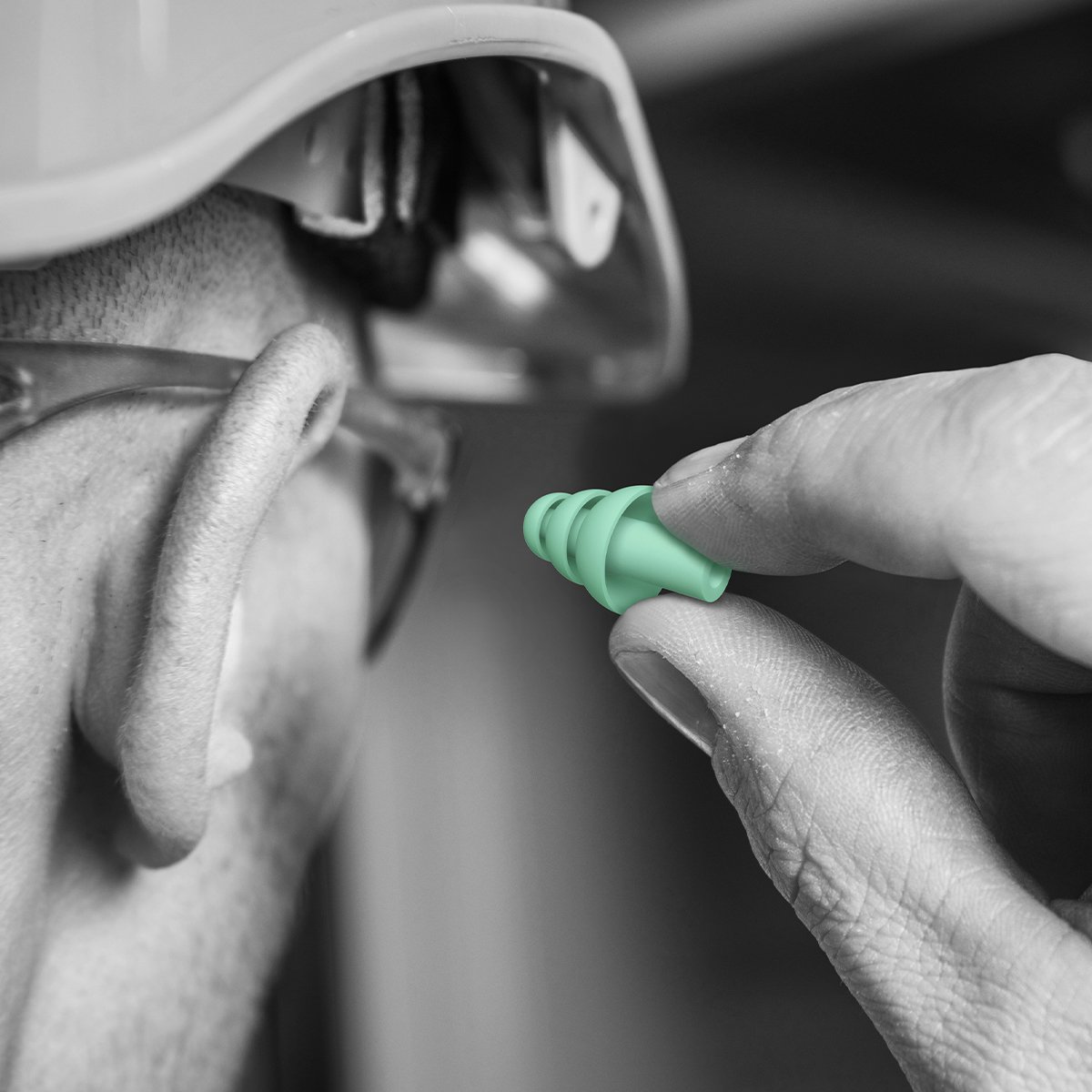
The long-term effects of noise exposure include permanent hearing loss, tinnitus, and a range of broader health problems such as elevated stress, disrupted sleep, and increased cardiovascular risk. Damage builds gradually, which is why many people don’t notice it until it’s already significant. The louder the noise and the longer the exposure, the greater the harm. Below, we break down exactly how this damage happens, what symptoms to watch for, and what you can do about it.
How does repeated noise exposure damage your hearing over time?
Repeated noise exposure damages hearing by gradually destroying the hair cells inside the cochlea, the spiral-shaped structure in your inner ear responsible for converting sound vibrations into electrical signals your brain can interpret. Unlike many other cells in the body, these hair cells do not regenerate. Once they are gone, they are gone permanently.
Each time you are exposed to loud noise, some of these hair cells are stressed or destroyed. A single loud event may only cause a temporary threshold shift, where your hearing feels muffled for a few hours before recovering. But repeated exposures stack up. Over months and years, enough hair cells are damaged that the hearing loss becomes permanent and measurable.
The damage tends to start in the high-frequency range, which is why people with early noise-induced hearing loss often struggle to hear consonants clearly or follow conversations in noisy environments before they notice any obvious hearing problem. By the time the loss is obvious in everyday life, significant damage has already occurred.
What are the most common symptoms of long-term noise damage?
The most common symptoms of long-term noise damage are permanent hearing loss, tinnitus (a persistent ringing, buzzing, or hissing in the ears), and difficulty understanding speech, especially in background noise. These symptoms often develop slowly and may go unnoticed for years.
Tinnitus is particularly common and can range from mildly annoying to severely disruptive. Some people experience it only occasionally at first, but for many, it becomes a constant presence that affects sleep, concentration, and quality of life. There is no cure for tinnitus, which makes prevention the only reliable strategy.
Other symptoms worth recognizing include:
- Needing to turn up the TV or phone volume higher than others find comfortable
- Frequently asking people to repeat themselves
- Difficulty following conversations in crowded or noisy spaces
- A sense of fullness or pressure in the ears after loud exposure
- Sounds feeling distorted or unclear even at normal volumes
Many of these symptoms appear so gradually that people rationalize them as normal aging. In reality, noise-induced hearing loss is one of the most preventable forms of hearing impairment.
What health effects beyond hearing loss does noise exposure cause?
Beyond hearing loss, long-term noise exposure is linked to elevated stress hormone levels, increased blood pressure, disrupted sleep, reduced concentration, and higher cardiovascular risk. Noise does not just affect the ears — it activates the body’s stress response even during sleep, when the brain continues to process sound.
Chronic exposure to environmental or occupational noise keeps the nervous system in a low-grade state of alert. Over time, this sustained physiological stress contributes to fatigue, irritability, and difficulty concentrating. Workers in loud environments often report feeling mentally drained at the end of a shift in ways that go beyond physical tiredness.
Research in occupational health has consistently found associations between prolonged noise exposure and elevated risk of hypertension and heart disease, independent of other lifestyle factors. The mechanism is thought to involve repeated activation of the stress response, which raises cortisol and adrenaline levels and puts strain on the cardiovascular system over time.
Sleep disruption is another significant consequence. Even moderate nighttime noise can fragment sleep quality, reducing time spent in restorative sleep stages. Over months and years, this compounds into chronic sleep deprivation, which carries its own set of health consequences including weakened immune function and impaired cognitive performance.
How loud does noise need to be to cause permanent hearing damage?
Noise above 85 decibels (dB) can cause permanent hearing damage with prolonged exposure. At 85 dB, damage can occur after around 8 hours. For every 3 dB increase above that threshold, the safe exposure time roughly halves. At 100 dB, damage can occur in under 15 minutes. At 110 dB or above, damage can begin almost immediately.
To put those numbers in context: normal conversation sits around 60 dB, city traffic around 85 dB, a loud concert or club typically 100 to 110 dB or higher, and power tools or heavy machinery often well above 100 dB. Many live music venues in the US regularly exceed 110 dB, and there is no federal regulation limiting sound levels at concerts or clubs, meaning attendees are routinely exposed to noise levels that can cause immediate damage.
The important thing to understand is that duration matters as much as volume. A brief, very loud sound can cause instant damage. But sustained exposure to moderately loud noise over hours, days, and years causes cumulative damage that builds invisibly until it becomes irreversible.
Can hearing loss from noise exposure be reversed or treated?
Hearing loss caused by noise exposure cannot currently be reversed. The cochlear hair cells destroyed by loud noise do not regenerate, and there is no approved medical treatment that restores noise-induced hearing loss. Management options exist, but they compensate for lost hearing rather than restore it.
The main management options include hearing aids, which amplify sound to compensate for reduced sensitivity, and cochlear implants for severe or profound loss. Tinnitus associated with noise damage can sometimes be managed through sound therapy, cognitive behavioral therapy, or hearing aids that mask the ringing, but the underlying cause cannot be eliminated.
Research into hair cell regeneration is ongoing, and some early-stage scientific work shows promise for future treatments. However, no such treatment is available in 2026, and there is no reliable timeline for when one might be. This makes prevention the single most important strategy for protecting long-term hearing health.
Who is most at risk from long-term noise exposure?
People most at risk from long-term noise exposure include workers in manufacturing, construction, and heavy industry; musicians and live music professionals; motorcyclists; frequent concert or club attendees; and people who regularly use headphones at high volumes. Risk increases with both the intensity of the noise and the number of years of exposure.
Occupational exposure is the largest single category. Workers operating heavy machinery, power tools, or industrial equipment for full working days accumulate significant noise doses over the course of a career. In many industries, hearing loss is so common it is mistakenly accepted as an inevitable part of the job.
Outside of work, recreational exposure is a growing concern. Regular concert attendance, motorcycling, and prolonged headphone use at high volumes all contribute meaningfully to lifetime noise dose. Young people who attend frequent live music events are building up exposure at an age when the long-term consequences feel distant, but the damage accumulates regardless.
Some individuals are also genetically more susceptible to noise-induced hearing loss than others, meaning two people with identical exposure histories can end up with very different outcomes. Age also increases vulnerability, as the auditory system becomes less resilient over time.
How can you protect your hearing from long-term noise damage?
You can protect your hearing from long-term noise damage by reducing your exposure time, increasing your distance from noise sources, and wearing appropriate hearing protection in loud environments. The most practical and reliable protection for most situations is a well-fitting pair of high-quality earplugs.
Here are the most effective steps you can take:
- Wear hearing protection consistently in any environment above 85 dB, whether at work, on a motorbike, or at a live event.
- Limit exposure time where possible. Taking breaks away from loud environments gives your ears partial recovery time.
- Keep headphone volume under 60% of maximum and take regular breaks from in-ear listening.
- Get your hearing tested regularly if you work in a noisy environment or have significant recreational exposure. Early detection matters even when treatment options are limited.
- Choose the right protection for the situation. Generic foam earplugs block sound indiscriminately and can make it harder to communicate. High-fidelity earplugs reduce volume while keeping sound clear and natural, making them far more practical for extended use.
Consistency is what makes protection effective. The most common reason people sustain noise-induced hearing damage is not ignorance of the risk but the inconvenience of the protection available to them. Earplugs that muffle sound, feel uncomfortable, or fall out tend to get left at home.
That is exactly the problem we set out to solve at Shush. Our Shush Worker earplugs are built specifically for people in loud occupational environments, with an SNR of 23 dB and a ceramic filter design that reduces dangerous noise levels while keeping speech and ambient sound clear enough to communicate without removing them. Made from durable, hypoallergenic synthetic rubber, they are built for all-day comfort and long-term use, so protection is never the thing you skip because it is too uncomfortable to keep in.
Frequently Asked Questions
How do I know if the earplugs I'm using are actually providing enough protection?
Check the earplug’s Noise Reduction Rating (NRR) or Single Number Rating (SNR) and compare it to the decibel levels you’re regularly exposed to. For most occupational and recreational environments above 85 dB, you want a rating that brings your effective exposure down below that threshold. Equally important is fit — even a high-rated earplug provides little protection if it’s not seated correctly in the ear canal, so follow the manufacturer’s insertion instructions and test the seal by noticing a significant reduction in ambient sound when properly worn.
What's the difference between foam earplugs and high-fidelity earplugs, and does it matter which one I use?
Foam earplugs block sound broadly across all frequencies, which reduces volume but also muffles speech and makes it difficult to communicate or stay aware of your surroundings. High-fidelity earplugs use acoustic filters to attenuate sound more evenly, preserving clarity while still reducing dangerous volume levels. For short-term, high-intensity situations like operating a jackhammer, foam may be sufficient — but for extended use in environments where communication matters, such as construction sites, live music, or manufacturing floors, high-fidelity earplugs are far more practical and are more likely to actually be worn consistently.
Can I recover any of my hearing if I stop exposing myself to loud noise now?
If you’ve experienced only temporary threshold shifts — that muffled sensation after a loud event that clears up within hours — your hearing can recover fully, and stopping or reducing exposure helps prevent those temporary shifts from becoming permanent. However, if noise-induced hearing loss has already become permanent, the damaged cochlear hair cells cannot regenerate and the lost hearing cannot be recovered by reducing future exposure. Cutting back on noise exposure is still absolutely worth doing because it prevents further damage from accumulating on top of what’s already there.
Is it safe to use headphones or earbuds every day, and how do I know if my volume is too loud?
Daily headphone use is generally safe as long as you keep the volume at or below 60% of the device’s maximum and take regular listening breaks — a common guideline is the 60/60 rule: no more than 60% volume for no more than 60 minutes at a stretch. A practical real-world test is whether you can hold a normal conversation with someone nearby while listening; if you can’t, the volume is likely in a damaging range. Many smartphones now include built-in hearing health features that track average listening levels and alert you when you’ve exceeded recommended thresholds, which is worth enabling if your device supports it.
How often should I get my hearing tested, and where do I go for that?
If you work in a noisy occupational environment, OSHA requires your employer to provide annual audiometric testing once your noise exposure meets certain thresholds — check with your employer or safety officer about your workplace’s hearing conservation program. For recreational exposure or general monitoring, getting a baseline hearing test in your 20s or 30s and repeating it every few years gives you a meaningful comparison point to catch early changes before they become significant. You can get a hearing test through an audiologist, an ENT (ear, nose, and throat) specialist, or many hearing aid providers who offer free screenings.
What should I do immediately after being exposed to an unexpectedly loud noise, like a sudden blast or an extremely loud concert?
Give your ears as much quiet as possible for at least 16 to 24 hours following the exposure — this means avoiding headphones, loud environments, and any additional noise stress while your auditory system attempts to recover. If you experience severe pain, sudden significant hearing loss, or a new and persistent ringing that doesn’t begin to improve after 24 to 48 hours, see a doctor or audiologist promptly, as some acute noise injuries may benefit from early medical intervention. Temporary muffling or mild tinnitus that gradually fades is common after intense exposure, but symptoms that persist beyond a couple of days warrant professional evaluation.
Are there any supplements or lifestyle habits that can help protect hearing health?
While no supplement is a substitute for physical hearing protection, some research suggests that antioxidants — including magnesium, vitamins C and E, and N-acetylcysteine (NAC) — may help reduce oxidative stress in the cochlea following noise exposure, though the evidence is still preliminary and no supplement is FDA-approved for this purpose. Cardiovascular health is closely linked to hearing health, since the inner ear depends on strong blood flow, so regular exercise, a heart-healthy diet, and not smoking all support long-term auditory function. Getting adequate sleep and managing chronic stress also matter, since both sleep deprivation and elevated cortisol levels can compound the physiological damage that noise exposure causes.
Related Articles
- What are the best gifts for someone who travels a lot?
- How loud are power tools?
- Do reusable earplugs feel better than foam ones?
- Can I wear earplugs while using a circular saw?
- Can noise at work cause more than just hearing loss?
- How does noise affect worker health?
- Why do my earplugs keep falling out at work?
- Do earplugs come in different sizes?
- Can better earplugs improve hearing protection compliance?
- Can ringing ears after a festival become permanent?
- What is noise-induced hearing loss and can clubbing cause it?
- Can wearing ear protection at clubs improve your experience on the dance floor?
- What causes hearing loss at loud concerts?
- Can ear protection for clubbing still let you feel the bass?
- How do high-fidelity earplugs differ from regular foam ones?