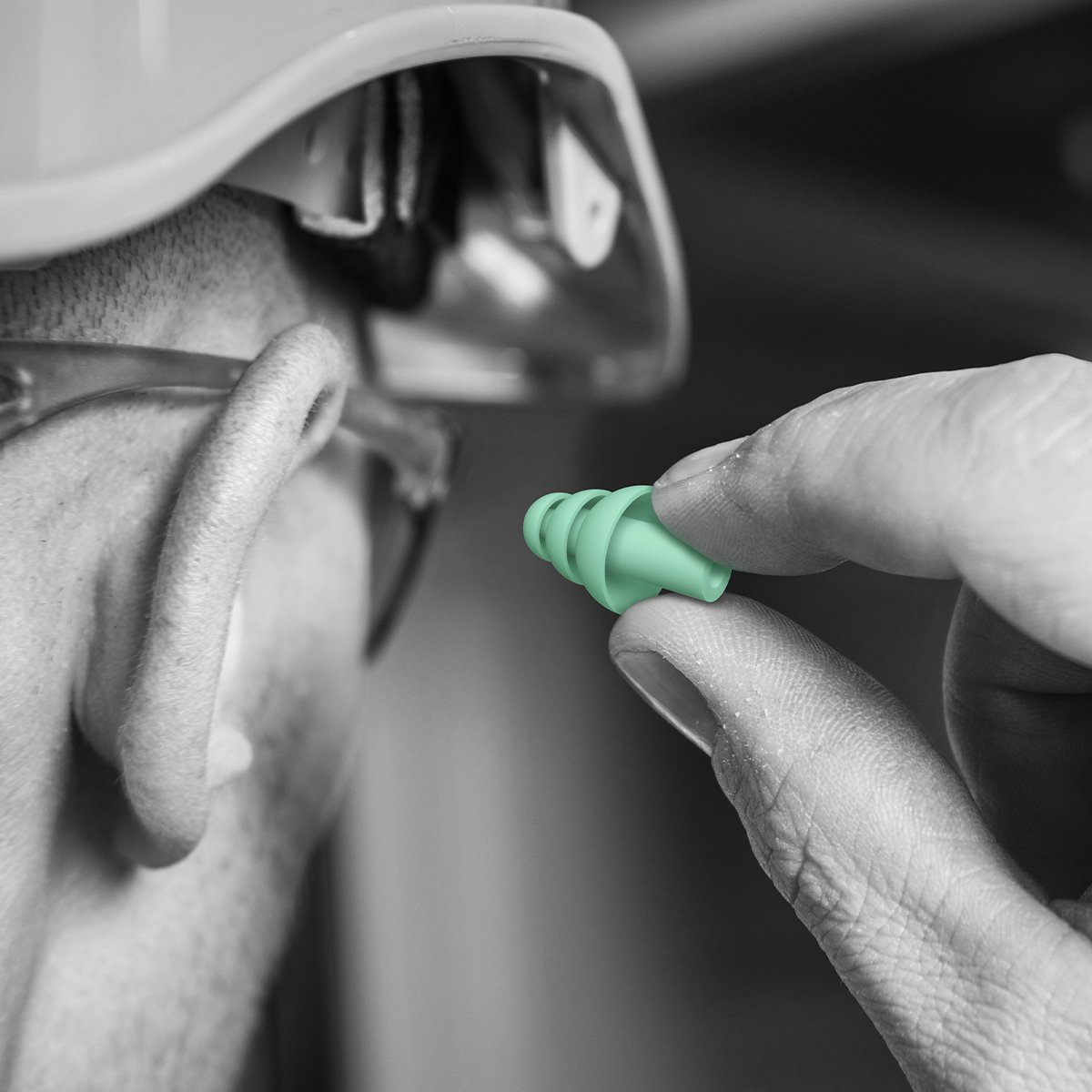
Yes, reusable earplugs are more cost-effective than disposables for teams in most workplace settings. A single pair of quality reusable earplugs can last a full year or longer, while disposable foam earplugs are used once and thrown away, generating ongoing supply costs that add up fast across a workforce. The sections below break down the real numbers, hidden costs, compliance factors, and when making the switch actually pays off.
How much do disposable earplugs actually cost per worker per year?
Disposable foam earplugs typically cost between $0.10 and $0.30 per pair. For a worker in a noisy environment who uses a fresh pair every shift, that adds up to roughly $25 to $75 per person per year in earplug costs alone, before factoring in ordering, storage, or distribution overhead. Across a team of 50 workers, that range climbs to $1,250 to $3,750 annually just for the product itself.
That per-pair price looks low at first glance, but it compounds quickly. Workers in manufacturing or construction often go through more than one pair per shift if earplugs get dirty, lost, or damaged. Some facilities report consumption rates of two to three pairs per worker per day in high-traffic or messy environments. At that rate, annual costs per worker can exceed $100 before any administrative expenses are counted.
It is also worth noting that bulk purchasing of disposables can reduce the unit price, but it ties up budget in inventory that needs storage space and restocking management. The cost is not just financial. It is also logistical.
How do reusable earplugs reduce long-term spending for teams?
Reusable earplugs reduce long-term spending by replacing recurring per-use costs with a single upfront investment per worker. A durable pair of reusable earplugs used daily for a full year replaces hundreds of disposable pairs, bringing the effective cost per use down to a fraction of the disposable equivalent. For teams, this means predictable budgeting and far fewer repeat purchases.
The math is straightforward. If a pair of reusable earplugs costs $15 to $30 and lasts 365 days of regular use, the daily cost is $0.04 to $0.08. Compare that to $0.10 to $0.30 per disposable pair, and reusables come out ahead within the first few months of use. The savings per worker may seem modest individually, but across a team of 20, 50, or 100 workers, the annual difference becomes significant.
Reusable earplugs also reduce the time managers spend reordering supplies. Fewer purchase orders, less storage space needed, and fewer distribution touchpoints all contribute to indirect savings that do not show up in the product price but absolutely show up in operational efficiency.
What are the hidden costs of disposable earplugs in the workplace?
The hidden costs of disposable earplugs go beyond the product price. They include waste disposal, inventory management, compliance tracking, and the environmental impact of single-use plastics, all of which add real cost and administrative burden to a workplace hearing protection program.
Here are the most common hidden costs teams overlook:
- Inventory management: Disposables need to be stocked, monitored, and reordered regularly. Someone has to manage that process, and that time has a cost.
- Waste disposal: In some regulated industries, used foam earplugs are considered contaminated waste and must be disposed of properly, which adds both cost and process complexity.
- Non-compliance risk: Workers who run out of disposables mid-shift or forget to grab a pair may go unprotected. Reusables are worn and kept by the individual worker, reducing the chance of gaps in protection.
- Environmental cost: Disposable foam earplugs are not recyclable in most cases. For organizations with sustainability goals, the volume of single-use waste from a large workforce is a real concern.
- Training and hygiene issues: Disposables are often used longer than intended because workers do not want to seem wasteful. A used foam earplug loses its shape and effectiveness, which creates a false sense of protection without the actual noise reduction.
Are reusable earplugs compliant with workplace safety standards?
Yes, reusable earplugs can be fully compliant with workplace safety standards, provided they carry the appropriate certifications for your region and meet the required noise reduction rating for the specific work environment. Compliance depends on the product’s tested attenuation level, not whether it is reusable or disposable.
In the United States, OSHA requires hearing protection to reduce a worker’s noise exposure to safe levels, and the relevant standard for measuring earplug performance is ANSI S3.19. In Europe, earplugs must meet EN 352-2 under the EU PPE Regulation (EU) 2016/425. High-quality reusable earplugs are regularly tested and certified against these standards and can meet or exceed the protection levels of disposable alternatives.
When sourcing bulk earplugs for employees, always verify that the product includes independent third-party certification, not just manufacturer claims. Certifications from recognized testing bodies give you documented proof of performance that holds up in compliance audits.
Which earplug type is better for worker comfort and compliance?
Reusable earplugs generally deliver better comfort and higher compliance rates than disposable foam earplugs, particularly for workers who need to wear hearing protection for extended periods. Foam earplugs can cause ear canal irritation over time, and their one-size-fits-all approach means many workers get a poor fit, which reduces both comfort and actual protection.
Worker compliance is one of the most underrated factors in any hearing protection program. An earplug that workers find uncomfortable, difficult to insert correctly, or prone to falling out will simply not be worn consistently. Disposable foam earplugs have a notoriously high non-compliance rate in practice, especially among workers who have been using them for years and have learned to tolerate the discomfort rather than address it.
Reusable earplugs made from soft, hypoallergenic materials conform more naturally to the ear canal and are easier to insert and remove cleanly. Workers who have their own designated pair are also more likely to treat them as personal protective equipment they care about, rather than a disposable commodity they grab from a shared box.
When does switching to reusable earplugs make financial sense for a team?
Switching to reusable earplugs makes financial sense for a team when workers use hearing protection daily or near-daily and when the team size is large enough that the cumulative cost of disposables exceeds the upfront investment in reusables within a few months. For most teams of five or more workers in consistent noise environments, the break-even point arrives within the first quarter.
A few practical signals that the switch makes sense right now:
- Your team goes through disposables faster than expected because of loss, contamination, or misuse
- You are spending time managing earplug inventory that could be better spent elsewhere
- Workers are complaining about discomfort or you are seeing low compliance rates
- Your organization has sustainability commitments that single-use plastics work against
- You are preparing for a compliance audit and want documented, certified hearing protection on record
The switch does not have to happen all at once. Many teams start with a pilot group, measure the difference in cost and compliance over a quarter, and then roll out to the full workforce based on real data.
If you are looking for a certified, durable option to start with, our Shush Worker earplugs are built specifically for industrial and construction environments. With an SNR of 23 dB, a synthetic rubber construction that lasts at least 365 days, and independent certification across US, EU, Canadian, and Australian standards, they are designed to deliver consistent protection and genuine comfort across a full working day, without the ongoing cost of single-use alternatives.
Frequently Asked Questions
How do I calculate the exact break-even point when switching from disposable to reusable earplugs for my team?
Start by multiplying your current disposable earplug consumption per worker per day by your cost per pair, then multiply by your team size and the number of working days in a year to get your annual disposable spend. Next, divide the upfront cost of a quality reusable pair (typically $15–$30) by the daily cost difference between reusables and disposables to find your break-even day. For most teams using earplugs daily, this calculation lands somewhere between 30 and 90 days, meaning reusables pay for themselves within the first quarter.
What is the best way to track and manage reusable earplugs across a large workforce?
The most effective approach is to assign a labeled, dedicated pair to each worker and log the issue date so you can track when replacements are due — typically around the 12-month mark for quality reusables. Some facilities use a simple sign-out sheet or tie earplug issuance to onboarding and annual PPE reviews, which also creates a compliance paper trail. Keeping a small reserve stock on hand ensures you can quickly replace lost or damaged pairs without leaving workers unprotected between reorder cycles.
How do I know when reusable earplugs need to be replaced?
Reusable earplugs should be replaced when they show visible signs of wear such as cracking, hardening, discoloration, or a change in shape that prevents a proper seal in the ear canal. A quick daily inspection before use takes only a few seconds and should become part of the worker’s routine, similar to checking other PPE. Most quality reusable earplugs made from synthetic rubber or silicone are designed to last at least 365 days of regular use, so building an annual replacement cycle into your PPE program is a reliable and straightforward baseline.
Can workers with smaller or larger ear canals still get a proper fit with reusable earplugs?
Yes — many reusable earplugs are available in multiple sizes or come with interchangeable flanged tips designed to accommodate a range of ear canal sizes, which is actually a significant advantage over one-size-fits-all disposable foam options. A proper fit is critical not just for comfort but for achieving the earplug’s rated noise reduction level, so it is worth taking the time during initial issuance to confirm each worker has the right size. When purchasing in bulk for a team, look for suppliers that offer size variety or fit-testing guidance as part of their product support.
What is the best way to clean reusable earplugs to keep them hygienic and effective?
Most reusable earplugs can be cleaned with mild soap and warm water, rinsed thoroughly, and left to air dry completely before the next use — a process that takes less than a minute. Avoid using harsh solvents, alcohol-based cleaners, or abrasive materials, as these can degrade the earplug material and reduce both comfort and attenuation performance over time. Providing workers with a small carrying case or pouch keeps clean earplugs protected between uses and reinforces the habit of treating them as valued personal protective equipment rather than a throwaway item.
Are there any situations where disposable earplugs are still the better choice over reusables?
Disposable earplugs remain a practical choice in situations where hygiene concerns make sharing or reusing any PPE inappropriate, such as in sterile environments, medical settings, or when issuing temporary hearing protection to visitors, contractors, or one-time site guests. They are also useful as emergency backup protection when a worker’s reusable pair is lost or being cleaned. For these specific use cases, keeping a small supply of disposables on hand alongside a primary reusable program gives you flexibility without abandoning the cost and compliance benefits of reusables for your core workforce.
How should I present the business case for switching to reusable earplugs to management or procurement teams?
Lead with a three-column cost comparison showing your current annual disposable spend, the projected annual cost of reusables (upfront investment plus estimated replacement rate), and the net savings — this format resonates quickly with procurement and finance decision-makers. Supplement the numbers with compliance and liability data, noting that consistent worker use of properly fitted, certified PPE directly reduces the risk of OSHA citations and workers’ compensation claims related to noise-induced hearing loss. If leadership wants proof before committing to a full rollout, propose a paid pilot with one team or department over a single quarter and let the data make the case for you.
Related Articles
- What are the best earplugs for home use?
- What earplugs are best for factory workers?
- Can years of factory noise cause permanent hearing loss?
- How do you get workers to actually wear earplugs?
- Can noise exposure affect sleep quality in workers?
- What are the health effects of long-term noise exposure at work?
- What are the legal requirements for hearing protection at work?
- How do musicians protect their hearing at live shows?
- What are the long-term consequences of skipping ear protection at concerts?
- Should teenagers wear ear protection when going to nightclubs?
- What happens to sound quality when you wear the wrong earplugs?
- What are the early signs of hearing damage from clubbing?
- Do earplugs affect your ability to communicate with people at loud events?
- How do you store concert earplugs without losing or damaging them?
- What is the difference between foam and high-fidelity festival earplugs?