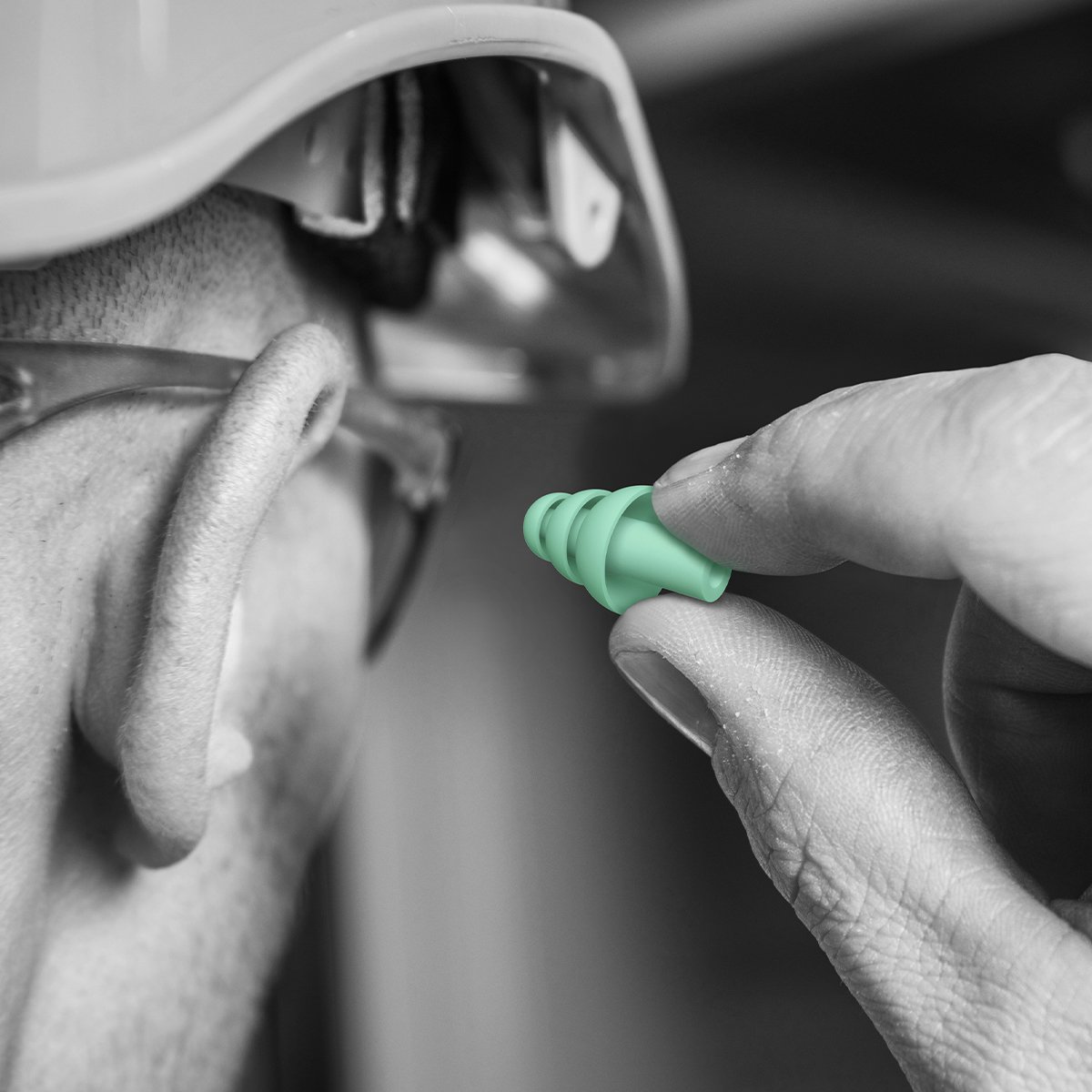
Yes, power tools can damage your hearing. Most common power tools operate between 85 and 110 decibels, and noise-induced hearing loss begins with sustained exposure above 85 dB. The damage is cumulative and permanent, meaning every session without protection adds up over time. Below, we break down exactly how loud power tools are, which ones carry the highest risk, and what you can do to protect your ears.
How loud are power tools compared to safe noise levels?
Most power tools produce noise levels between 85 and 110 decibels, which puts them well above the 85 dB threshold where hearing damage begins. For context, normal conversation sits around 60 dB, while a circular saw or angle grinder can easily hit 100 dB or more. At those levels, safe exposure time drops to minutes, not hours.
The National Institute for Occupational Safety and Health (NIOSH) recommends limiting unprotected exposure to 85 dB to no more than eight hours per day. Every 3 dB increase above that cuts the safe exposure time in half. So at 91 dB, you have two hours. At 100 dB, you have 15 minutes. At 110 dB, damage can begin in under two minutes of unprotected exposure.
The challenge with power tool noise is that it rarely feels dangerous in the moment. A single afternoon in the workshop does not feel like much, but the inner ear does not recover the way other parts of the body do. Each session without protection contributes to a slow, irreversible decline in hearing.
How does repeated power tool use cause hearing loss?
Repeated power tool use causes hearing loss by progressively destroying the tiny hair cells inside the cochlea, the part of your inner ear responsible for converting sound vibrations into signals your brain can interpret. These hair cells do not regenerate. Once they are gone, the hearing loss they cause is permanent.
Loud noise forces sound waves through the cochlea at an intensity the hair cells were not designed to handle. Short, intense bursts cause acute damage. Longer, lower-level noise causes chronic damage over months and years. Power tool users typically experience the chronic pattern, where gradual exposure across dozens or hundreds of sessions adds up to meaningful hearing loss before any obvious symptoms appear.
This is why power tool noise is dangerous is such an important question to ask early. The risk is not dramatic or sudden for most people. It is quiet and cumulative, which makes it easy to ignore until the damage is already done.
What are the early signs of noise-induced hearing loss?
The earliest signs of noise-induced hearing loss include ringing or buzzing in the ears after tool use (called tinnitus), difficulty understanding speech in noisy environments, and sounds seeming muffled or flat after a loud session. These symptoms are your inner ear signaling that it has been pushed beyond its limits.
Many people notice that voices become harder to follow in group conversations, or that they need to turn up the TV more than they used to. High-pitched sounds like birdsong or certain consonants in speech are often the first to go, because high-frequency hair cells sit at the base of the cochlea where they receive the most mechanical stress from loud noise.
Temporary threshold shift is another early warning sign. This is the muffled, deadened sensation you may feel immediately after working with loud tools. While hearing typically returns to normal within hours, repeated episodes of temporary threshold shift are a reliable indicator that permanent damage is accumulating. Treating it as a warning rather than a normal part of tool use is a good habit to develop.
Which power tools pose the greatest hearing risk?
The power tools that pose the greatest hearing risk are those that consistently operate above 95 dB, especially when used for extended periods in enclosed spaces. Angle grinders, circular saws, routers, reciprocating saws, and pneumatic nail guns are among the most hazardous because they combine high decibel output with common extended use.
- Angle grinder: Typically 100 to 105 dB, one of the loudest handheld tools
- Circular saw: Around 100 to 110 dB at the operator’s ear
- Router: Often 95 to 100 dB, used for long, continuous passes
- Reciprocating saw: Around 103 dB during active cutting
- Pneumatic nail gun: Impact noise can spike above 110 dB per shot
- Belt sander: Typically 93 to 98 dB, often used for long durations
- Chainsaw: 106 to 115 dB, among the highest-risk outdoor tools
Working indoors amplifies the risk further. Hard surfaces reflect sound, raising the effective noise level in a garage or workshop above what the tool produces on its own. Poor ventilation and smaller spaces make this effect more pronounced.
Should you wear hearing protection for every power tool task?
Yes, you should wear hearing protection for virtually every power tool task. If a tool is loud enough to require you to raise your voice to be heard by someone standing nearby, it is loud enough to damage your hearing over time. That is a practical rule of thumb that applies to most power tools in regular use.
Some people assume that short tasks do not require protection. But a 90-second cut with a circular saw at 105 dB still exposes your ears to a meaningful acoustic load, and those brief exposures add up across a week of projects. The habit of reaching for protection every time you pick up a tool is far more protective than trying to judge which tasks are “short enough” to skip it.
The only exception might be very low-output tools like electric screwdrivers or small hand-held sanders operating below 80 dB, where the noise level genuinely falls below the damage threshold. For anything louder, consistent protection is the right call.
What type of hearing protection works best with power tools?
For power tool use, earplugs with a meaningful noise reduction rating and a comfortable, secure fit work best. The goal is consistent protection across the full session, which means the hearing protection needs to stay in place, feel comfortable enough to keep in, and reduce noise to safe levels without blocking out all situational awareness.
Foam disposable earplugs are widely available but have real drawbacks. They muffle sound indiscriminately, making it harder to hear colleagues or notice changes in tool behavior that signal a problem. They also compress and lose their shape over time, meaning their actual attenuation often falls short of the printed rating.
High-fidelity reusable earplugs offer a meaningful improvement. They reduce volume while preserving sound clarity, so you can still communicate and stay aware of your surroundings. Our Shush Worker earplugs are built specifically for this kind of environment, with an SNR of 23 dB and a ceramic filter that keeps sound natural and clear rather than muffled. The hypoallergenic synthetic rubber construction holds its shape through full working days and lasts at least 365 days of regular use, which makes them a far better long-term investment than disposable foam alternatives.
How can you reduce power tool noise without earplugs?
You can reduce power tool noise exposure through a combination of tool maintenance, workspace design, and smarter work habits. These steps lower the overall noise load your ears face, though they do not replace hearing protection for tools that exceed 85 dB.
Maintain your tools regularly
Dull blades and worn bearings force tools to work harder, which increases noise output. Keeping blades sharp, lubricating moving parts, and replacing worn components reduces the noise a tool produces at the source. A well-maintained circular saw runs noticeably quieter than a neglected one.
Improve your workspace setup
Hard, reflective surfaces amplify tool noise by bouncing sound around the room. Adding acoustic absorption to your workshop, such as foam panels, heavy curtains, or even dense shelving filled with materials, reduces reverberation and lowers the effective noise level you experience. Working outdoors when possible also disperses sound rather than trapping it.
Adjust how and when you work
Taking regular breaks away from the noise allows your ears partial recovery between sessions. Positioning yourself to maximize distance from the noise source, even by a few feet, reduces exposure meaningfully because sound intensity drops with distance. Choosing corded tools over pneumatic ones where possible also helps, since pneumatic tools tend to generate more impact noise.
These measures are genuinely useful for reducing overall exposure, but they work best alongside hearing protection, not as a substitute for it. For any tool that consistently operates above 85 dB, the most reliable protection is still a well-fitted earplug with adequate attenuation.
Frequently Asked Questions
Can I use noise-canceling headphones instead of earplugs when working with power tools?
Noise-canceling headphones are designed for low-frequency, continuous background noise like airplane engines, not the sharp, high-decibel output of power tools. They do not provide the same level of impulse noise protection as properly rated hearing protection and may give you a false sense of security. If you prefer an over-ear option, look for earmuffs with a certified Noise Reduction Rating (NRR) appropriate for your tool’s decibel level rather than consumer noise-canceling headphones. For the best of both worlds, some workers combine foam earplugs with rated earmuffs for especially loud tasks like chainsaw work.
How do I know if my hearing has already been damaged from years of power tool use?
The most reliable way to find out is to schedule an audiogram with an audiologist or your primary care physician, who can map your hearing across different frequencies and identify any high-frequency loss that is common with noise-induced damage. At home, warning signs include consistently struggling to follow conversations in restaurants or group settings, frequently asking people to repeat themselves, or needing the TV louder than others in the room prefer. Because noise-induced hearing loss develops gradually, many people do not notice it until it is significant, which is exactly why getting a baseline hearing test is a smart move even if you feel fine right now.
Is it too late to protect my hearing if I've already been using power tools without protection for years?
It is never too late to start protecting your hearing, even if you have already experienced some degree of noise-induced loss. While the hair cells that have already been damaged cannot be restored, you can absolutely prevent further deterioration by consistently wearing proper hearing protection going forward. Think of it the same way you would sunscreen after a sunburn — the damage that is done is done, but protecting yourself now limits how much worse it gets. Starting a consistent protection habit today is one of the most impactful things you can do for your long-term hearing health.
What NRR rating should I look for when buying hearing protection for workshop use?
For most workshop and power tool environments, look for hearing protection with an NRR of at least 25 to 30, which provides meaningful attenuation across the range of tools you are likely to use. Keep in mind that real-world protection is typically about half the printed NRR value when accounting for imperfect fit and seal, so a higher rating gives you a useful safety margin. For extremely loud tools like chainsaws or pneumatic nail guns, consider pairing earplugs with earmuffs to achieve the combined attenuation you need. Always check that your hearing protection carries an ANSI/ISEA S3.19 certification, which confirms it has been independently tested and rated.
Should kids or teenagers wear hearing protection when using or being near power tools?
Absolutely — children and teenagers are not less vulnerable to noise-induced hearing loss, and in some respects their developing auditory systems may be more sensitive to acoustic trauma. The same 85 dB threshold and exposure time limits that apply to adults apply to younger users as well. Even if a child is just observing a project from nearby, they should be wearing properly fitted hearing protection, since distance alone is not always sufficient to bring noise levels below the damage threshold. Make it a house rule that anyone in the workshop during power tool use wears protection, regardless of age or how briefly they are in the space.
Are battery-powered tools quieter and safer for my hearing than corded or pneumatic tools?
Battery-powered tools are often somewhat quieter than their pneumatic counterparts because they eliminate the compressor noise and sharp pressure-release impact associated with air-powered tools, but they are not necessarily safe for unprotected use. A cordless circular saw or angle grinder still produces 95 to 105 dB at the operator’s ear, which is well above the damage threshold. The noise reduction compared to pneumatic tools is real but modest, and it should not be used as a reason to skip hearing protection. Treat battery-powered tools with the same caution you would any other tool operating above 85 dB.
What's the best way to build a consistent habit of wearing hearing protection every time I use tools?
The most effective strategy is to make hearing protection part of your tool storage setup rather than a separate step you have to remember. Store your earplugs directly with your most-used tools — on the same hook as your circular saw, in the same drawer as your router bits, or clipped to your work apron — so grabbing them becomes automatic rather than deliberate. Setting a personal rule like u0022no tool turns on until protection is inu0022 removes the judgment call entirely and makes compliance a default rather than a decision. High-fidelity reusable earplugs also make the habit easier to maintain because they are comfortable enough to wear for a full session without the urge to pull them out.
Related Articles
- Are there earplugs that don't block all sound?
- Can tinnitus from work noise be permanent?
- Do reusable earplugs feel better than foam ones?
- What earplugs can I wear all day without discomfort?
- Are foam earplugs good enough for power tools?
- Why do earplugs hurt after wearing them all day?
- How do you ensure hearing protection compliance on a job site?
- How loud is a typical nightclub compared to safe hearing levels?
- What is noise-induced hearing loss and can concerts cause it?
- Can earplugs for music sound protection damage your hearing over time?
- Can earplugs for music protection reduce listening fatigue during long shows?
- What are the early signs of hearing damage from clubbing?
- Can earplugs for a football game block crowd noise but keep commentary clear?
- What is the safest way to protect your hearing at outdoor stadium concerts?
- Do earplugs for clubbing muffle the music too much?