Yes, workplace noise causes both stress and fatigue. Loud or persistent sound triggers your body’s stress response, raising cortisol levels and keeping your nervous system in a low-level state of alert. This happens whether you work on a construction site or in an open-plan office. The following questions break down exactly how noise affects your body, what levels are considered harmful, and what you can do about it.
How does workplace noise trigger a stress response?
Workplace noise triggers a stress response by activating the body’s fight-or-flight system. When your brain detects sound, especially unpredictable or intrusive noise, it signals the adrenal glands to release cortisol and adrenaline. This happens automatically, even when you are focused on something else. Over the course of a workday, repeated noise events keep your nervous system in a state of low-level activation that drains your energy and increases tension.
The brain cannot fully filter out background noise, even when you consciously ignore it. Auditory processing continues in the background, consuming mental resources. This is why a noisy environment leaves you feeling worn out even when your actual workload is not unusually heavy. The cognitive effort required to stay focused despite noise is real, even if it is invisible.
Unpredictable noise is particularly effective at triggering stress. A sudden loud sound, an unexpected phone ringing, or irregular construction noise nearby causes a stronger stress response than a steady background hum because the brain treats unpredictability as a potential threat. Each interruption resets your attention and adds another small spike of physiological arousal.
What are the physical symptoms of noise-induced fatigue?
Noise-induced fatigue produces physical symptoms including headaches, muscle tension, elevated heart rate, difficulty concentrating, and general tiredness at the end of the day. These symptoms develop because your body sustains a mild stress response throughout prolonged noise exposure. Over time, the accumulated physiological effort of managing that response depletes your energy reserves.
Common physical signs include:
- Tension headaches, particularly around the temples or back of the neck
- Tight shoulders and jaw, caused by prolonged muscle bracing
- Difficulty sleeping, even after leaving the noisy environment
- Reduced ability to concentrate or make decisions toward the end of the day
- Irritability and a shorter emotional fuse
- A persistent sense of tiredness that does not improve with short breaks
These symptoms are often mistaken for general work stress or overwork. Noise is rarely identified as the cause because it feels like a background condition rather than an active stressor. Recognizing these signs is the first step toward addressing the actual source of the problem.
What noise levels at work are considered harmful?
Noise levels above 85 decibels (dB) are considered harmful with prolonged exposure. At this threshold, sustained noise exposure over an eight-hour workday begins to cause cumulative hearing damage. The louder the noise, the less time it takes to become damaging. At 100 dB, safe exposure time drops to around 15 minutes without hearing protection.
For context, a normal conversation sits around 60 dB. A busy open office reaches roughly 65 to 75 dB. Heavy machinery, power tools, and industrial equipment regularly exceed 90 to 100 dB, and some environments like construction sites or manufacturing floors can reach 110 dB or higher at close range.
In the US, OSHA sets the permissible exposure limit at 90 dB averaged over an eight-hour shift, with a requirement to implement hearing conservation programs at 85 dB. However, these regulations apply to formal workplace settings. Workers in less regulated environments, or those exposed to noise outside of official working hours, often have no formal protection at all. Understanding your actual exposure level is important before deciding what kind of protection you need.
Why does office noise cause fatigue even when it’s not that loud?
Office noise causes fatigue even at moderate volumes because the brain works harder to maintain focus in the presence of competing sounds. Conversations, keyboard sounds, phone calls, and HVAC hum sit well below harmful decibel levels, but they constantly compete for your attention. The mental effort required to filter out this noise and stay on task is cognitively expensive and accumulates over the day.
Speech is particularly disruptive. Research in cognitive psychology consistently shows that intelligible speech in the background impairs reading comprehension, writing quality, and memory recall, even when the listener is not consciously paying attention to it. The brain processes language automatically, which means a nearby conversation draws on the same mental resources you are trying to use for your own work.
Open-plan offices amplify this problem. They were designed to encourage collaboration, but they also remove acoustic barriers that once allowed people to work without constant auditory interruption. Workers in open offices report higher levels of stress and lower levels of satisfaction with their work environment compared to those in private or semi-private spaces. The fatigue is real, and the cause is often the noise level rather than the workload itself.
How does chronic noise exposure affect long-term health?
Chronic noise exposure affects long-term health by increasing the risk of permanent hearing loss, cardiovascular disease, sleep disruption, and mental health problems. These effects develop gradually over months and years, which is why many people do not connect their health issues to noise exposure until significant damage has already occurred.
Hearing loss is the most well-documented outcome. Repeated exposure to noise above safe levels damages the hair cells in the inner ear, and those cells do not regenerate. The damage is permanent and cumulative. Workers in loud industries who do not use hearing protection consistently are at significantly higher risk of age-related hearing loss arriving earlier and more severely than it otherwise would.
Beyond hearing, sustained noise exposure keeps the cardiovascular system under low-level stress. Elevated cortisol over long periods is associated with higher blood pressure and increased cardiovascular risk. Poor sleep caused by noise exposure compounds this further, since sleep is when the body repairs itself and regulates stress hormones. Over time, the combination of disrupted sleep, elevated stress, and auditory strain adds up to a measurable impact on overall health and quality of life.
What can reduce noise stress and fatigue in the workplace?
Reducing noise stress and fatigue at work involves a combination of environmental changes, behavioral habits, and personal hearing protection. No single solution works for every situation, but combining approaches produces the most noticeable results. The right strategy depends on whether you are dealing with harmful industrial noise or disruptive office-level sound.
Environmental and behavioral strategies
- Use acoustic panels, soft furnishings, or partitions to absorb sound in open offices
- Create designated quiet zones where focused work is protected from conversation noise
- Schedule demanding cognitive tasks during quieter periods of the day
- Take regular breaks away from noisy areas to allow your nervous system to recover
- Communicate noise expectations with colleagues to reduce unnecessary interruptions
Personal hearing protection
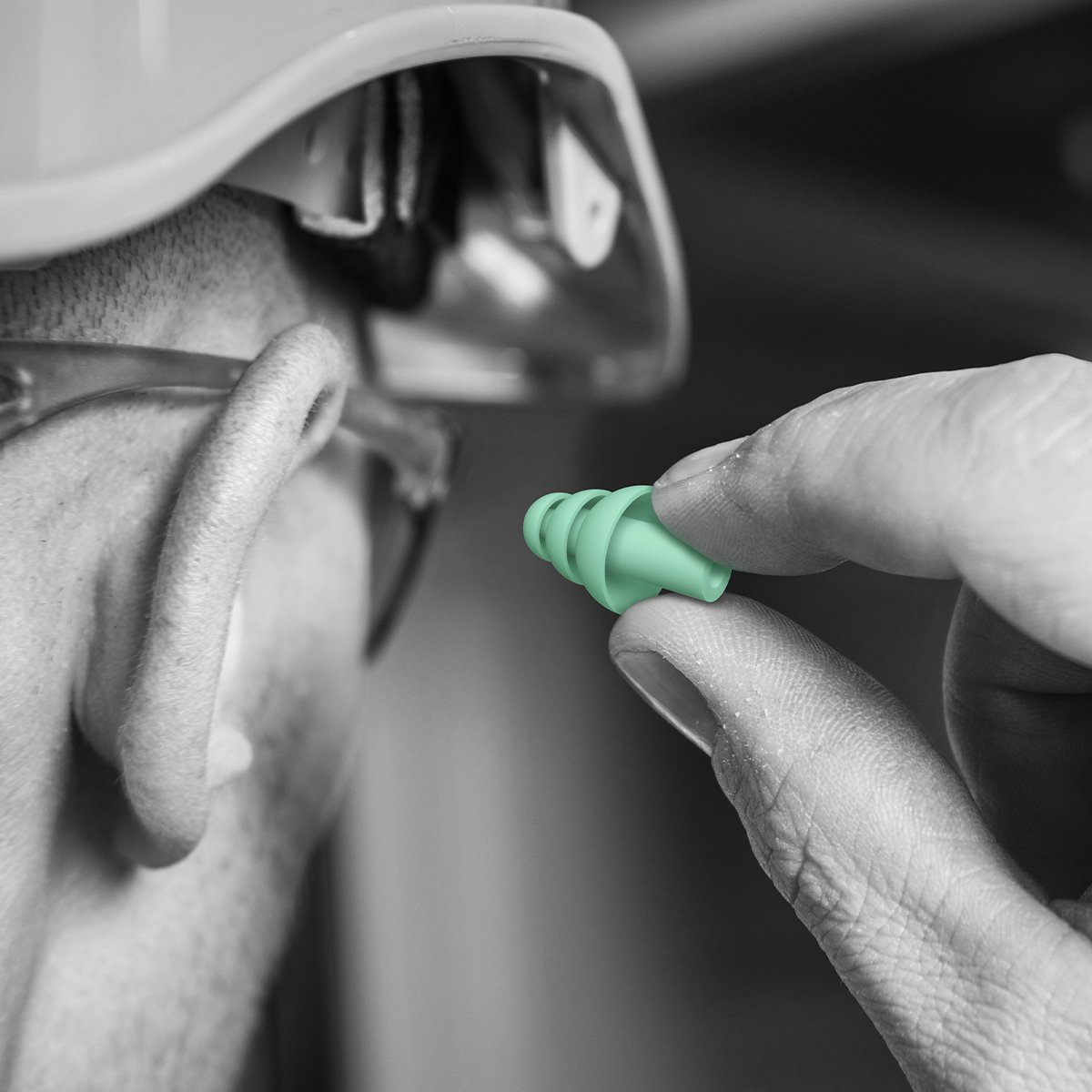
For workers in loud environments, personal hearing protection is not optional. It is the most direct and reliable way to reduce noise exposure to safe levels. High-quality earplugs designed for occupational use reduce harmful noise while still allowing you to hear speech and stay aware of your surroundings, which makes them practical for full-shift wear.
Our Shush Worker earplugs are built specifically for this. With an SNR rating of 23 dB, they bring industrial noise down to safe levels without muffling communication. The ceramic filter inside each earplug preserves sound clarity, so you can still talk to colleagues without removing them. Made from durable hypoallergenic synthetic rubber, they are comfortable enough for all-day wear and last at least a full year of daily use, making them a practical long-term investment in your hearing health.
Frequently Asked Questions
How do I know if my workplace noise level is actually dangerous, and what tools can I use to measure it?
The most reliable way to measure your workplace noise level is with a sound level meter or a smartphone decibel meter app, such as NIOSH SLM (developed by the National Institute for Occupational Safety and Health and available for free). If readings consistently exceed 85 dB during your shift, you are in a range where hearing protection should be worn. For a more precise assessment, especially in industrial settings, ask your employer about conducting a formal noise exposure assessment, which OSHA can require employers to perform when noise levels may meet or exceed their action level of 85 dB averaged over an eight-hour workday.
Can noise-induced fatigue affect my sleep even after I leave work, and how do I break that cycle?
Yes, noise-induced fatigue can significantly disrupt your sleep even after you have left the noisy environment, because elevated cortisol and nervous system activation do not immediately reset when the noise stops. To help your body wind down, build a decompression routine between work and bedtime — this could include a short walk, limiting screen time, or spending quiet time away from stimulating environments. If sleep disruption persists, consider whether noise exposure is also occurring at home, such as from traffic or neighbors, and address those sources with white noise machines or earplugs designed for sleep use.
I work in an open-plan office and can't change the layout — what are the most practical steps I can take right now?
Even without the ability to redesign your workspace, there are several immediate steps you can take. Noise-canceling headphones or low-attenuation earplugs can significantly reduce the cognitive load of filtering out background speech and ambient sound during focused work. You can also time your most demanding tasks — writing, analysis, or deep thinking — for early mornings or after lunch when office activity tends to be lower. Communicating with your team about designated quiet hours, even informally, can reduce unnecessary interruptions and create a more manageable acoustic environment without any physical changes to the space.
Is there a difference between using foam earplugs from a drugstore and purpose-built occupational earplugs?
Yes, there is a meaningful difference. Standard foam earplugs from a drugstore are designed primarily to block as much sound as possible, which can make it difficult to hear speech, safety signals, or equipment warnings — a real problem in active work environments. Purpose-built occupational earplugs, like those with acoustic filters, are engineered to reduce harmful noise levels while preserving speech clarity and situational awareness, making them far more practical for full-shift wear. For anyone spending hours in a loud workplace, investing in occupational-grade hearing protection is both safer and more comfortable than relying on generic foam options.
What are the most common mistakes workers make when trying to protect their hearing on the job?
The most common mistake is inconsistent use — removing hearing protection during breaks or for short tasks, not realizing that even brief unprotected exposures to high-decibel noise contribute to cumulative damage over time. Another frequent error is using hearing protection that fits poorly, since an improperly sealed earplug provides far less protection than its rating suggests. Workers also commonly underestimate moderate noise environments, assuming that if a space is not painfully loud it is not harmful, when in reality sustained exposure in the 85–95 dB range causes significant damage without ever feeling extreme in the moment.
Are there any workplace rights I should know about regarding noise exposure in the U.S.?
Yes. Under OSHA’s Occupational Noise Exposure Standard (29 CFR 1910.95), employers in general industry are required to implement a hearing conservation program when workers are exposed to noise at or above 85 dB averaged over an eight-hour shift. This program must include regular noise monitoring, free hearing protection, annual audiometric testing, and employee training. If you believe your employer is not meeting these requirements, you have the right to file a confidential complaint with OSHA at osha.gov, and retaliation against workers for raising safety concerns is prohibited by law.
How long does it take to recover from noise-induced fatigue, and is the damage reversible?
Noise-induced fatigue — the stress, tiredness, and cognitive drain caused by a noisy workday — typically begins to resolve within hours of leaving the noisy environment, provided you give your nervous system adequate rest and recovery time. However, noise-induced hearing loss is a different matter entirely: the damage to hair cells in the inner ear is permanent and does not heal. This distinction is important because fatigue feeling temporary can create a false sense that everything is fine, even as cumulative hearing damage quietly builds over years. Addressing noise exposure proactively, before symptoms of hearing loss appear, is the only effective long-term strategy.
Related Articles
- How long can you be exposed to loud noise before damage?
- What earplugs are best for factory workers?
- How do you get workers to actually wear earplugs?
- Does earplug comfort affect compliance rates?
- Does occupational noise cause fatigue?
- How do you use earplugs for festivals correctly?
- What are the long-term consequences of skipping ear protection at concerts?
- Do earplugs for live music change how a band actually sounds?
- What decibel reduction do you really need for music sound protection?
- How do you prevent hearing damage at concerts without muffling the sound?
- Do earplugs for EDM events block the bass frequencies you came to feel?
- Can earplugs for a football game block crowd noise but keep commentary clear?
- What causes hearing loss at loud concerts?
- Do earplugs affect your ability to communicate with people at loud events?
- How long does ringing in ears last after a festival?