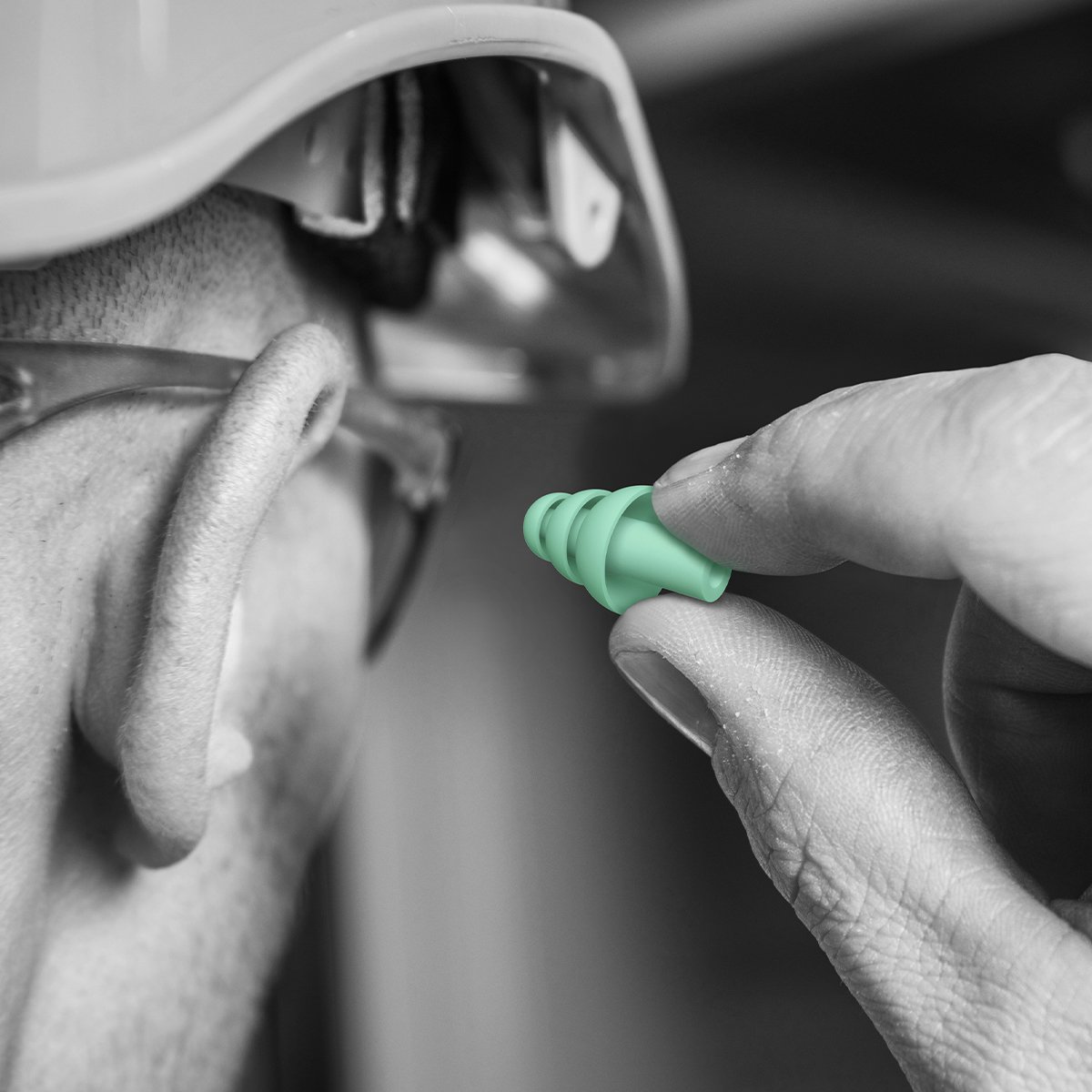
Yes, a drill is loud enough to damage your hearing. Most power drills operate between 90 and 100 decibels, which is well above the 85 dB threshold where hearing damage begins. Even short sessions without protection can put your hearing at risk, especially if you drill regularly. Below, we break down exactly what you need to know about drill noise, safe exposure times, and the right protection to use.
At what decibel level does hearing damage occur?
Hearing damage begins at around 85 decibels (dB) with prolonged exposure. At this level, the hair cells inside your inner ear start to experience stress, and repeated exposure without recovery time causes permanent damage over time. The louder the sound, the faster the damage occurs, and there is no safe way to reverse noise-induced hearing loss once it sets in.
The relationship between volume and damage is not linear. Every 3 dB increase in sound level roughly doubles the amount of acoustic energy reaching your ears. So a sound at 88 dB is twice as intense as one at 85 dB, and 91 dB is four times as intense. This is why even a modest increase in noise level dramatically shortens the safe exposure window.
At 100 dB, the limit for safe unprotected exposure drops to around 15 minutes. At 110 dB, it falls to under 2 minutes. Power tool noise is dangerous not just because of peak volume, but because most people use tools repeatedly over the course of a workday or project without giving their ears time to recover.
How loud is a drill in decibels?
A standard power drill typically produces between 90 and 100 dB during use. Hammer drills and rotary drills working through concrete or masonry can reach closer to 105 to 110 dB, depending on the material and drill speed. These levels place power tool noise firmly in the range that is dangerous to hearing, even with relatively short exposure.
The actual noise level varies depending on several factors: the type of drill, the surface being drilled, the drill bit condition, and whether the drill is running continuously or in short bursts. A cordless drill running at low speed through drywall sits at the lower end of the range. A hammer drill driving through concrete at full power sits at the upper end, where the risk of hearing damage accelerates significantly.
For context, 95 dB is roughly the volume of a lawnmower or a busy road with heavy traffic. Most people would not think twice about running a drill for an hour without protection, but at that volume, the exposure limit for safe, unprotected hearing is just one hour. After that, damage accumulates with every additional minute.
How long can you use a drill before it damages your hearing?
At 90 dB, the safe unprotected exposure limit is around two hours before hearing damage becomes a real risk. At 95 dB, that window drops to about one hour. At 100 dB, you have roughly 15 minutes of safe exposure. These thresholds assume continuous exposure, and they apply to cumulative noise throughout the day, not just a single session.
That last point matters more than most people realize. If you spend 20 minutes drilling in the morning and another 40 minutes in the afternoon, your ears experience that as a single combined exposure. Other noisy activities throughout the day, like commuting, listening to music, or using other power tools, all add to the total load your hearing absorbs.
For anyone doing regular DIY work, home renovation, or professional construction, the risk is not one dramatic event. It is the quiet accumulation of repeated exposure over months and years. Noise-induced hearing loss from power tool use tends to develop gradually, which is exactly why so many people do not notice it until the damage is already significant.
What are the early signs of noise-induced hearing loss?
The earliest sign of noise-induced hearing loss is often a temporary ringing or buzzing in the ears after exposure to loud sound, known as tinnitus. You may also notice that speech sounds muffled or that you have trouble following conversations in noisy environments. These symptoms can feel minor at first, but they signal that your inner ear has been stressed and is struggling to recover.
Other early warning signs include:
- Needing to turn up the TV or phone volume more than usual
- Difficulty understanding people on the phone
- Frequently asking people to repeat themselves
- A feeling of fullness or pressure in the ears after noise exposure
- Sounds seeming less sharp or clear than they used to
The tricky part is that early noise-induced hearing loss typically affects high-frequency sounds first. You may still hear voices clearly but start missing consonants or struggling with sounds like “s,” “f,” and “th.” Many people attribute this to aging or distraction rather than recognizing it as a sign of hearing damage. If you regularly use power tools and notice any of these changes, it is worth having your hearing checked.
Should you wear hearing protection when using a drill?
Yes, you should wear hearing protection when using a drill, particularly for sessions lasting more than a few minutes or when using a hammer drill on hard surfaces. At 90 to 100 dB, drill noise sits well above the safe threshold, and the cumulative effect of regular unprotected exposure adds up faster than most people expect. Hearing protection is a straightforward way to eliminate that risk entirely.
Many people skip protection because they assume short tasks do not warrant it, or because they find standard foam earplugs uncomfortable and inconvenient. But the exposure limits at drill noise levels are shorter than most people think, and the damage is permanent. A few minutes of protection is a far easier trade-off than years of tinnitus or reduced hearing.
Protection is especially important if you use a drill as part of regular work or an ongoing project. Occasional DIY use carries lower risk than daily professional use, but the principle is the same: if the noise level exceeds 85 dB and the exposure lasts more than a short burst, protection is the right call.
What type of hearing protection works best for drilling?
For drilling, the best hearing protection combines meaningful noise reduction with comfort and clarity, so you can still hear what is happening around you while the loud, harmful frequencies are brought down to a safe level. High-fidelity earplugs are a strong choice for this kind of work because they reduce volume without muffling sound the way foam earplugs do, making it easier to stay aware of your environment.
Foam earplugs offer high attenuation but block sound indiscriminately, which can make it harder to hear instructions, alarms, or other people nearby. Earmuffs provide good protection and are easy to put on and take off, but they can be bulky and uncomfortable for extended wear, especially in warmer conditions. High-fidelity earplugs strike a practical balance for most drilling situations.
For professional environments or anyone using heavy-duty equipment like hammer drills and rotary hammers regularly, a higher SNR rating becomes more important. Our Shush Worker earplugs are built specifically for this kind of environment, with an SNR of 23 dB and a ceramic filter design that preserves sound clarity while bringing dangerous noise levels down to a safe range. Made from durable, hypoallergenic synthetic rubber, they are comfortable enough for all-day wear and last at least a full year of regular use, making them a practical long-term choice for anyone serious about protecting their hearing on the job.
Frequently Asked Questions
Can I reduce drill noise instead of wearing ear protection?
You can take steps to lower the noise output of your drill — such as keeping bits sharp, drilling at lower speeds when possible, and using vibration-dampening mounts — but these measures will not bring noise levels down to a safe threshold on their own. A well-maintained drill on an easy surface might sit closer to 90 dB instead of 100 dB, but that is still above the 85 dB damage threshold. Noise reduction at the source is a good habit, but it should complement hearing protection, not replace it.
What if I only drill for a minute or two at a time — do I still need ear protection?
Short bursts do add up, especially if you are drilling repeatedly throughout a project or workday. Hearing damage is cumulative, meaning your ears do not reset between sessions — 10 one-minute bursts at 100 dB carry a similar risk to a single 10-minute session at that level. If you are doing multiple short drilling tasks in a day, wearing protection for each one is still the right call. Putting earplugs in takes seconds, and the protection is immediate.
How do I know what SNR or NRR rating I need for drilling?
For a standard power drill operating around 90 to 95 dB, a noise reduction rating (NRR) of 20 to 25 dB is generally sufficient to bring your exposure down to a safe level. For hammer drills or rotary hammers pushing 105 to 110 dB, you will want protection at the higher end of that range or higher. In the U.S., look for the NRR number on the packaging — a practical rule of thumb is to divide the NRR by two to estimate real-world noise reduction, so an NRR of 25 gives you roughly 12 to 13 dB of effective protection in typical conditions.
Is it safe to listen to music through earbuds while drilling to drown out the noise?
No — this is one of the most common and damaging mistakes DIYers and workers make. Listening to music through earbuds while drilling means your ears are being hit with both the drill noise and the audio from your earbuds simultaneously, significantly increasing your total noise exposure. To hear music over a 95 dB drill, you would likely need to push your earbuds to a similar volume, effectively doubling the acoustic load on your inner ear. Use proper hearing protection instead, and save the music for when the drill is off.
How do I get started building a hearing protection habit if I have never worn earplugs before?
The easiest way to build the habit is to keep your hearing protection stored with your drill — in the same bag, drawer, or case — so putting them in becomes part of your setup routine before every session. Start with a comfortable, well-fitting earplug style, since discomfort is the number one reason people skip protection. High-fidelity earplugs are a great starting point for new users because they do not create the muffled, isolated feeling that foam earplugs do, making the adjustment much easier.
Can noise-induced hearing loss from drilling be treated or reversed?
Unfortunately, noise-induced hearing loss is permanent — once the hair cells in your inner ear are damaged, they do not regenerate. There is currently no medical treatment that can restore hearing lost due to noise exposure. Hearing aids can help manage the effects of existing hearing loss, but they do not restore normal hearing. This is why prevention through consistent hearing protection is so critical: the damage happens silently and gradually, and by the time most people notice it, significant and irreversible loss has already occurred.
Should children or bystanders nearby also wear hearing protection when someone else is drilling?
Yes, absolutely. Sound radiates outward from a drill in all directions, and anyone within close range — typically within 10 to 15 feet — can be exposed to noise levels above 85 dB. Children are especially vulnerable because their smaller ear canals can amplify sound slightly, and they are less likely to recognize or report early warning signs of hearing stress. If you are drilling in a shared space, make sure bystanders either move to a safe distance or wear appropriate hearing protection as well.
Related Articles
- What do you give someone who prefers experiences over material things
- What are the best gifts for someone who loves going out?
- What are the long-term effects of noise exposure?
- Does reducing workplace noise improve productivity?
- Does loud noise at work affect concentration?
- What are the legal requirements for hearing protection at work?
- How often do reusable earplugs need to be replaced?
- How do filters in high-fidelity earplugs preserve sound quality?
- Can one night of clubbing cause permanent hearing damage?
- How do earplugs for music protection compare to noise-canceling earbuds?
- Do I need earplugs for my first EDM event?
- Do earplugs change how electronic music sounds at a live EDM event?
- Do earplugs for clubbing muffle the music too much?
- How do you store concert earplugs without losing or damaging them?
- Should you wear earplugs to every concert you attend?